Cells
Explore the microscopic world of cells and discover how these tiny units of life work together to create all living organisms
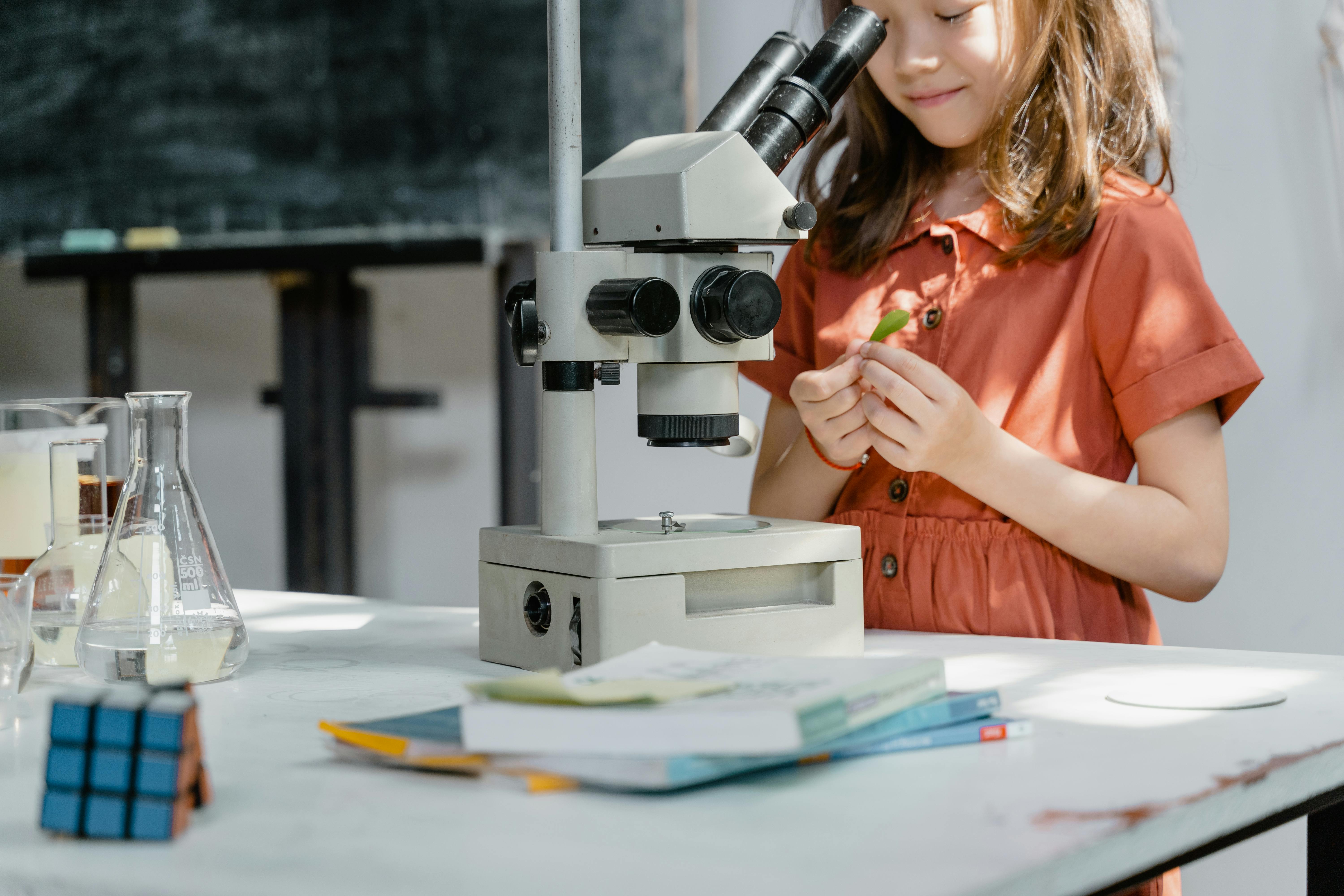
Children using a microscope to observe a plant cell
Every living thing on Earth - from the tiniest bacteria to the largest whale, from a single mushroom to a giant redwood tree - is made of cells! These microscopic building blocks are like tiny factories, each one working hard to keep life going. You are made of about 37 trillion cells all working together!
What Are Cells?
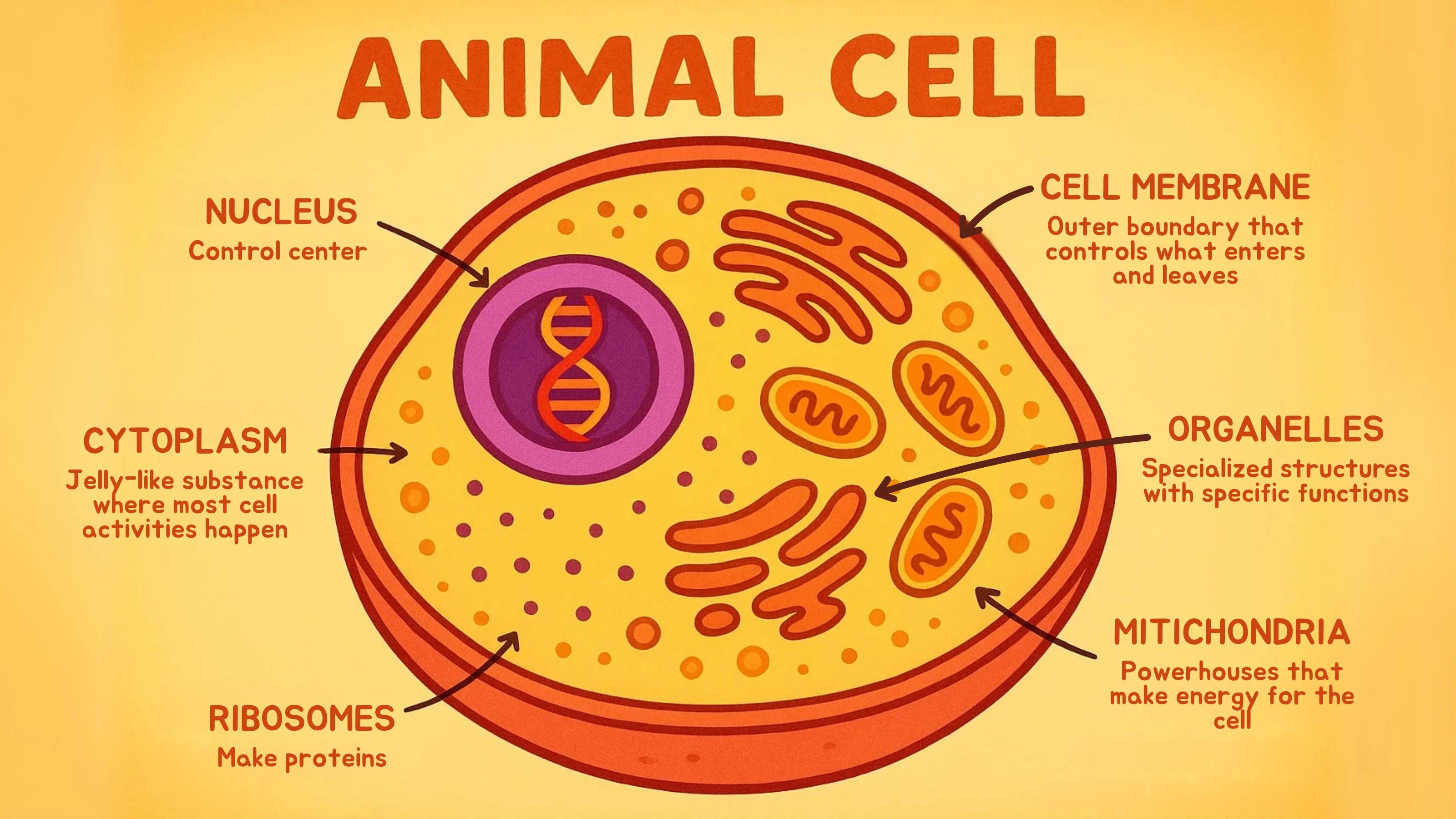
Cells are the smallest units of life. They're like tiny rooms surrounded by walls, filled with even tinier parts that each have special jobs. Some living things, like bacteria, are made of just one cell. Others, like you, are made of trillions of cells working as a team!
Parts of a Cell: The Cellular City
Think of a cell like a busy city with different neighborhoods! The nucleus is like city hall - it controls everything and contains the DNA instructions. The cytoplasm is like the city's neighborhoods where work gets done. Organelles are like special buildings with specific jobs, such as power plants and factories.

Plant Cells vs Animal Cells
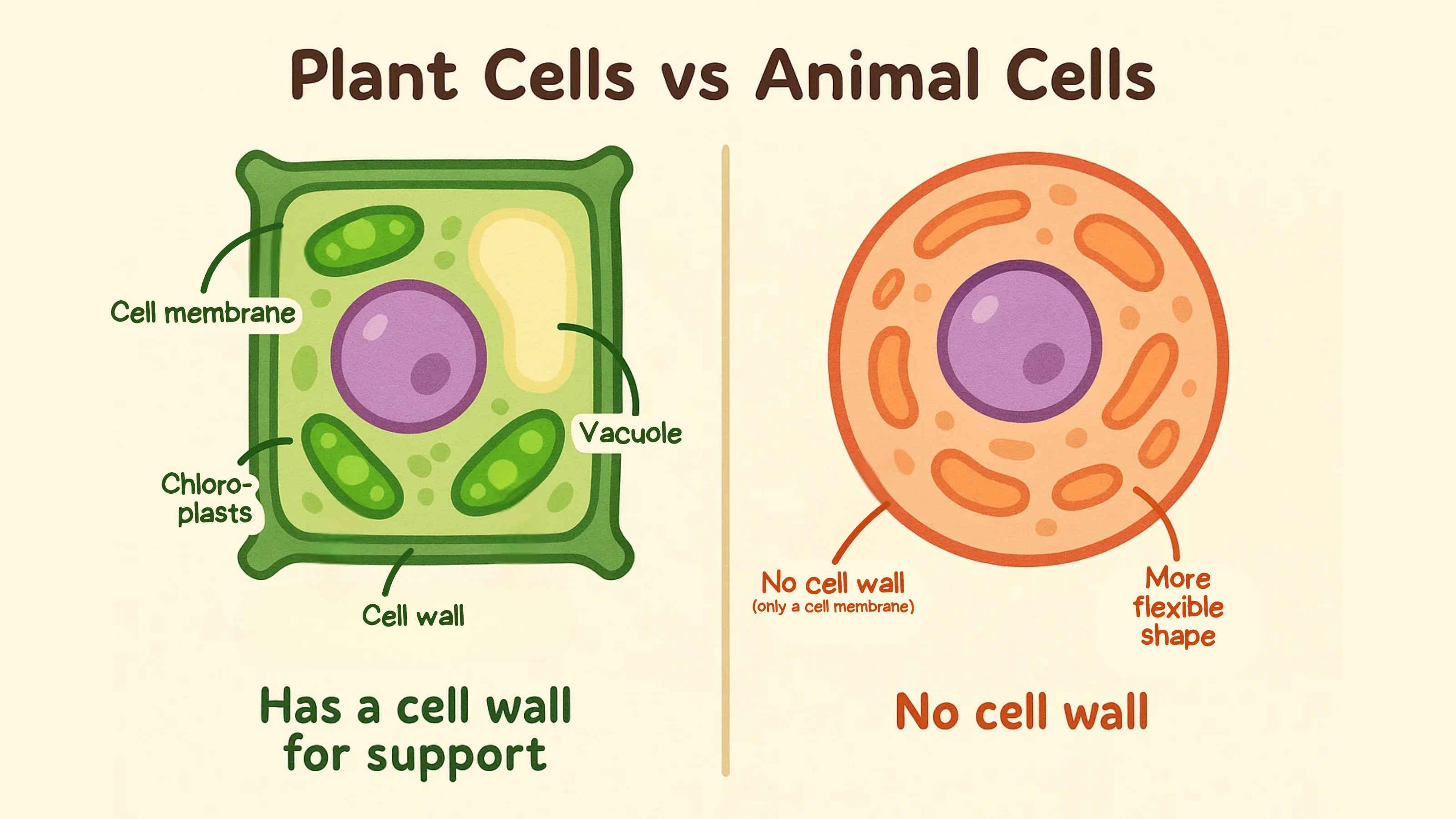
Plant cells and animal cells are similar but have some important differences! Plant cells have a thick cell wall for protection and support, plus chloroplasts that capture sunlight to make food. Animal cells don't have these but are more flexible and can move around easier.
How Cells Work Together
In your body, different types of cells have specialized jobs. Muscle cells contract to help you move. Nerve cells carry messages. Blood cells transport oxygen. Bone cells provide structure. It's like having millions of tiny workers, each doing their part to keep you healthy and alive!
Understanding cells helps us appreciate that we're all made of the same basic building blocks of life - it's amazing how something so tiny can be so important!