Circulatory System

Learn how your heart pumps blood to deliver oxygen and nutrients to every cell in your body


3D representation of a human heart
1/3

3D representation of a human heart

PHOTOGRAPH BY Aakash Dhage, Unsplash

Your body has an amazing delivery system that works 24/7 without you ever thinking about it! Your circulatory system is like a super-efficient highway network that delivers oxygen, nutrients, and other important materials to every single cell in your body while picking up waste products for removal.

Your Heart: The Ultimate Pump

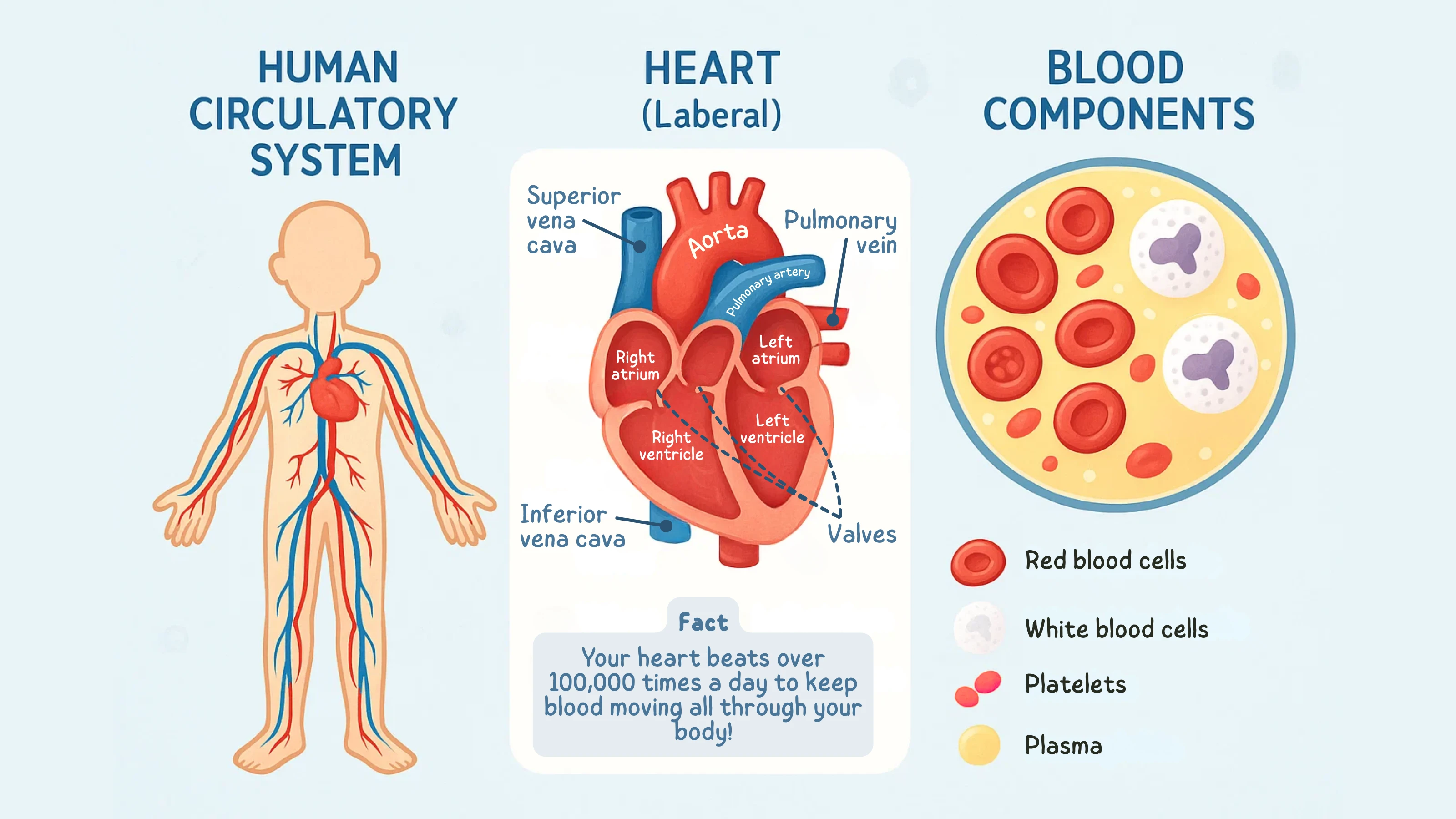
Your heart is an incredible muscle about the size of your fist that beats over 100,000 times per day! It has four chambers - two atria (upper chambers) that receive blood and two ventricles (lower chambers) that pump blood out. The heart never rests, working tirelessly to keep blood flowing throughout your body.

AMAZING HEART FACTS
Your heart beats about 100,000 times per day
It pumps about 2,000 gallons of blood daily
Your heart is about the size of your closed fist
It starts beating before you're born and never stops until you die
The heart muscle is special - it can contract on its own without signals from your brain

Blood: Your Body's Transportation Fluid

Blood is much more than just a red liquid! It's made up of red blood cells that carry oxygen, white blood cells that fight infection, platelets that help stop bleeding, and plasma - the liquid part that carries nutrients, hormones, and waste products.
BLOOD COMPONENTS AND JOBS
RED BLOOD CELLS: Carry oxygen from lungs to body cells (and bring CO₂ back)
WHITE BLOOD CELLS: Your body's army that fights germs and diseases
PLATELETS: Tiny cell fragments that help blood clot to stop bleeding
PLASMA: Liquid part that transports nutrients, hormones, and waste
HEMOGLOBIN: Iron-containing protein that makes blood red and carries oxygen
BLOOD VOLUME: Adults have about 10-12 pints of blood in their bodies

Circulatory System Diagram

Blood Vessels: The Body's Highway System

Your body has three types of blood vessels: Arteries carry oxygen-rich blood away from your heart to your body. Veins bring oxygen-poor blood back to your heart. Capillaries are tiny vessels where oxygen and nutrients actually get delivered to cells and waste gets picked up.

The Circulation Journey

Blood circulation is like a figure-eight highway! Pulmonary circulation sends blood from your heart to your lungs to pick up oxygen and drop off carbon dioxide. Systemic circulation sends oxygen-rich blood from your heart to your entire body, then brings the oxygen-poor blood back to start the journey again.

CIRCULATORY SYSTEM ACTIVITIES
Feel your pulse on your wrist or neck
Listen to heartbeats with a stethoscope (or paper tube)
Count how many times your heart beats in one minute
Notice how your pulse changes with exercise
Try to find your pulse in different places on your body

KEEPING YOUR CIRCULATORY SYSTEM HEALTHY
EXERCISE: Makes your heart stronger and improves circulation
HEALTHY EATING: Provides good nutrients and avoids artery-clogging foods
NO SMOKING: Protects blood vessels and improves oxygen delivery
STAY HYDRATED: Helps blood flow smoothly
MANAGE STRESS: Reduces strain on your heart and blood vessels

CIRCULATION AND EXERCISE
Your heart beats faster during exercise to deliver more oxygen
Regular exercise makes your heart stronger and more efficient
Athletes often have slower resting heart rates because their hearts are so strong
Exercise improves blood flow to muscles and brain
Physical activity helps grow new tiny blood vessels

SIGNS OF GOOD CIRCULATION
Regular, steady heartbeat
Good color in skin and fingernails
Quick healing of small cuts
No unusual swelling in hands or feet
Good energy levels for daily activities

Your circulatory system is truly amazing - it's like having a personal delivery service that keeps every part of your body supplied with exactly what it needs to stay healthy and strong!