Digestive System

Follow food's amazing journey through your body and learn how digestion breaks down food into energy and nutrients


Teeth taking a bite of an orange as the first step to digestion
1/3

Teeth taking a bite of an orange as the first step to digestion

PHOTOGRAPH BY Engin Akyurt, Unsplash

Every bite of food you eat goes on an incredible 25-foot journey through your digestive system! This amazing biological factory breaks down food into tiny nutrients your body can use for energy, growth, and staying healthy. It's like having a personal food processing plant inside you!

The Mouth: Where Digestion Begins

Digestion starts the moment food enters your mouth! Your teeth mechanically break food into smaller pieces while saliva begins chemical digestion with special enzymes. Your tongue helps mix everything together and pushes food toward your throat when you swallow.
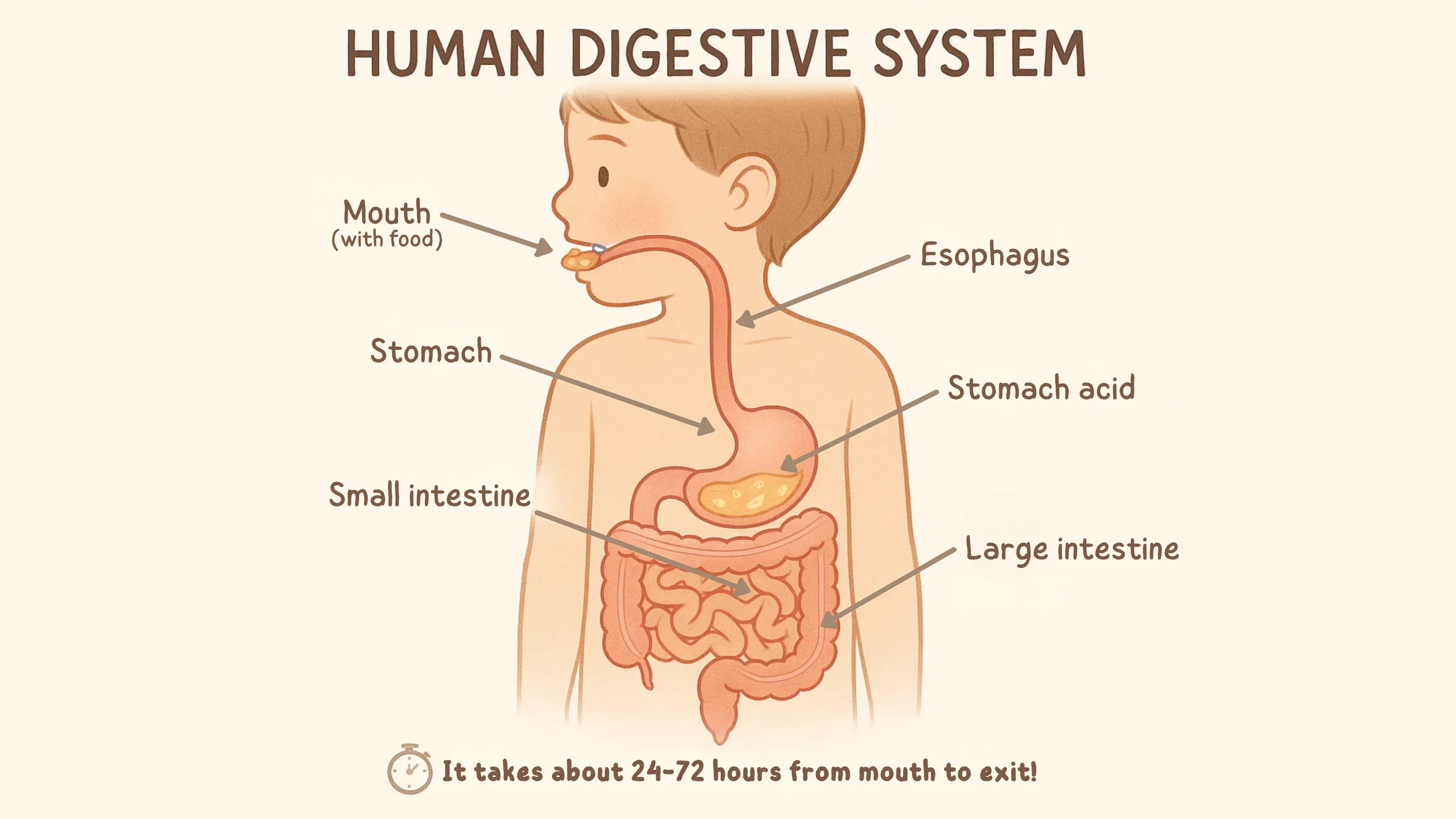
THE DIGESTIVE JOURNEY
MOUTH: Chewing and saliva begin breaking down food
ESOPHAGUS: Muscular tube that pushes food to stomach
STOMACH: Acid bath that continues breaking down food
SMALL INTESTINE: Where most nutrient absorption happens
LARGE INTESTINE: Removes water and forms waste
TOTAL TIME: About 24-72 hours from mouth to exit!

Digestive System Diagram

The Stomach: Your Body's Mixing Bowl

Your stomach is like a stretchy, muscular bag that can expand to hold up to 4 cups of food! It produces strong stomach acid and enzymes that break down proteins. The stomach muscles churn and mix food for 2-4 hours, turning it into a soupy mixture called chyme.

AMAZING DIGESTIVE FACTS
Your small intestine is about 20 feet long but coiled up to fit in your abdomen
Your stomach acid is strong enough to dissolve metal
You produce about 1.5 liters of saliva every day
Your digestive system has its own nervous system with 500 million neurons
Food doesn't fall down your esophagus - muscles push it down
The surface area of your small intestine is about the size of a tennis court!
Info box image

Small Intestine: The Nutrient Absorption Center

The small intestine is where the real magic happens! This long, coiled tube is lined with millions of tiny finger-like projections called villi that absorb nutrients from food. Carbohydrates become simple sugars, proteins become amino acids, and fats become fatty acids that enter your bloodstream.

Large Intestine: The Final Stop

The large intestine (colon) is the final stop on food's journey. Here, water is absorbed from leftover food waste, and beneficial bacteria help break down remaining materials. What's left becomes solid waste that your body eliminates.

DIGESTIVE SYSTEM ACTIVITIES
Time how long it takes to chew different foods thoroughly
Observe how saliva breaks down crackers when you chew them slowly
Track what happens to food color (like beets) through digestion
Learn about fiber by comparing different foods

HELPING YOUR DIGESTION
CHEW THOROUGHLY: Breaks food into smaller pieces for easier digestion
EAT FIBER: Fruits, vegetables, and whole grains help move food through your system
DRINK WATER: Helps dissolve nutrients and keeps things moving
EAT SLOWLY: Gives your stomach time to signal when you're full
PROBIOTICS: Beneficial bacteria from yogurt support gut health

DIGESTIVE HELPERS
ENZYMES: Special proteins that break down different nutrients
BILE: Made by liver, helps digest fats
PANCREATIC JUICE: Contains enzymes for proteins, fats, and carbohydrates
GUT BACTERIA: Trillions of helpful microbes aid digestion
PERISTALSIS: Wave-like muscle contractions that move food along

NUTRIENTS YOUR BODY NEEDS
CARBOHYDRATES: Provide quick energy for cells
PROTEINS: Build and repair muscles and tissues
FATS: Provide long-term energy and help absorb vitamins
VITAMINS: Help your body use other nutrients properly
MINERALS: Build strong bones and teeth, help nerves function
WATER: Essential for all body processes

Your digestive system works around the clock to fuel your body - it's amazing how it transforms a sandwich into the energy you need to run, think, and grow!