Ecosystems and Habitats
Explore different habitats around the world and discover how living things depend on each other in ecosystems

Child exploring a forest ecosystem and observing different plants and animals
Imagine a busy neighborhood where everyone has a specific job and depends on their neighbors to survive. That's exactly what an ecosystem is like! Every living thing has a role to play, and they all work together in amazing ways to create thriving communities in nature.
What Are Habitats and Ecosystems?
A habitat is like an animal's address - it's the specific place where an organism lives and finds everything it needs to survive. An ecosystem includes the habitat plus all the living things in it and how they interact with each other and their environment.
Amazing Ecosystems Around the World
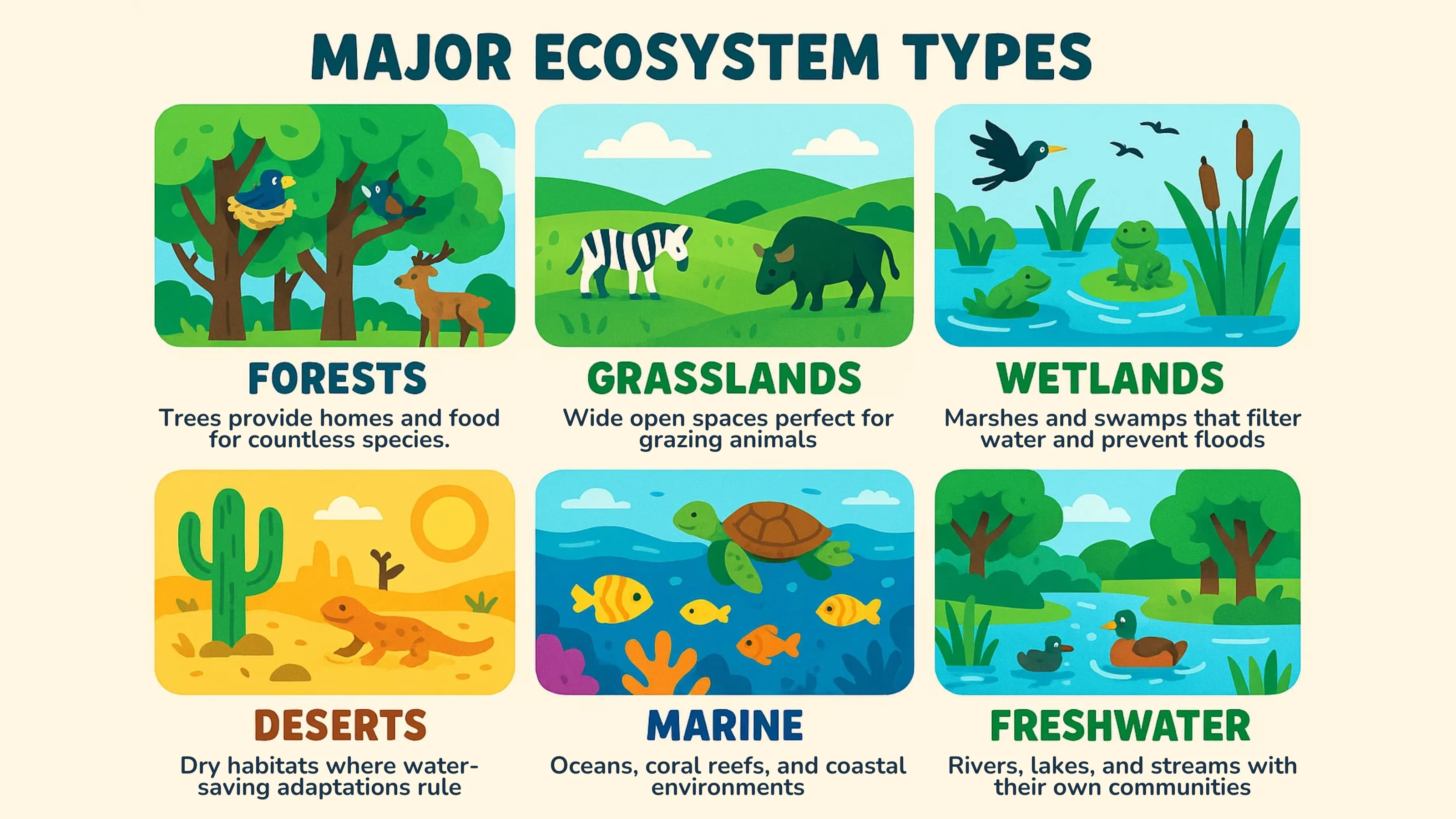
Earth has incredible variety in ecosystems! Tropical rainforests are like nature's apartments with animals living at different levels from floor to canopy. Coral reefs are underwater cities bustling with colorful fish. Deserts seem empty but are home to specially adapted creatures. Wetlands are nature's water filters and nurseries.

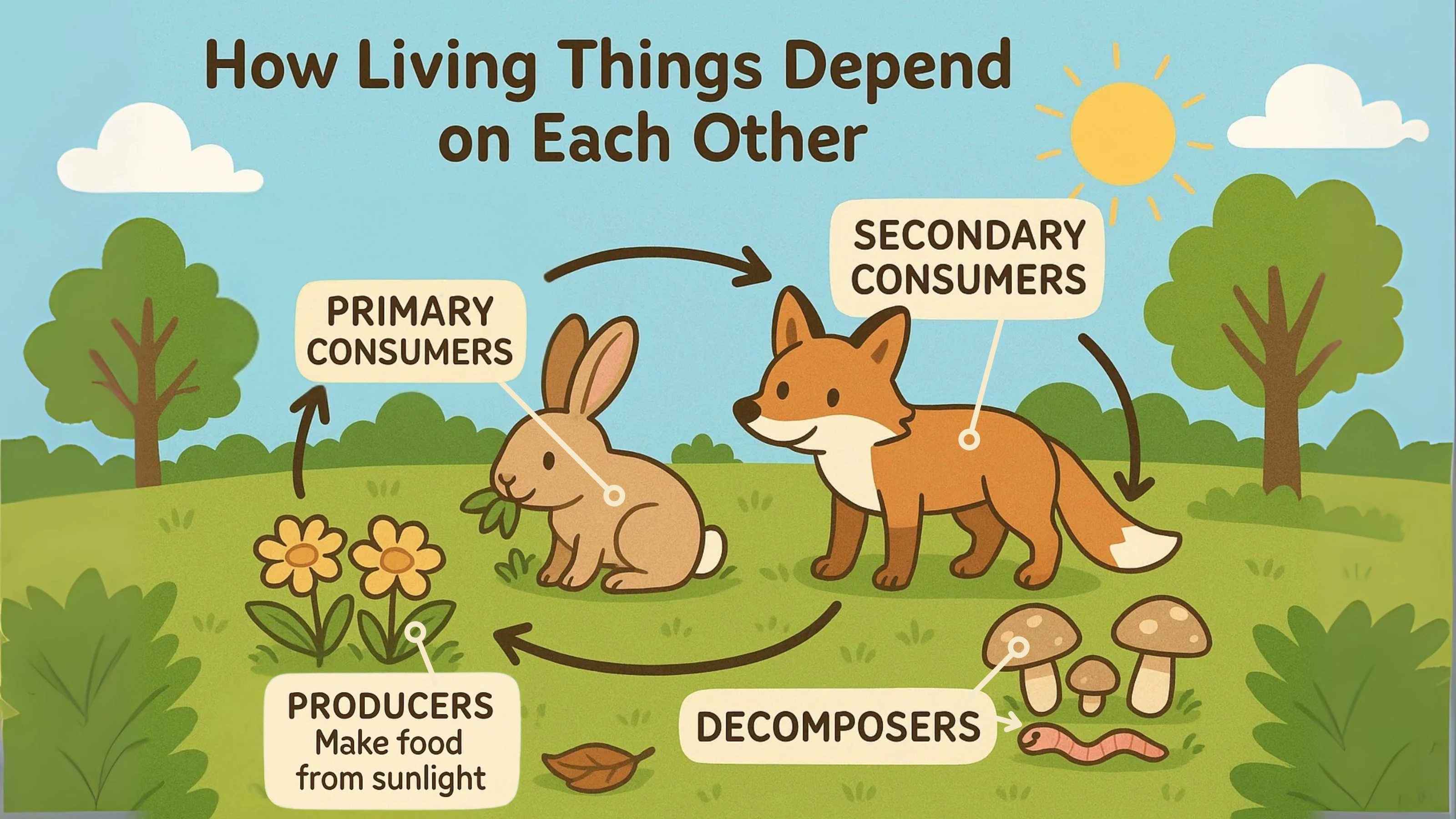
How Living Things Depend on Each Other
In ecosystems, everything is connected! Producers (plants) make food from sunlight. Primary consumers (herbivores) eat plants. Secondary consumers (carnivores) eat the herbivores. Decomposers (bacteria and fungi) break down dead things and return nutrients to the soil. It's a giant recycling system!
Ecosystem Services: How Nature Helps Us
Ecosystems don't just support wildlife - they help humans too! Forests clean our air and provide oxygen. Wetlands filter water and prevent flooding. Pollinators help grow our food. Soil organisms make the ground fertile for farming. We depend on healthy ecosystems for our survival!
Understanding ecosystems helps us appreciate how interconnected life on Earth really is - we're all part of nature's great web of life!