
Fish

Explore the underwater world of fish and learn how they've adapted to life beneath the waves


Children observing tropical fish in an aquarium and learning about fish diversity
1/3

Children observing tropical fish in an aquarium and learning about fish diversity

PHOTOGRAPH BY Nur Taufik Zamari, Unsplash

Imagine being able to breathe underwater and glide effortlessly through the water like a living torpedo! Fish are masters of aquatic life, perfectly adapted for underwater living with amazing features that let them thrive in oceans, rivers, and lakes around the world.

What Makes a Fish a Fish?

Fish are vertebrates (have backbones) that live in water and breathe through gills. Most fish are cold-blooded, have fins for swimming, and are covered in scales for protection. They come in incredible variety - from tiny goldfish to massive whale sharks!

FISH CHARACTERISTICS
GILLS: Extract oxygen from water instead of air
FINS: Specialized appendages for swimming and steering
SCALES: Overlapping plates that protect and reduce drag
LATERAL LINE: Sense organ that detects water movement and pressure
SWIM BLADDER: Internal balloon that helps control buoyancy
COLD-BLOODED: Body temperature matches water temperature

Gills: Underwater Breathing Machines

Gills are amazing organs that work like underwater lungs! As water flows over the gills, they extract dissolved oxygen and release carbon dioxide. Fish pump water through their gills by opening and closing their mouths and gill covers - it's like they're constantly "drinking" water to breathe!

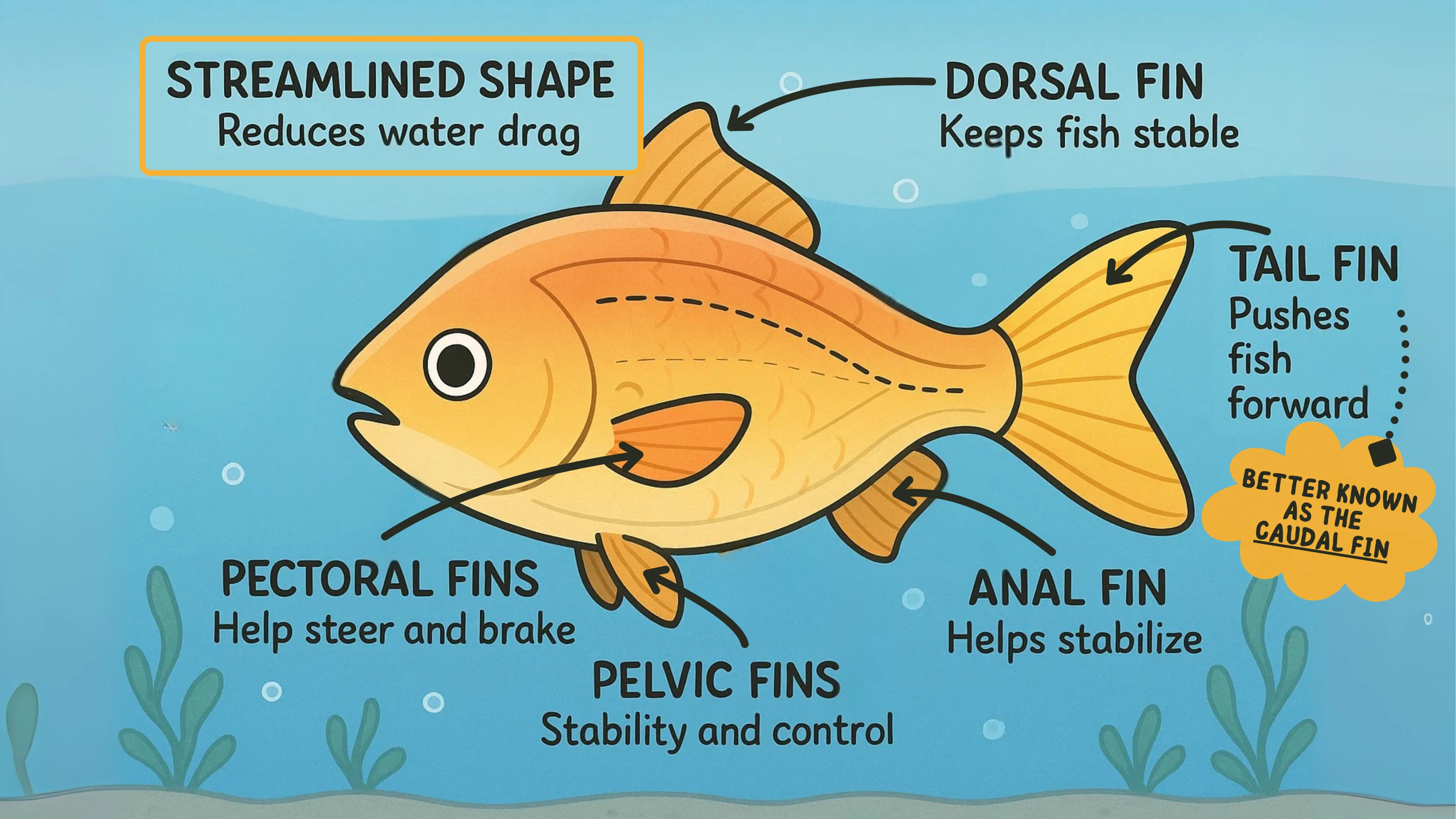
HOW FISH SWIM AND MOVE
TAIL FIN: Main propulsion, pushes fish forward
DORSAL FIN: Top fin provides stability
PECTORAL FINS: Side fins for steering and braking
PELVIC FINS: Bottom fins for stability and fine movements
ANAL FIN: Bottom rear fin for stability
STREAMLINED SHAPE: Reduces water resistance for efficient swimming
Info box image

Parts of a Fish Diagram

Fish Diversity: From Tiny to Gigantic

Fish range from the tiny paedocypris (smaller than your fingernail) to the enormous whale shark (bigger than a school bus)! Goldfish can live over 40 years, seahorses are fish that swim upright, and flying fish can glide above water for hundreds of feet.

Fish Senses: Detecting the Underwater World

Fish have incredible senses adapted for underwater life! Their lateral line system detects water movements and helps them navigate and avoid predators. Many fish have excellent color vision, some can sense electrical fields, and others use echolocation like dolphins!

FISH OBSERVATION ACTIVITIES
Visit an aquarium and observe different fish swimming patterns
Watch how fish use their different fins for movement
Look for fish in local ponds, streams, or tide pools
Study fish anatomy using pictures or models

AMAZING FISH ADAPTATIONS
CAMOUFLAGE: Many fish can change colors to match their surroundings
ELECTRIC FISH: Some fish generate electricity for navigation or defense
DEEP SEA FISH: Special adaptations for life in crushing ocean depths
CLEANING STATIONS: Some fish make a living cleaning parasites off other fish
MIGRATION: Some fish travel thousands of miles between feeding and spawning areas

FISH HABITATS
FRESHWATER: Rivers, lakes, streams, and ponds
SALTWATER: Oceans and seas around the world
CORAL REEFS: Tropical underwater cities teeming with colorful fish
DEEP OCEAN: Dark depths with specialized pressure-resistant fish
TIDE POOLS: Rocky coastal areas that fish visit during high tide

PROTECTING FISH AND AQUATIC HABITATS
Keep waterways clean by not polluting rivers and oceans
Support sustainable fishing practices
Protect coral reefs and coastal habitats
Learn about local fish species and their needs
Practice catch-and-release fishing when appropriate

Fish show us that there's a whole other world beneath the water's surface - one filled with incredible diversity and amazing adaptations for aquatic life!