Food Chains and Webs
Follow the flow of energy through ecosystems from producers to top predators and understand nature's dining relationships
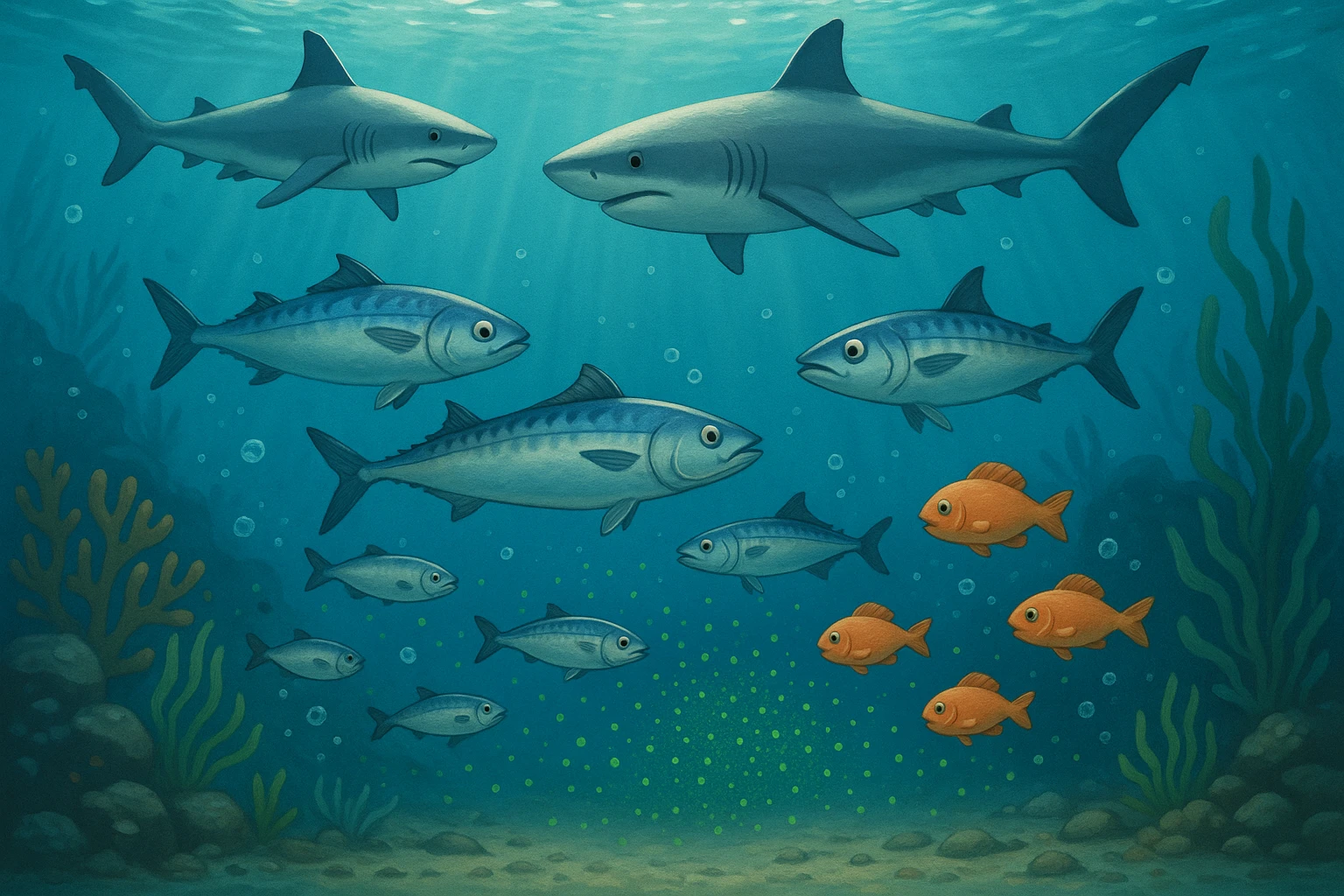
Ocean food web showing phytoplankton to fish to sharks
PHOTOGRAPH BY Duskbloom Littles
In nature, everyone needs to eat to survive, and this creates amazing connections between all living things! Food chains and food webs show us how energy travels from the sun through plants and animals, creating a giant dining network that keeps ecosystems running.
What Are Food Chains?
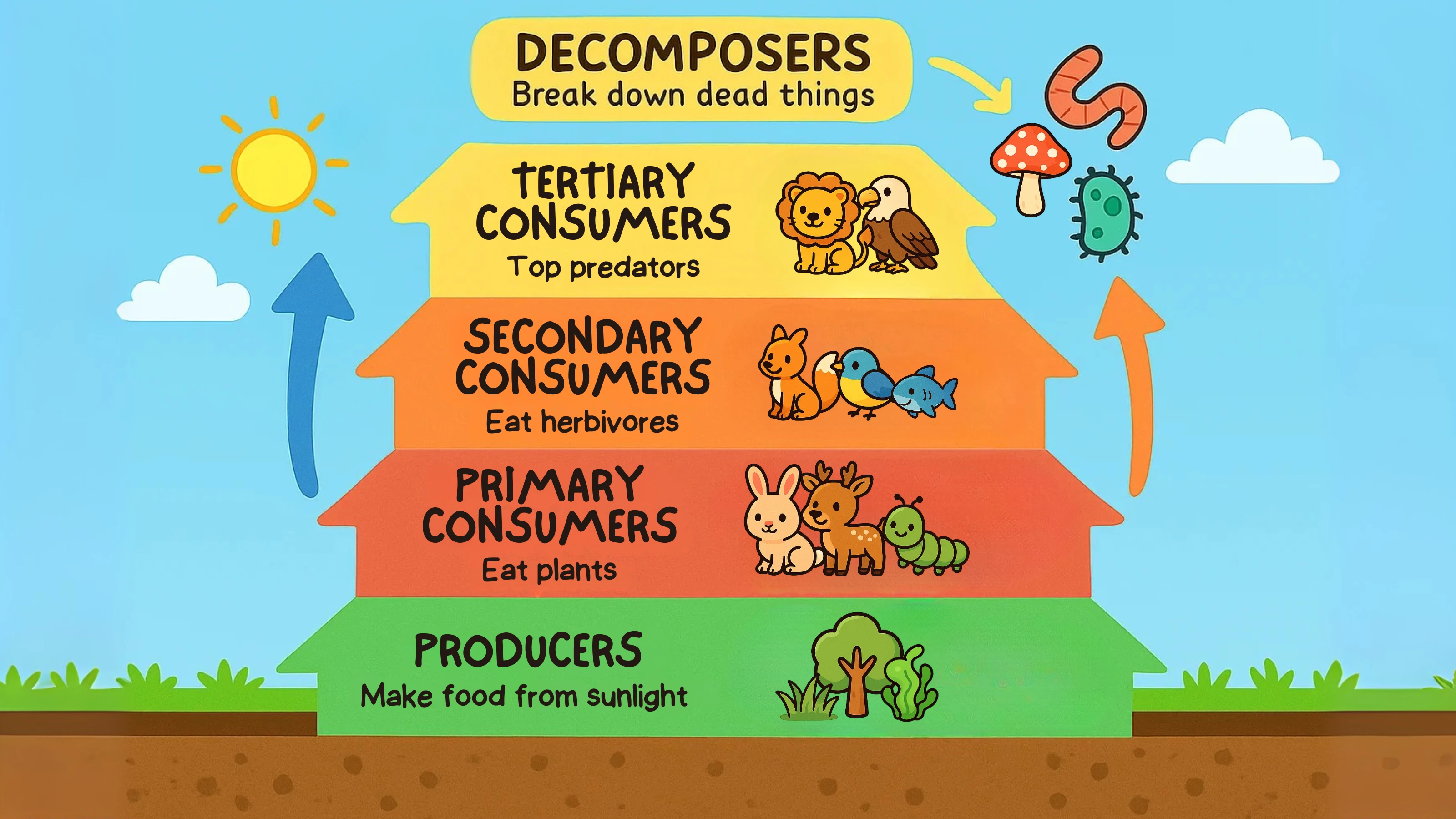
A food chain is like a simple path showing who eats whom in nature. It always starts with producers (usually plants) that make their own food from sunlight. Then primary consumers (herbivores) eat the plants, secondary consumers (carnivores) eat the herbivores, and so on up the chain!
Energy Flow: Following the Sun's Power
All energy in food chains comes from the sun! Plants capture sunlight and turn it into food energy through photosynthesis. When animals eat plants, they get that solar energy. When other animals eat those animals, the energy passes along. However, energy is lost at each step, which is why there are fewer top predators than plant-eaters.

Food Webs: The Real Story
In real ecosystems, things are much more complicated than simple chains! Most animals eat many different things, and most plants are eaten by many different animals. This creates a food web - a complex network of interconnected food chains that shows the true relationships in nature.
Predators and Prey
The relationship between predators (hunters) and prey (the hunted) is crucial for keeping ecosystems balanced. Predators help control prey populations, while prey animals have developed amazing adaptations to avoid being eaten. It's nature's way of keeping everything in balance!
Understanding food chains and webs helps us see how all life is connected - when we protect one species, we're really protecting entire ecosystems!