
Insects

Discover the incredible world of insects and learn why these tiny animals are the most successful group on Earth


Child pointing to an insect in an outdoor setting
1/3

Child pointing to an insect in an outdoor setting

PHOTOGRAPH BY Sen, Unsplash

If Earth had a popularity contest based on numbers, insects would win by a landslide! These six-legged creatures make up about 80% of all animal species on our planet. From busy ants to beautiful butterflies, from hardworking bees to incredible beetles, insects truly rule the world!

What Makes an Insect an Insect?

All insects have the same basic body plan: three body sections (head, thorax, abdomen), six legs, and usually two pairs of wings. They have compound eyes made of thousands of tiny lenses and antennae for sensing their world. Most insects also have an exoskeleton - a hard outer shell that protects them.
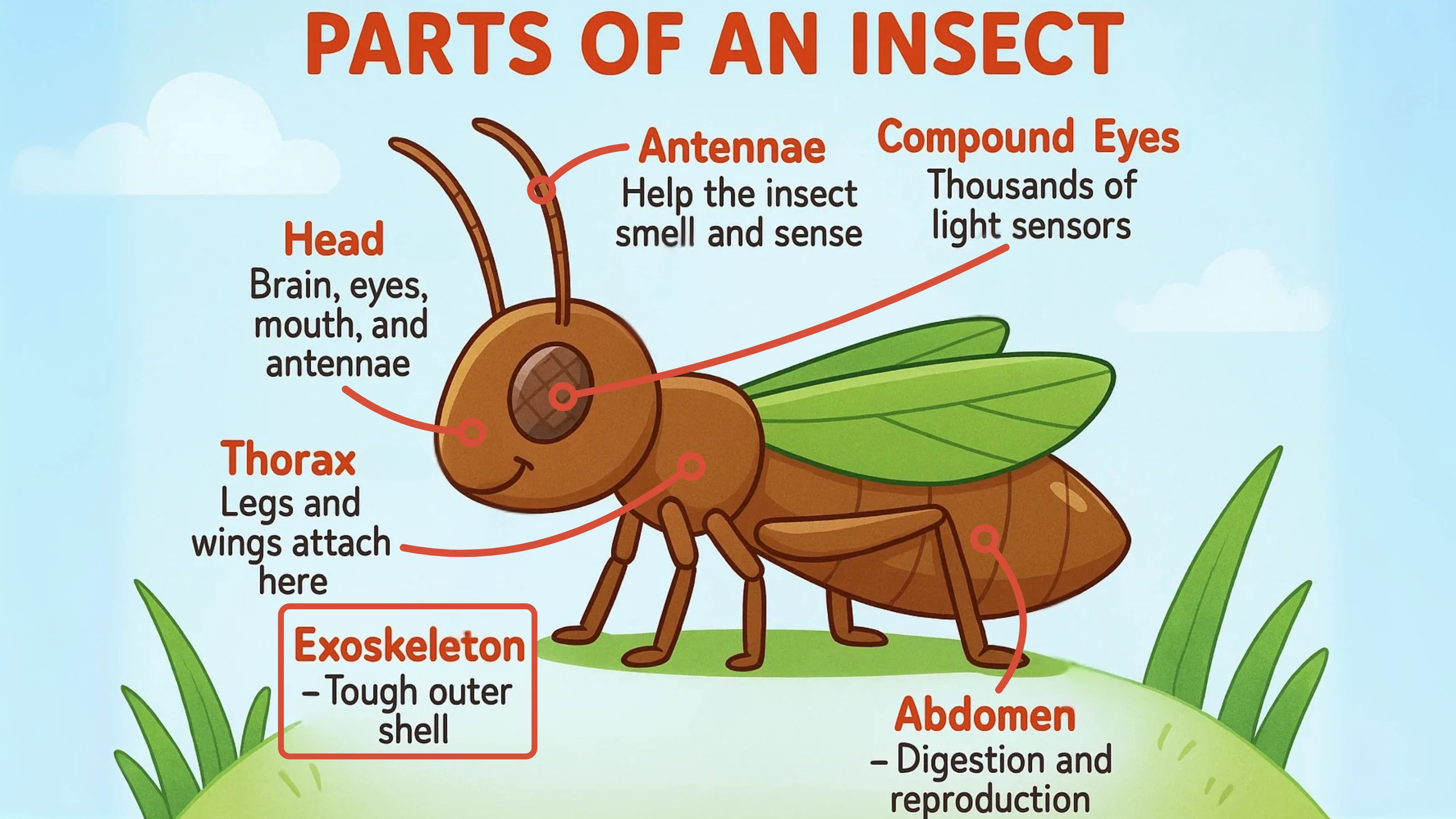
INSECT BODY PLAN
HEAD: Contains brain, eyes, mouth, and antennae
THORAX: Middle section with six legs and usually wings
ABDOMEN: Rear section containing digestive and reproductive organs
EXOSKELETON: Hard outer covering for protection and support
COMPOUND EYES: Made of thousands of individual light sensors
ANTENNAE: Sensitive organs for smell, touch, and hearing

Parts of an Insect Diagram

Insect Metamorphosis: Amazing Transformations

Many insects undergo metamorphosis - incredible transformations during their life cycle! Complete metamorphosis (like butterflies) includes four stages: egg, larva (caterpillar), pupa (chrysalis), and adult. Incomplete metamorphosis (like grasshoppers) goes from egg to nymph to adult without a pupa stage.

INSECT DIVERSITY CHAMPIONS
BEETLES: The largest group - 1 in 4 animal species is a beetle!
BUTTERFLIES & MOTHS: Beautiful pollinators with scale-covered wings
ANTS: Social insects that work together in complex colonies
BEES: Master pollinators essential for plant reproduction
FLIES: Important decomposers and pollinators
DRAGONFLIES: Ancient aerial predators with incredible flying skills
Info box image

Why Insects Are So Successful

Insects are incredibly successful because they're small (can live almost anywhere), reproduce quickly, have specialized diets, can fly (most species), and have incredible diversity. They've adapted to nearly every environment on Earth except the deep ocean!

Insects and Ecosystems

Insects are ecosystem superstars! They pollinate most flowering plants (including many food crops), decompose dead material and recycle nutrients, serve as food for many other animals, and some even control pest populations. Without insects, ecosystems would collapse!

INSECT OBSERVATION ACTIVITIES
Go on a backyard bug hunt with a magnifying glass
Watch ants carrying food back to their colony
Observe bees visiting flowers in a garden
Look for caterpillars and try to identify what they'll become

AMAZING INSECT ABILITIES
SUPER STRENGTH: Ants can lift 50 times their own weight
NAVIGATION: Bees use the sun and landmarks to find their way home
COMMUNICATION: Ants leave chemical trails for others to follow
CAMOUFLAGE: Stick insects look exactly like twigs
MIGRATION: Monarch butterflies travel thousands of miles

BENEFICIAL INSECTS
POLLINATORS: Bees, butterflies, and many others help plants reproduce
PEST CONTROLLERS: Ladybugs eat aphids that damage plants
DECOMPOSERS: Many insects break down dead plants and animals
SILK PRODUCERS: Silkworms provide silk for clothing
HONEY MAKERS: Bees produce honey and beeswax

HELPING INSECTS
Plant native flowers that provide nectar and pollen
Create insect hotels with hollow stems and wood pieces
Avoid using pesticides in gardens
Learn to identify beneficial insects vs. pests
Support organic farming practices

RESPECTING INSECTS
Most insects are harmless or beneficial to humans
Learn which insects in your area might sting or bite
Observe insects safely without disturbing them
Appreciate insects' important roles in nature

Insects prove that being small doesn't mean being unimportant - these tiny creatures keep our world running and show us the incredible power of diversity and adaptation!