Microorganisms
Discover the invisible world of microbes and learn about bacteria, viruses, and other microscopic life

Child using a microscope to observe pond water and discover microorganisms
Right now, millions of tiny living things are all around you - on your skin, in the air, in the soil, and even inside your body! These microorganisms (or "microbes") are so small you need a microscope to see them, but they play huge roles in keeping our world working properly.
What Are Microorganisms?
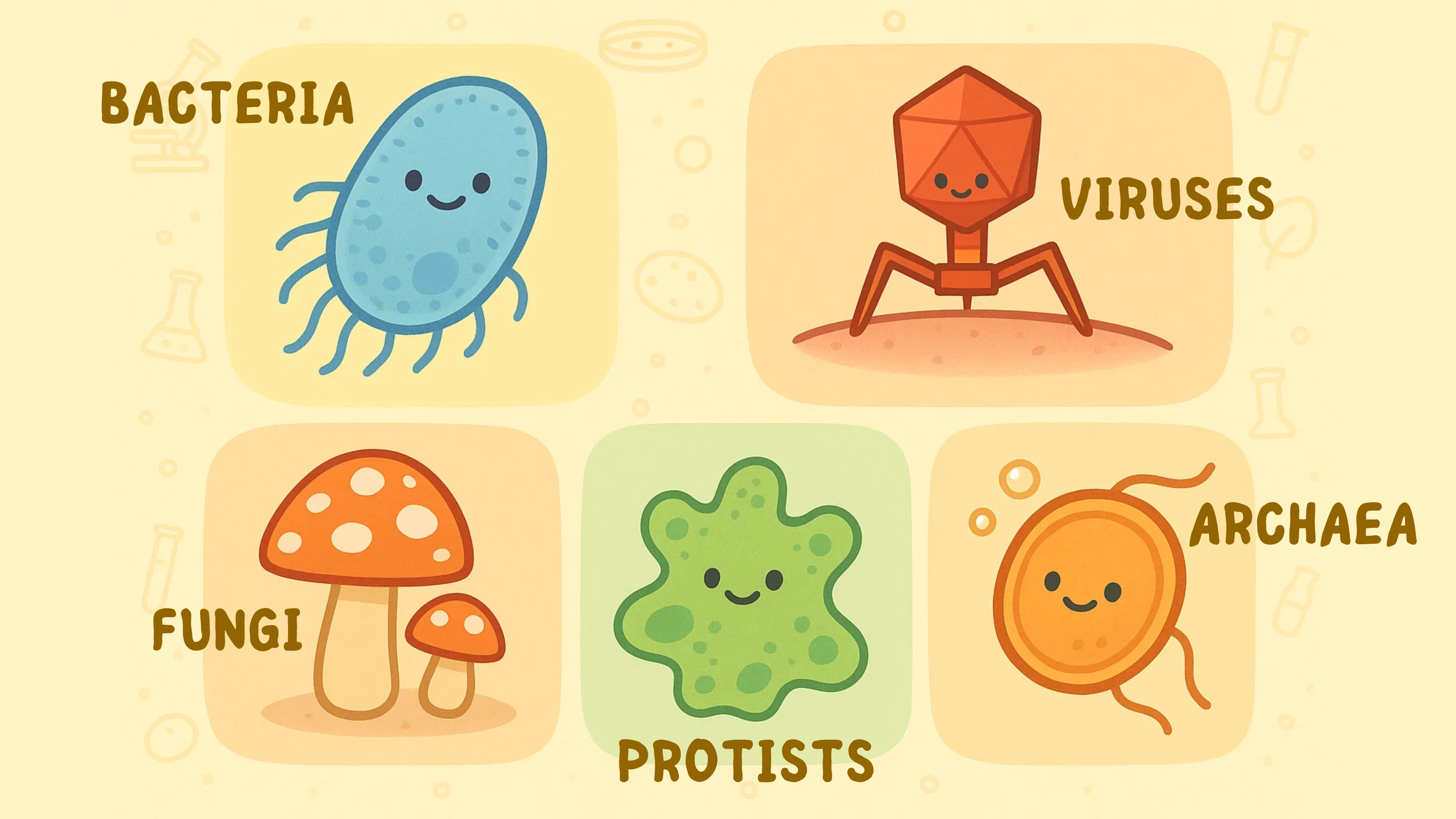
Microorganisms are living things that are too small to see with just your eyes. They include bacteria, viruses, fungi (like yeasts), and protists (single-celled organisms). Even though they're tiny, there are more microbes on Earth than all other living things combined!
Bacteria: The Most Common Life Forms
Bacteria are single-celled organisms that have been on Earth for over 3 billion years! They're incredibly diverse - some bacteria can survive in boiling water, others in ice, and some even in space. Most bacteria are harmless or helpful, and only a few cause diseases.

Viruses: The Tiny Invaders
Viruses are much smaller than bacteria and can't live on their own - they need to invade other cells to reproduce. Some viruses cause diseases like colds and flu, but scientists also use viruses to deliver medicines and study how cells work.
Good Microbes vs. Harmful Microbes
Most microorganisms are either helpful or harmless! Beneficial microbes help make food, clean up pollution, and keep us healthy. Pathogenic microbes can cause illness, but your immune system and modern medicine help protect you from them.
The microscopic world is full of amazing life forms that are essential for our planet's health - these tiny organisms prove that size doesn't determine importance!