Photosynthesis
Learn how plants use sunlight, water, and carbon dioxide to create food and oxygen through photosynthesis

Child observing plants in sunlight and learning about photosynthesis process
Plants are like magical chefs that can cook their own food using nothing but sunlight, water, and air! This amazing process is called photosynthesis, and it's one of the most important processes on Earth. Without photosynthesis, there would be no oxygen to breathe and no food for any living thing!
The Photosynthesis Recipe
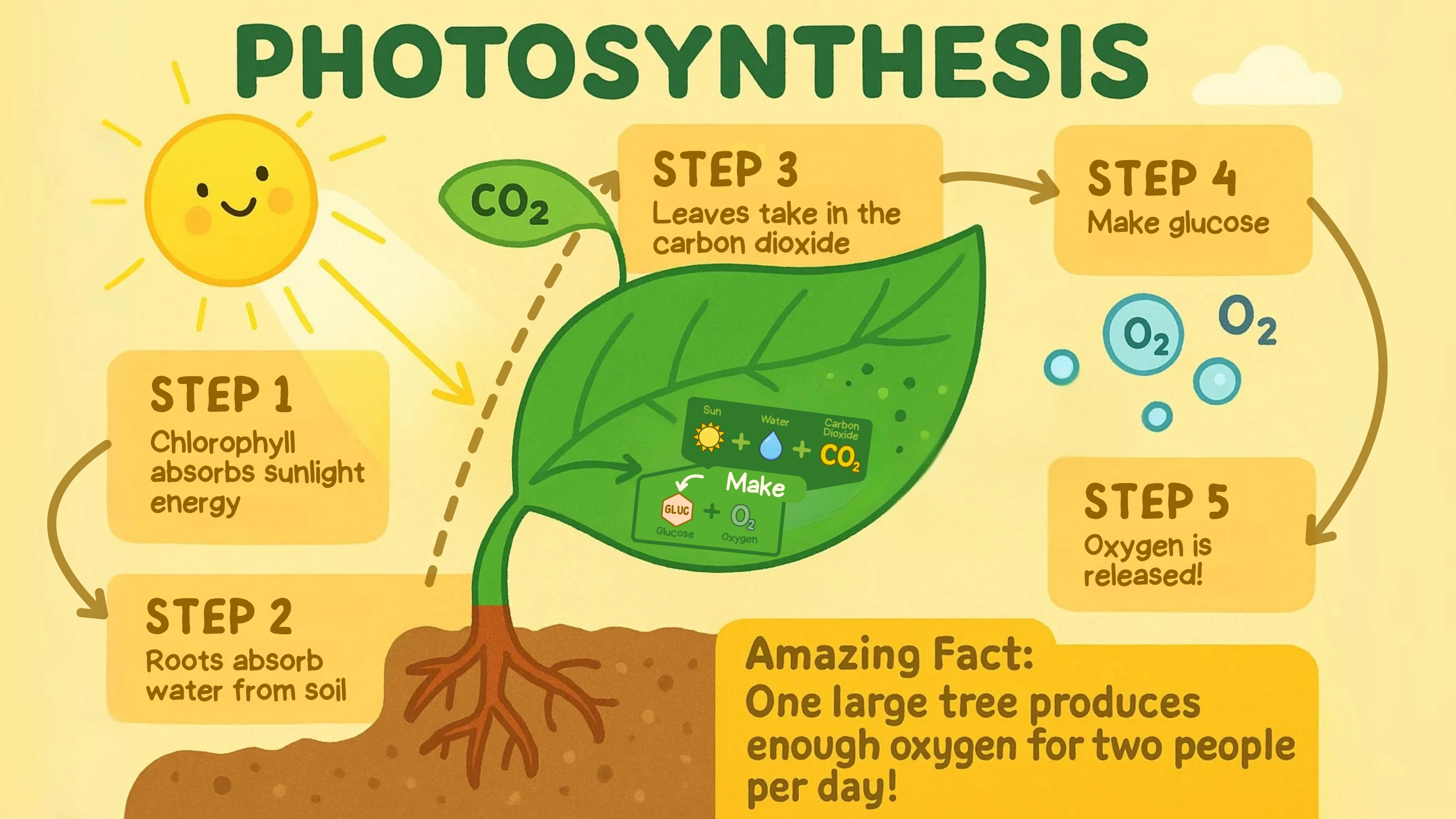
Photosynthesis is like following a recipe, but instead of making cookies, plants make sugar and oxygen! The ingredients are sunlight (energy), water (from roots), and carbon dioxide (from air). The products are glucose (sugar for food) and oxygen (which we breathe)!
Chloroplasts: The Plant's Kitchen
Chloroplasts are tiny green structures inside plant cells where photosynthesis happens. They contain chlorophyll, a green chemical that captures sunlight like a solar panel. Each leaf contains millions of chloroplasts, all working together to make food for the plant!
Why Leaves Are Green
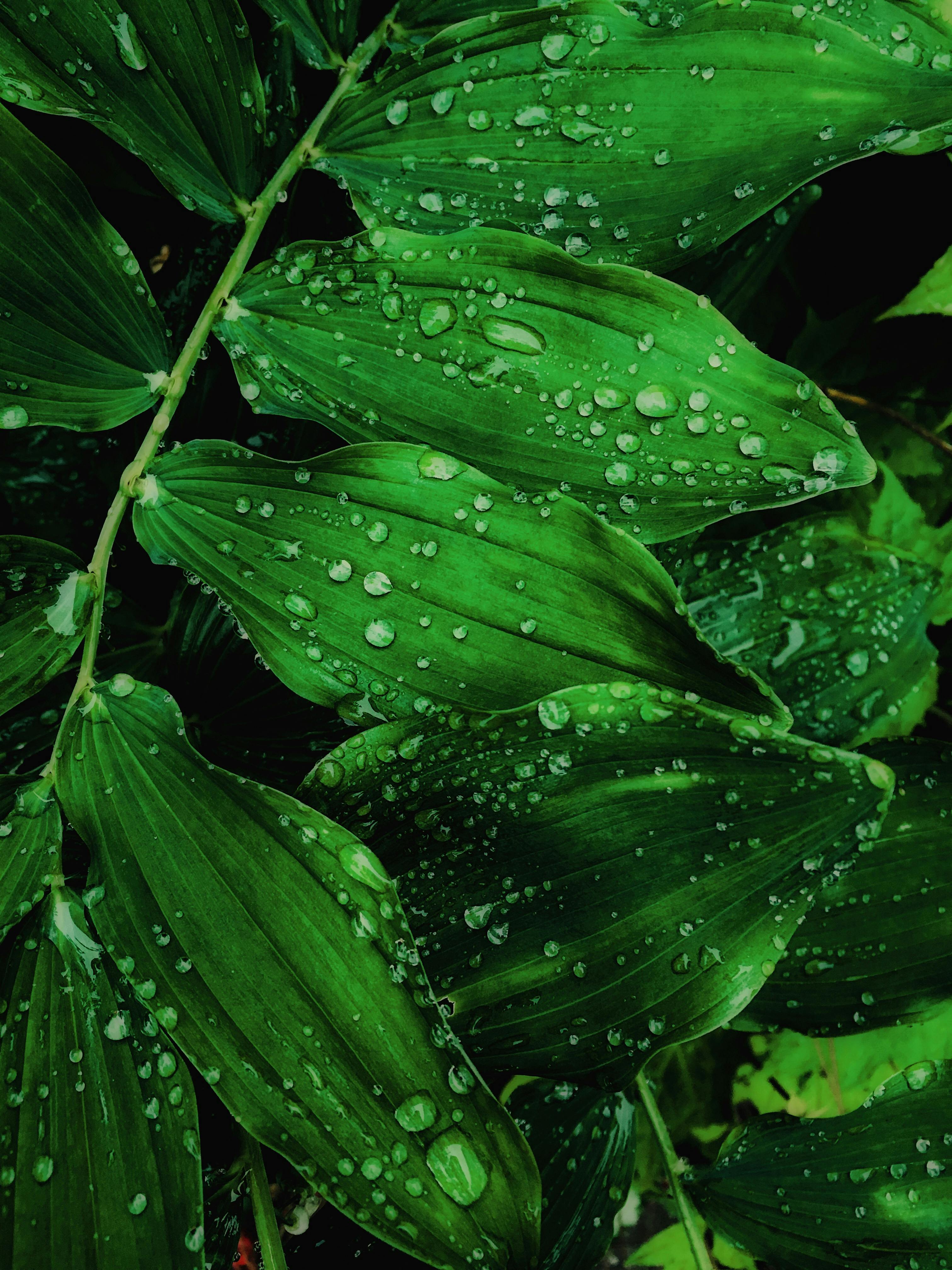
Leaves look green because chlorophyll absorbs red and blue light but reflects green light back to our eyes. In fall, chlorophyll breaks down and we can see other colors that were hiding underneath - that's why leaves turn yellow, orange, and red!
Photosynthesis Powers the World
Photosynthesis is the foundation of almost all life on Earth! Plants use the glucose they make for energy and growth. Animals eat plants (or eat animals that eat plants) to get that stored solar energy. Even fossil fuels like coal and oil come from ancient plants that captured sunlight millions of years ago!
Photosynthesis is nature's way of converting sunlight into life - it's the process that makes our green, oxygen-rich planet possible!