Plant Life Cycles
Follow the amazing journey of plants from tiny seeds to beautiful flowers and discover how they reproduce

Person planting seeds and observing different stages of plant growth
Every plant begins life as a tiny seed, but inside that small package is everything needed to grow into a magnificent tree, beautiful flower, or tasty vegetable! Understanding plant life cycles helps us appreciate the incredible journey from seed to seed that keeps our green world thriving.
The Amazing Seed: Life in a Package
A seed is like nature's perfect survival kit! Inside every seed is a baby plant (called an embryo), stored food to help it grow, and a protective coat to keep it safe. Seeds can wait patiently for months or even years until conditions are just right for growing.
Germination: The Seed Wakes Up!
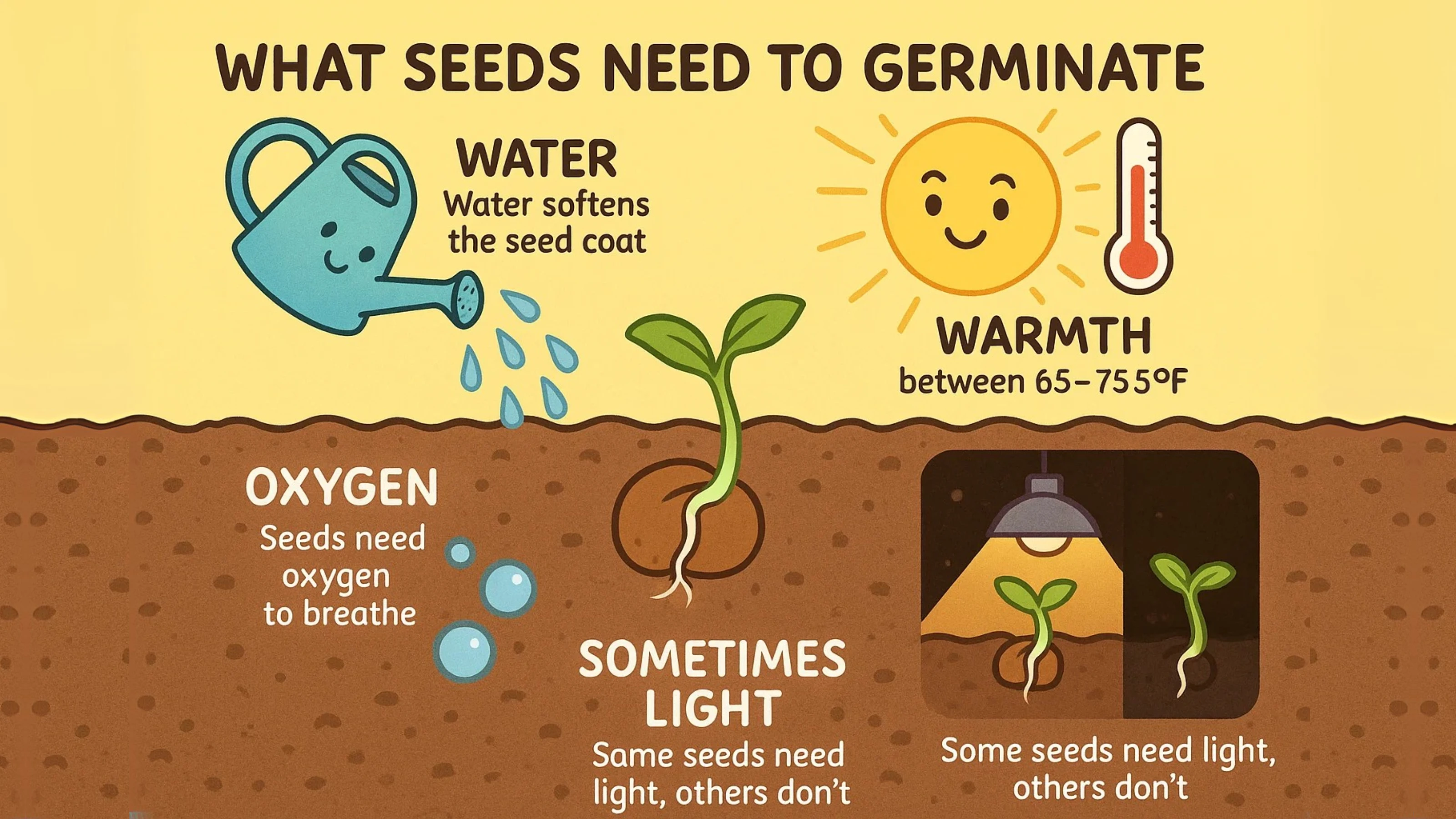
Germination is when the seed "wakes up" and begins growing. The first thing to emerge is usually the root, which grows downward to find water and anchor the plant. Next comes the shoot, which grows upward toward light. This amazing process can happen in just a few days!

Growing Up: From Seedling to Adult Plant
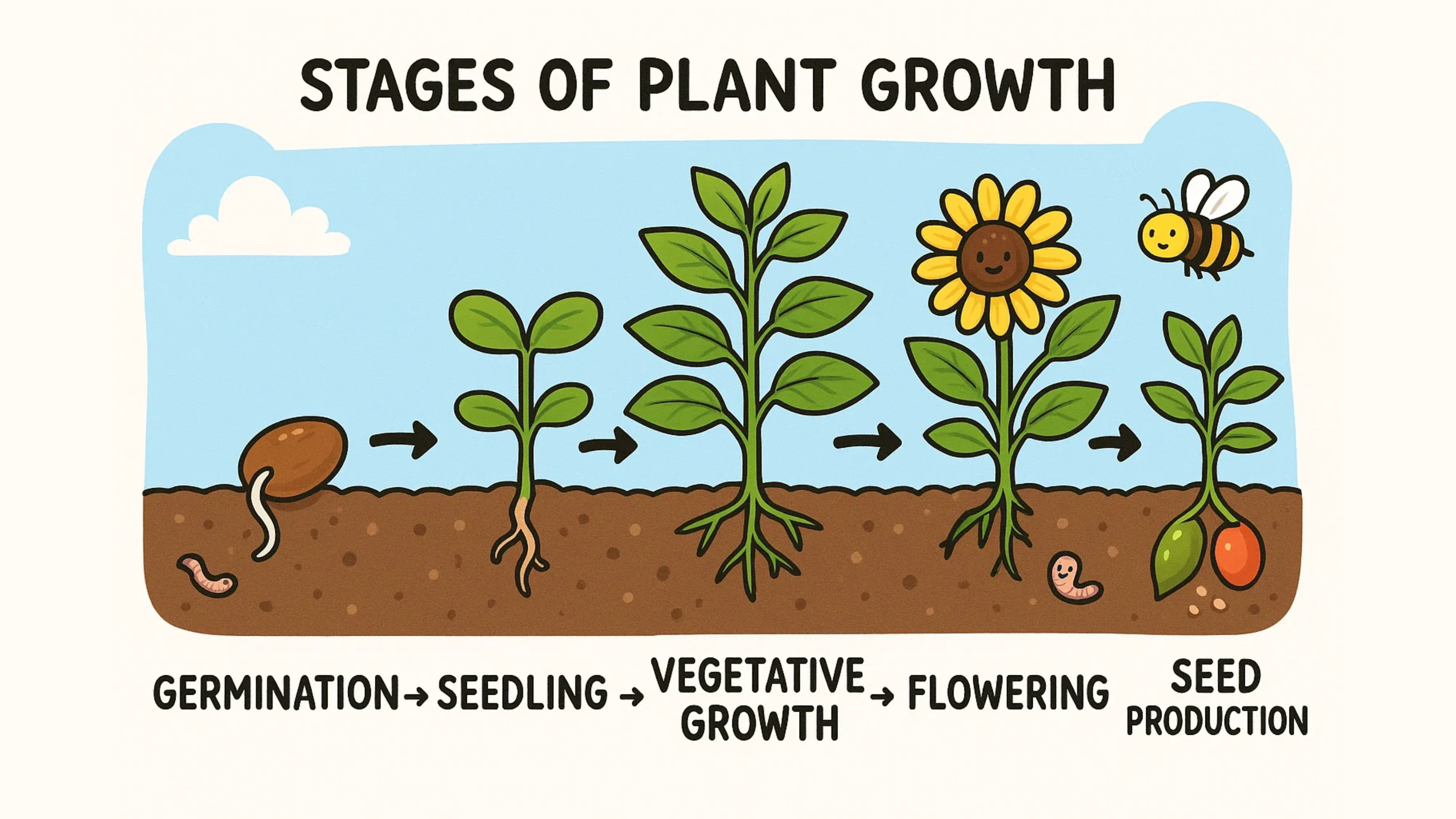
As the plant grows, it develops more roots to gather water and nutrients, and more leaves to capture sunlight for making food. The plant uses photosynthesis to turn sunlight, water, and carbon dioxide into sugar - it's like having its own food factory!
Flowering and Making New Seeds
When a plant is mature, it produces flowers to make new seeds. Flowers aren't just beautiful - they're reproduction centers! Pollen from one flower must reach another flower (with help from bees, wind, or other pollinators) to create new seeds. This process is called pollination.
Understanding plant life cycles helps us become better gardeners and appreciate how all plants, from giant redwoods to tiny wildflowers, follow this amazing pattern of growth and renewal!