Reptiles
Learn about reptile characteristics, diversity, and how these scaly animals have adapted to life on land

Child safely observing reptiles at a zoo
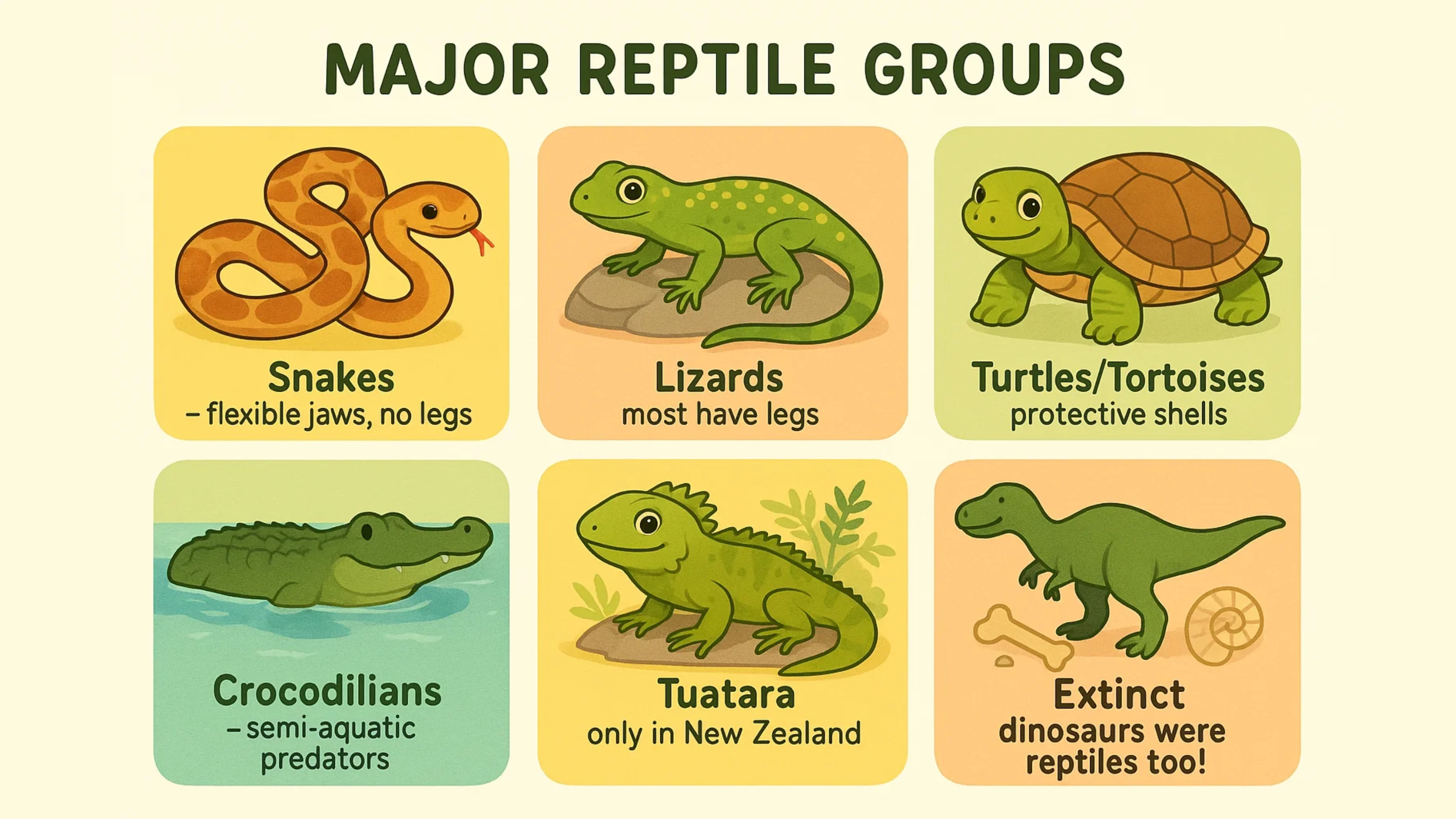
Snakes, lizards, turtles, and crocodiles might seem very different, but they're all reptiles - a fascinating group of animals that have been around since the time of dinosaurs! These scaly survivors have mastered the art of living on land while being cold-blooded.
What Makes a Reptile a Reptile?
All reptiles share important characteristics that make them unique. They're cold-blooded (their body temperature changes with their environment), have dry, scaly skin, breathe with lungs, and most lay leathery eggs on land. Unlike amphibians, reptiles don't need water to reproduce!
Scales: Nature's Armor
Scales are amazing! They're made of the same material as your fingernails (keratin) and create a waterproof, flexible armor that protects reptiles from injury and prevents them from drying out. As reptiles grow, they shed their skin - snakes shed their entire skin in one piece like taking off a sock!
Cold-Blooded Lifestyle
Being cold-blooded means reptiles can't make their own body heat like mammals and birds do. Instead, they use behavioral thermoregulation - moving to warm or cool places to control their temperature. You'll often see lizards basking in the sun to warm up or hiding in shade to cool down.
Reptile Superpowers
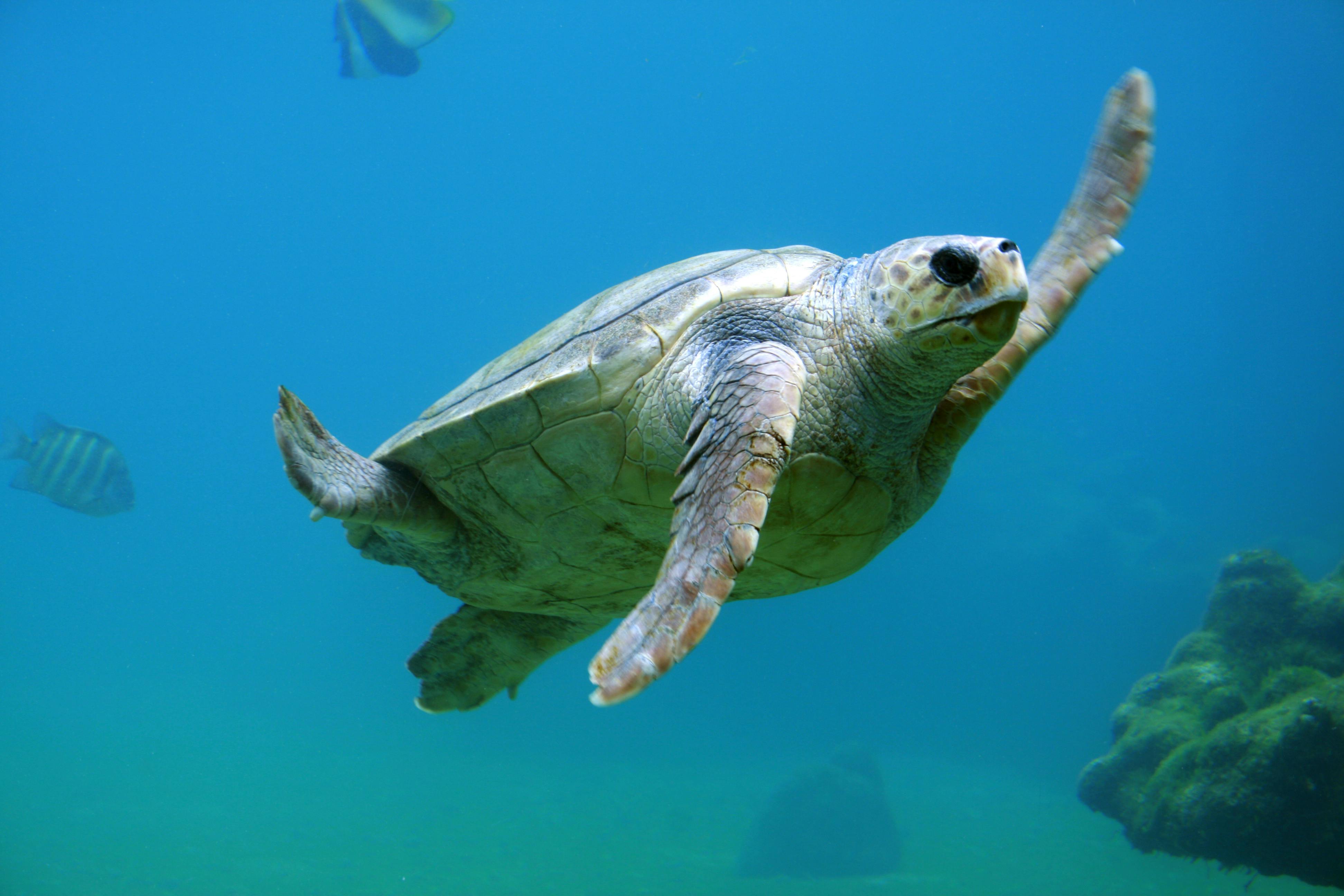
Reptiles have incredible adaptations! Chameleons can change colors and have eyes that move independently. Geckos can walk up glass walls with special toe pads. Snakes can sense heat from warm-blooded prey. Sea turtles can navigate across entire oceans to return to their birthplace!
Reptiles prove that being cold-blooded doesn't mean being unsuccessful - they've thrived for over 300 million years and continue to be important parts of ecosystems worldwide!