Respiratory System

Discover how your respiratory system brings oxygen into your body and removes carbon dioxide waste


Model of human lungs showing the branching airways and air sacs
1/2

Model of human lungs showing the branching airways and air sacs

PHOTOGRAPH BY Aakash Dhage, Unsplash

Every single breath you take is keeping you alive! Your respiratory system is an amazing air processing plant that brings life-giving oxygen into your body and removes waste carbon dioxide. You breathe about 20,000 times per day without even thinking about it!

The Journey of Air Through Your Body

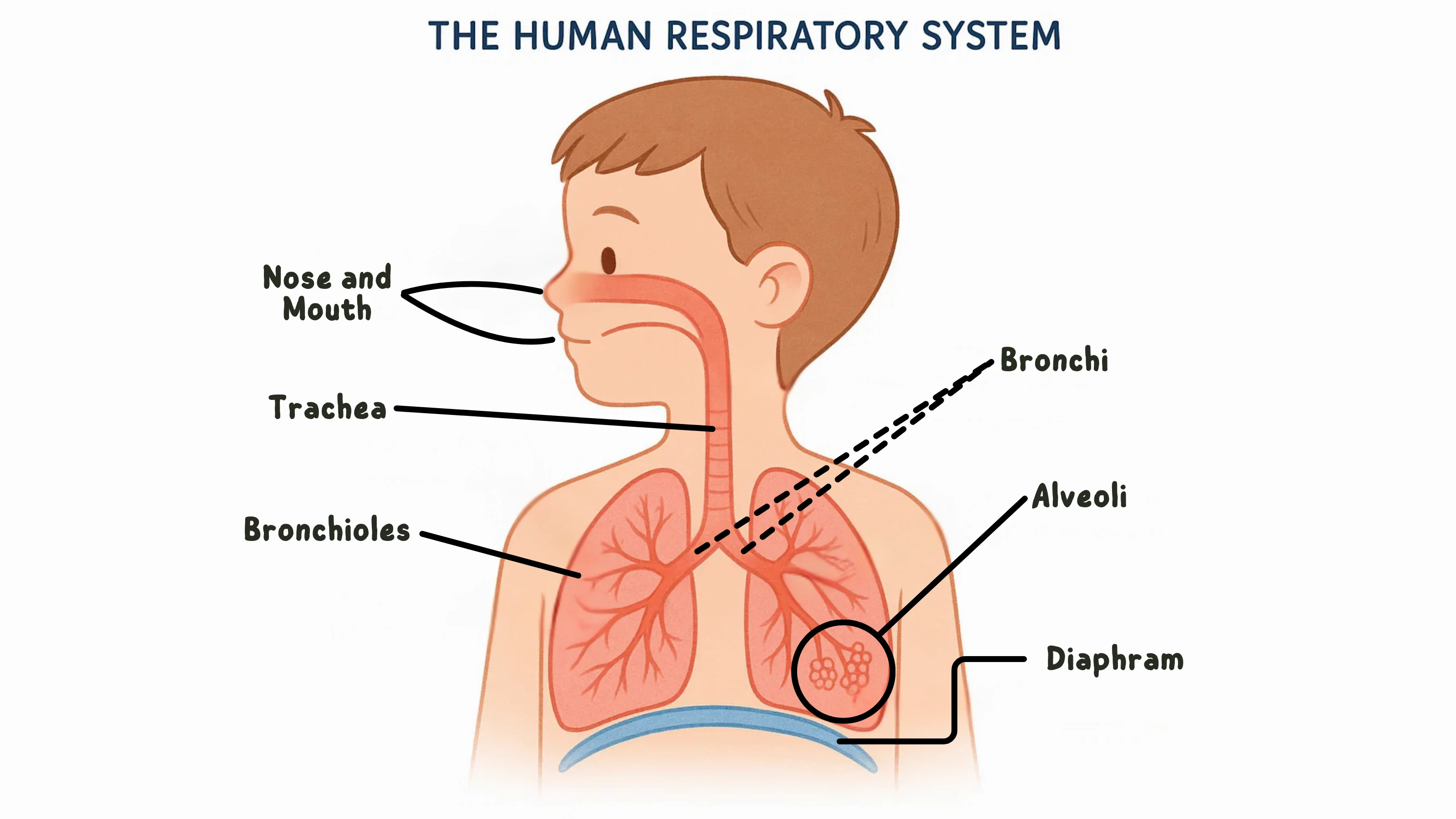
When you breathe in, air travels through your nose or mouth, down your trachea (windpipe), through bronchi (large airways), into smaller bronchioles, and finally reaches tiny alveoli (air sacs) in your lungs where the magic of gas exchange happens!
RESPIRATORY SYSTEM PARTS
NOSE/MOUTH: Entry points that filter, warm, and moisten air
TRACHEA: Windpipe that carries air to and from lungs
BRONCHI: Main airways that branch into each lung
BRONCHIOLES: Smaller airways that lead to air sacs
ALVEOLI: Tiny air sacs where oxygen enters blood
DIAPHRAGM: Main breathing muscle that moves up and down
Info box image

Respiratory System Diagram

Your Amazing Lungs

Your lungs are like biological balloons filled with millions of tiny air sacs called alveoli. If you could spread out all the alveoli in your lungs, they would cover a tennis court! These tiny sacs are surrounded by blood vessels where oxygen jumps from air into your blood.

LUNG FACTS THAT WILL BLOW YOU AWAY
You have about 300 million alveoli in each lung
Your lungs can hold about 6 liters of air when fully expanded
The total surface area of your lungs is about 70 square meters
You breathe in and out about 20,000 times per day
Your left lung is slightly smaller than your right to make room for your heart
Adults breathe about 12-20 times per minute at rest

The Diaphragm: Your Main Breathing Muscle

Your diaphragm is a dome-shaped muscle under your lungs that does most of the work of breathing. When it contracts and moves down, it creates space for your lungs to expand and suck in air. When it relaxes and moves up, it pushes air out of your lungs.

Gas Exchange: The Oxygen-Carbon Dioxide Trade

The real magic happens in the alveoli where gas exchange occurs! Oxygen from the air you breathe passes through the thin walls of alveoli into tiny blood vessels called capillaries. At the same time, carbon dioxide waste from your blood passes into the alveoli to be breathed out. It's like a microscopic trading post!

RESPIRATORY SYSTEM ACTIVITIES
Practice deep breathing and notice how your chest and belly move
Time how long you can hold your breath (safely!)
Feel how your ribcage expands when you take a deep breath
Try breathing through your nose vs. mouth and notice differences

KEEPING YOUR RESPIRATORY SYSTEM HEALTHY
AVOID SMOKING: Protects delicate lung tissue from damage
EXERCISE REGULARLY: Strengthens breathing muscles and improves lung capacity
BREATHE CLEAN AIR: Stay away from pollution and harmful chemicals
PRACTICE GOOD POSTURE: Allows lungs to expand fully
STAY HYDRATED: Keeps mucus thin and easier to clear

BREATHING AND EMOTIONS
STRESS: Can make breathing shallow and rapid
RELAXATION: Deep, slow breathing can calm your mind
MEDITATION: Focuses on breathing to reduce anxiety
EXERCISE: Improves both physical and mental health through better breathing
SINGING: Great exercise for respiratory muscles and lung capacity

AMAZING RESPIRATORY ADAPTATIONS
HIGH ALTITUDE: People who live at high elevations develop larger lung capacity
ATHLETES: Often have exceptional lung capacity from training
UNDERWATER: Some people can hold their breath for many minutes
COLD AIR: Your nose warms air from -40°F to 98°F before it reaches your lungs
FILTERING: Your nose filters out dust, pollen, and germs from the air

Your respiratory system works perfectly with your circulatory system - together they deliver life-sustaining oxygen to every cell in your body while removing harmful waste!