Acids and Bases
Learn about acids and bases found in your home, understand pH levels, and discover natural indicators

PH strips and indicators
Your house is full of acids and bases! From the lemon juice in your kitchen to the soap in your bathroom, these special chemicals are everywhere. Understanding acids and bases helps explain why some things taste sour, why soap cleans so well, and how your stomach digests food.
What Are Acids and Bases?
Acids are substances that taste sour and can react with metals. Think of lemon juice, vinegar, or orange juice - they all contain acids! Bases are the opposite of acids. They feel slippery and taste bitter (though you should never taste unknown chemicals!). Soap and baking soda are common bases.
The pH Scale: Measuring Acid and Base Strength
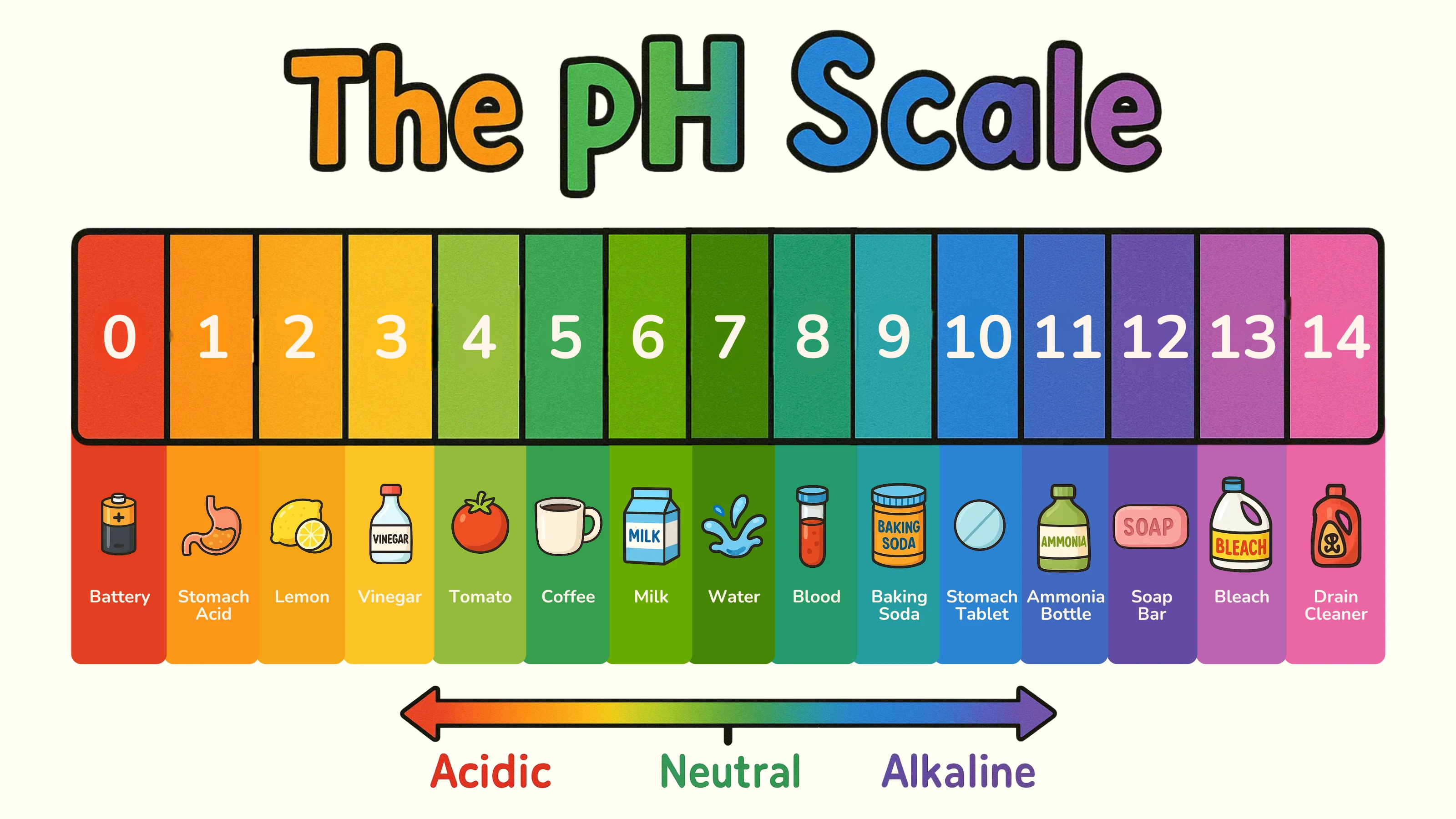
Scientists use the pH scale to measure how acidic or basic something is. The scale goes from 0 to 14. Numbers below 7 are acidic, 7 is neutral (pure water), and numbers above 7 are basic.

Acids and Bases in Your Body
Your body is an amazing chemistry lab! Your stomach produces strong acid to digest food, but your blood must stay slightly basic to keep you healthy. When you get "heartburn," it's because stomach acid went where it shouldn't go!
Natural Indicators: Nature's pH Test
Some plants can tell you if something is acidic or basic! Red cabbage juice is a natural indicator that changes color in acids and bases. In acids, it turns pink or red. In bases, it turns green or blue. It's like nature's own chemistry set!
Understanding acids and bases helps us cook better, clean more effectively, and appreciate the incredible chemistry happening in our bodies every day!