States of Matter (Solids, Liquids, and Gases)
Explore how matter changes between solid, liquid, and gas states through heating and cooling

Ice cubes melting into water showing the change from solid to liquid state
Everything around you - your chair, the air you breathe, even you - is made of matter! But matter isn't always the same. It can exist in three main forms called states: solid, liquid, and gas. The amazing thing is that the same substance can change between all three states!
The Three States of Matter
Think about water - it's the perfect example because you see it in all three states every day! Ice is solid water, liquid water flows from your faucet, and water vapor (steam) rises from hot soup. Same substance, three different forms!
Solids: Particles Packed Tight
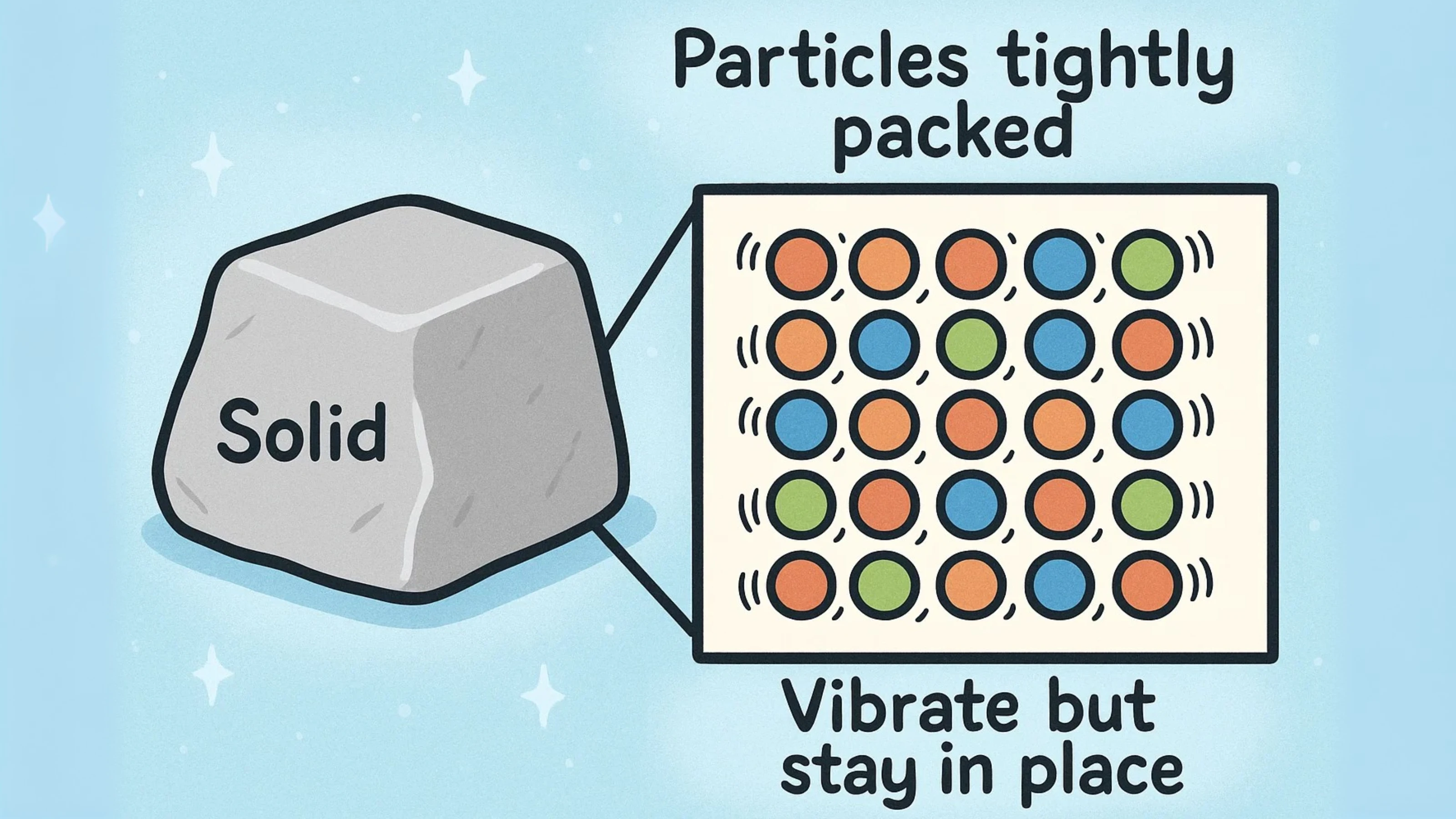
In solids, tiny particles are packed closely together and can barely move. They vibrate in place but stay in fixed positions, which is why solids keep their shape. A rock will always look like a rock unless something forces it to change!
Liquids: Particles That Flow
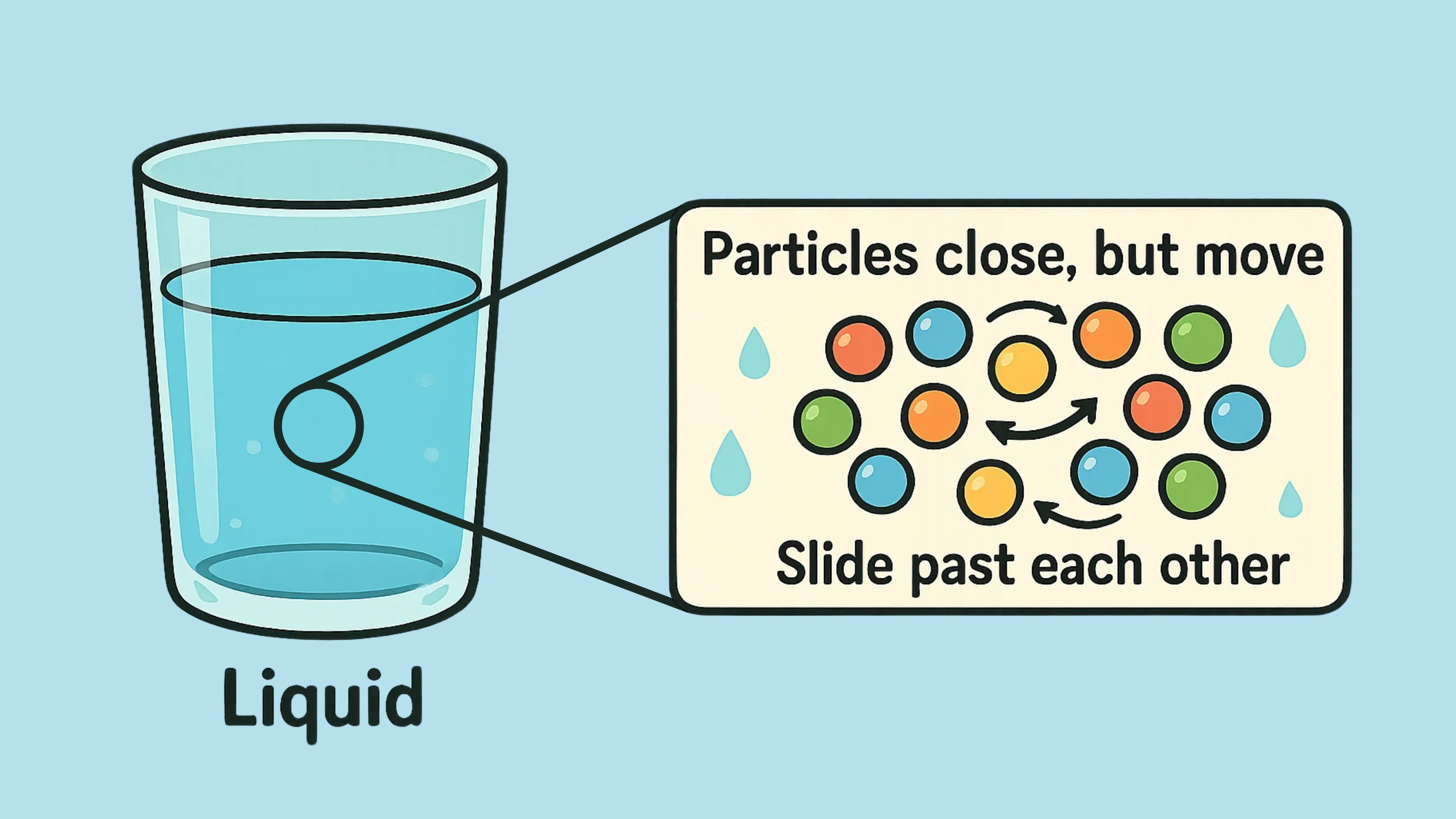
In liquids, particles are still close together but can slide past each other. This is why liquids can flow and take the shape of their container. Pour water into a round bowl, and it becomes round. Pour it into a square container, and it becomes square!

Gases: Particles That Spread Out
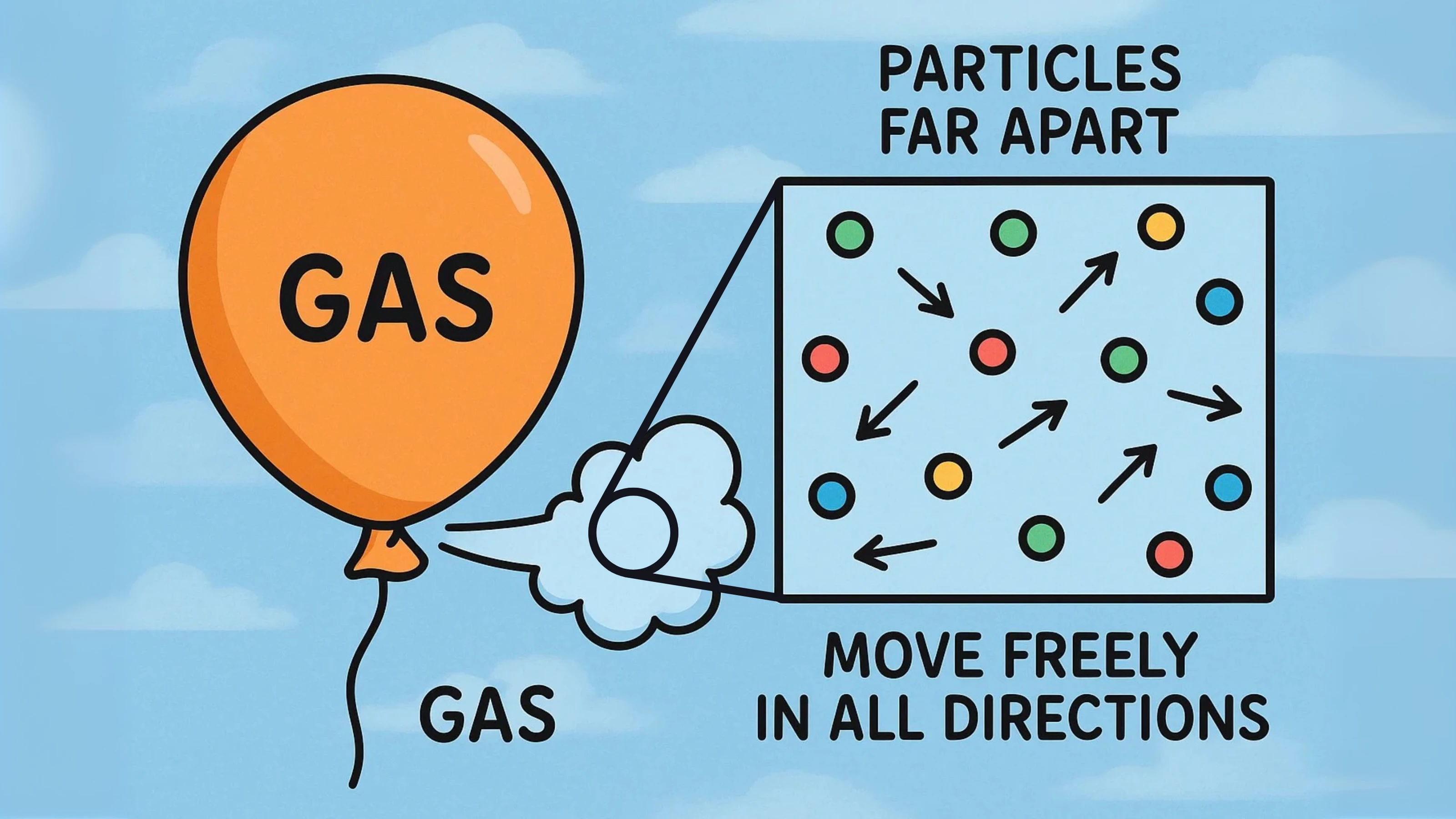
In gases, particles move around freely and spread out to fill any space available. That's why when you open a bottle of perfume, you can smell it across the room - the gas particles spread everywhere!
The coolest part? You can change matter from one state to another just by heating it up or cooling it down!