The mountains, valleys, and coastlines around us might look permanent, but they're constantly changing! Weathering and erosion are nature's sculptors, slowly breaking down rocks and reshaping Earth's surface. These processes have carved the Grand Canyon, created sandy beaches, and built fertile soil for plants to grow.
Weathering: Breaking Rocks Apart
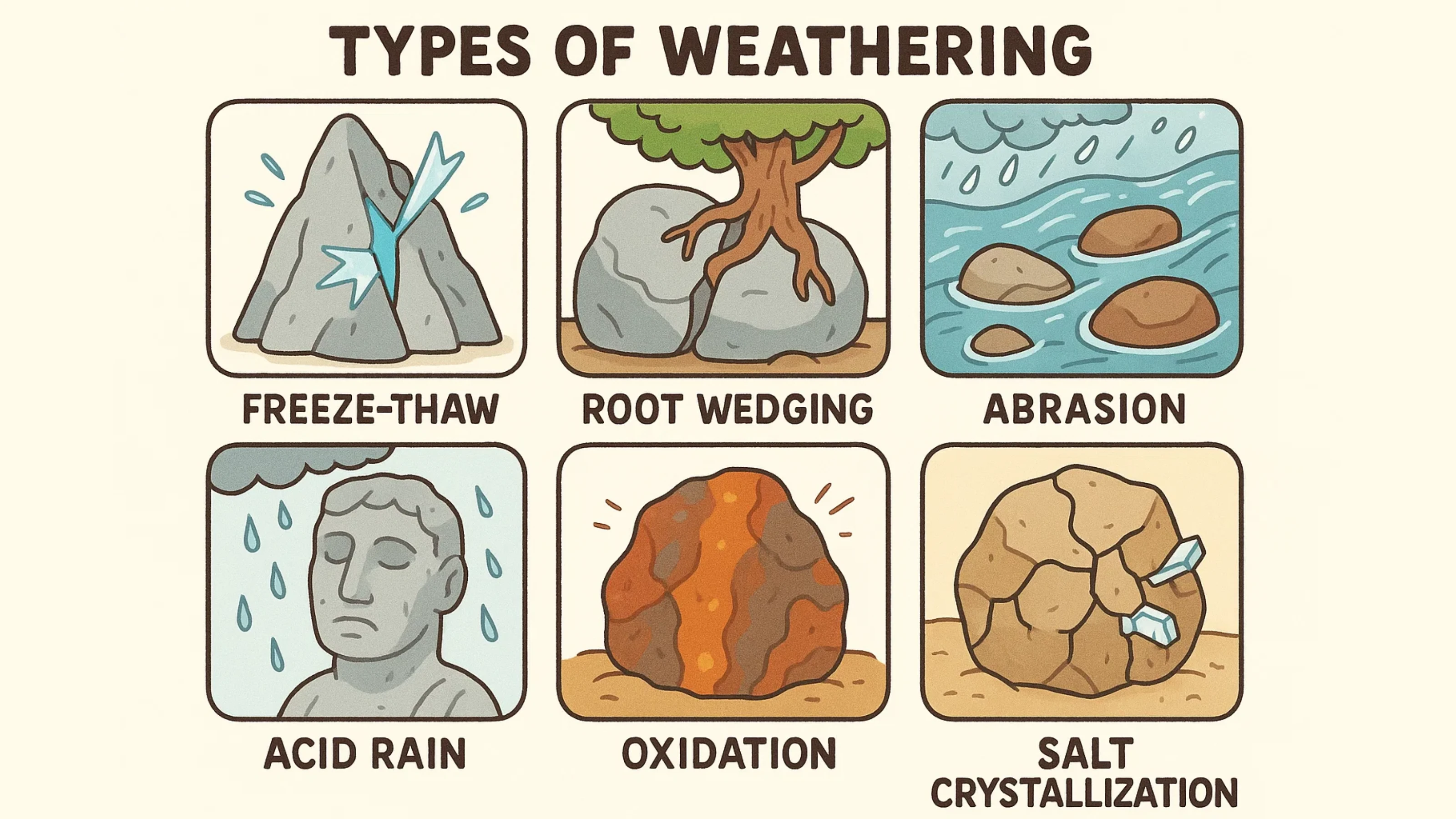
Weathering is the process that breaks rocks into smaller pieces without moving them. It happens in two main ways: Physical weathering physically breaks rocks apart (like water freezing in cracks), while chemical weathering changes the rock's chemical composition (like acid rain dissolving limestone).
FREEZE-THAW: Water freezes in rock cracks, expands, and splits the rock
ROOT WEDGING: Plant roots grow in cracks and gradually break rocks apart
ABRASION: Rocks rubbing against each other and wearing down
ACID RAIN: Chemical reactions that dissolve certain types of rocks
OXIDATION: Oxygen causing metals in rocks to rust and weaken
SALT CRYSTALLIZATION: Salt crystals growing in rock pores and causing cracks
Erosion: Moving the Pieces
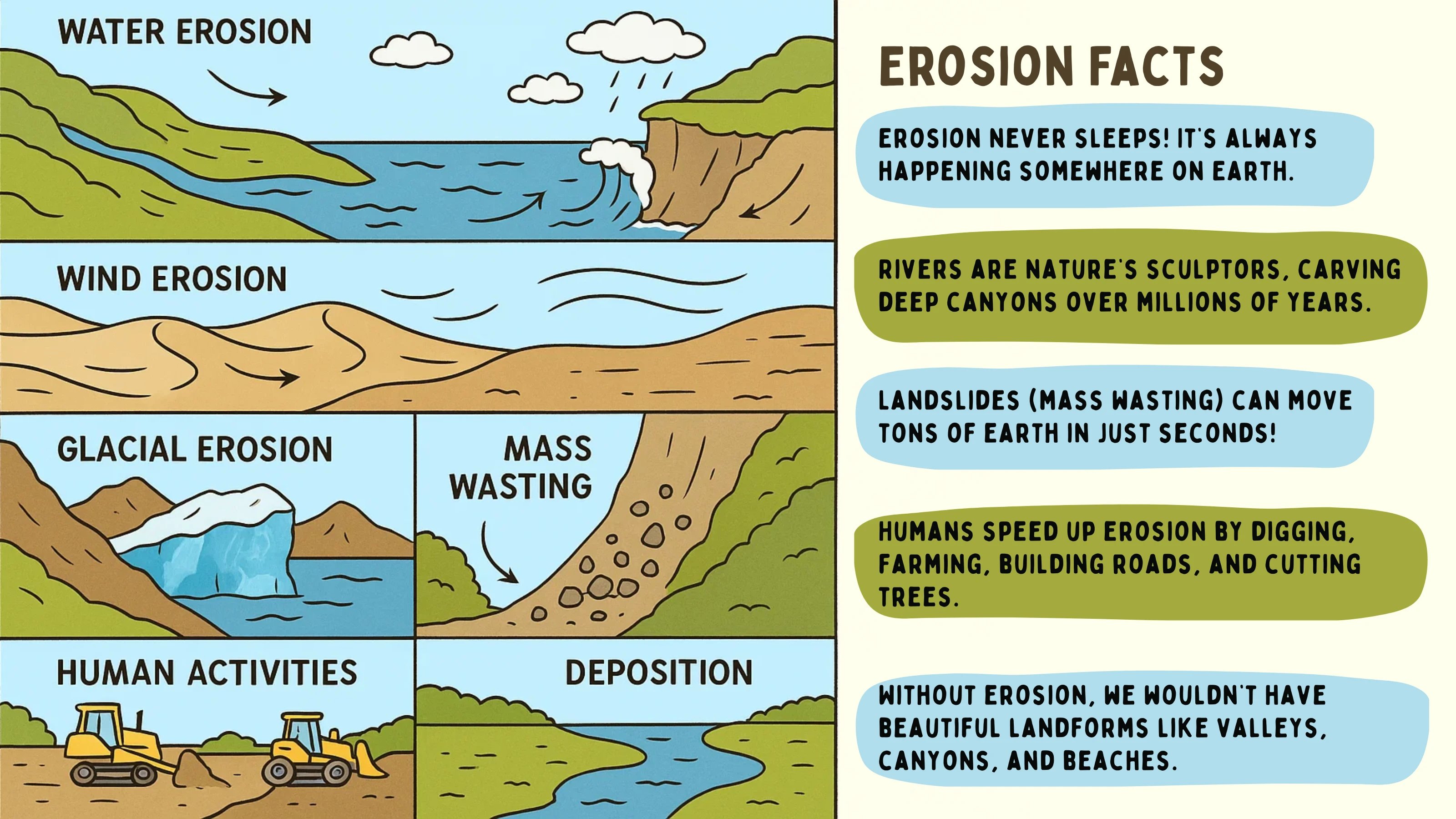
Erosion is the process that picks up weathered rock pieces and moves them to new locations. The main agents of erosion are water (rivers, rain, ocean waves), wind, ice (glaciers), and gravity (landslides). These forces can move everything from tiny sand grains to massive boulders!
WATER EROSION:
Rivers carve valleys, waves shape coastlines, rain washes away soil
WIND EROSION:
Creates sand dunes, polishes rocks, moves dust across continents
GLACIAL EROSION:
Ice sheets carve deep valleys and transport huge boulders
MASS WASTING:
Gravity causing landslides, rockfalls, and mudflows
HUMAN ACTIVITIES:
Construction, farming, and mining can speed up erosion
DEPOSITION:
Eventually, eroded materials settle in new locations
How Landscapes Are Shaped
The incredible landscapes we see today were shaped by millions of years of weathering and erosion! The Grand Canyon was carved by the Colorado River cutting through rock layers. Beaches are made from rocks that were weathered and eroded from distant mountains. Soil forms when rocks weather and mix with organic matter.
The Rock Cycle Connection
Weathering and erosion are important parts of the rock cycle! They break down existing rocks and create the sediments that eventually become new sedimentary rocks. This process has been recycling Earth's rocky materials for billions of years, constantly creating new landscapes.
Observe how water flows and erodes soil in your yard after rain
Look for examples of weathering on buildings, statues, or rocks
Create erosion patterns by pouring water on sand or soil
Find rocks that show signs of weathering (cracks, smooth surfaces, color changes)
CLIMATE: Hot, wet climates speed up chemical weathering
ROCK TYPE: Some rocks resist weathering better than others
SLOPE: Steep slopes increase erosion rates
VEGETATION: Plants can slow erosion but also cause root weathering
TIME: Most landscape changes happen very slowly over thousands of years
GRAND CANYON: Carved by the Colorado River over millions of years
ARCHES NATIONAL PARK: Wind and water carved natural stone arches
NIAGARA FALLS: Water erosion continues to move the falls upstream
COASTAL CLIFFS: Ocean waves constantly erode rocky coastlines
BADLANDS: Wind and water created dramatic eroded landscapes
PLANT COVER: Grass and trees hold soil in place with their roots
TERRACING: Creating steps on hillsides to slow water flow
WINDBREAKS: Rows of trees that reduce wind erosion
PROPER FARMING: Techniques that protect soil from erosion
RETAINING WALLS: Structures that prevent landslides and soil loss
SOIL LOSS: Farmland losing fertile topsoil needed for crops
COASTAL EROSION: Ocean waves threatening buildings and beaches
LANDSLIDES: Sudden erosion that can damage property and hurt people
RIVER FLOODING: Erosion can change river courses and cause floods
DUST STORMS: Wind erosion creating health hazards and poor visibility
Weathering and erosion remind us that Earth is constantly changing - the solid ground beneath our feet is slowly but surely being reshaped by the persistent forces of nature!