Floods happen when water overflows onto land that's normally dry. They're one of the most common and dangerous natural disasters, but they're also a natural part of the water cycle that has shaped Earth's landscapes for millions of years. Understanding floods helps us stay safe and appreciate water's powerful role in our environment.
What Causes Floods?
Floods occur when there's more water than the land can absorb or waterways can carry. This can happen from heavy rainfall, melting snow, dam failures, storm surge from hurricanes, or when rivers and streams overflow their banks. Sometimes multiple causes combine to create major flooding.
FLASH FLOODS: Sudden flooding that occurs within hours of heavy rain
RIVER FLOODS: Gradual overflow when rivers exceed their capacity
COASTAL FLOODS: Ocean water pushed inland by storms or high tides
URBAN FLOODS: City flooding when storm drains can't handle rainfall
MUDFLOWS: Fast-moving floods mixed with debris and soil
ICE JAM FLOODS: River ice blocking normal water flow
Flash Floods: The Most Dangerous Type
Flash floods are the deadliest type of flood because they happen so quickly! They can occur within minutes of heavy rainfall, especially in areas with steep terrain, poor drainage, or impermeable surfaces like concrete. Just 6 inches of moving water can knock you down, and 2 feet can float a car!
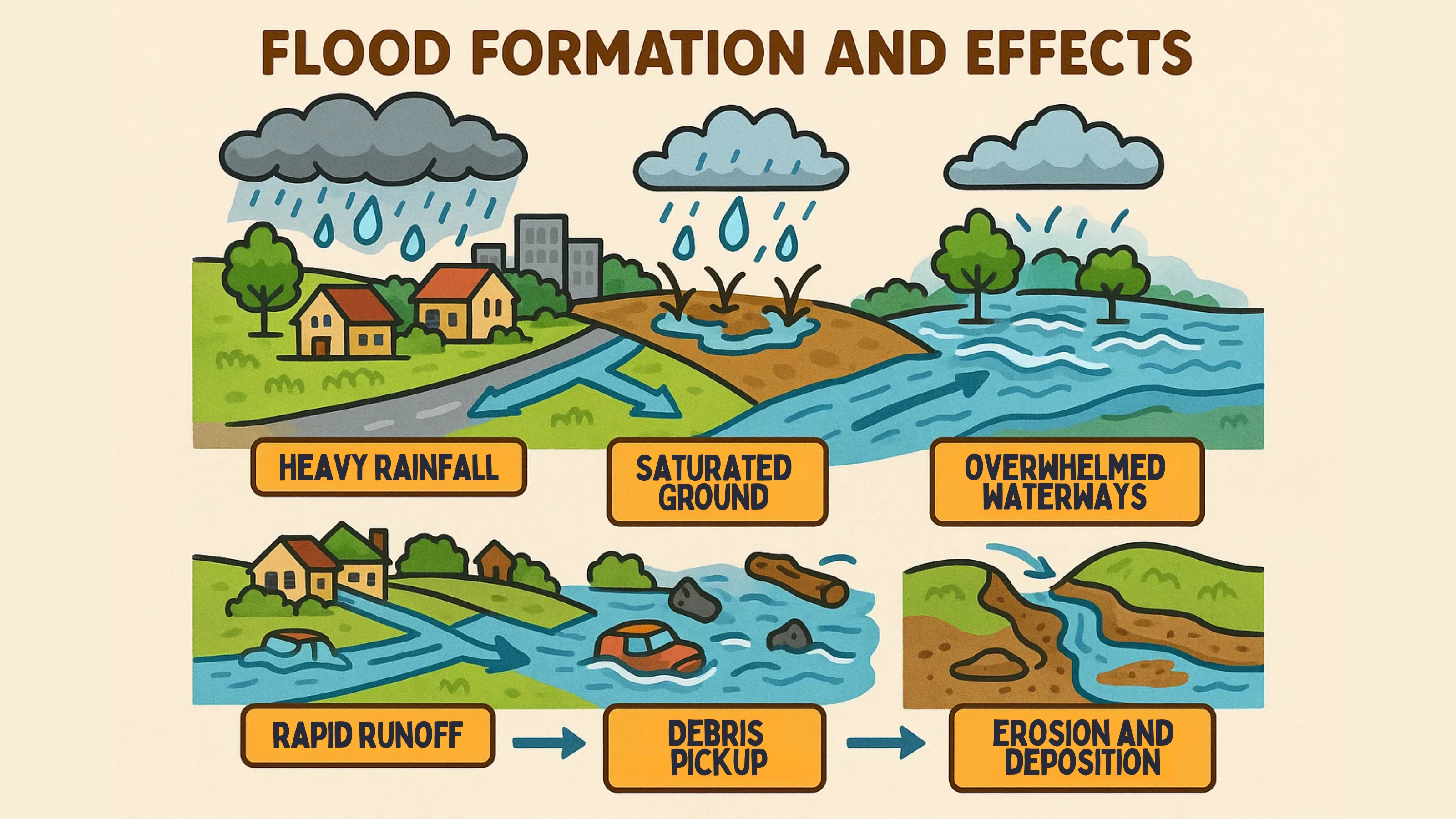
HEAVY RAINFALL:
More rain than soil and storm systems can handle
SATURATED GROUND:
Soil that can't absorb more water
RAPID RUNOFF:
Water flowing quickly across surfaces toward low areas
OVERWHELMED WATERWAYS:
Streams and rivers exceeding their capacity
DEBRIS PICKUP:
Floodwater collects rocks, trees, cars, and buildings
EROSION AND DEPOSITION:
Water carves new channels and deposits sediment
Floodplains: Nature's Overflow Areas
Floodplains are flat areas next to rivers that naturally flood during high water periods. These areas are incredibly fertile because floods deposit nutrient-rich sediment, making them excellent for farming. However, when people build in floodplains, floods can cause serious property damage.
Flood Benefits and Challenges
While floods can be dangerous and destructive, they also provide benefits! Floods replenish groundwater, deposit fertile soil, recharge wetlands, and transport nutrients downstream. Many ecosystems depend on periodic flooding to stay healthy. The challenge is learning to live safely with flood cycles.
Learn about flood risks in your area
Practice family evacuation plans
Identify higher ground escape routes
Create an emergency kit with water, food, and supplies
TURN AROUND, DON'T DROWN: Never drive through flooded roads
GET TO HIGH GROUND: Move to higher elevations immediately
STAY OUT OF FLOODWATER: It may contain sewage, chemicals, or debris
LISTEN TO WARNINGS: Pay attention to weather alerts and evacuation orders
NEVER WALK IN MOVING WATER: 6 inches of moving water can knock you down
AVOID ELECTRICAL HAZARDS: Stay away from downed power lines in water
WEATHER MONITORING: Meteorologists track rainfall and river levels
FLOOD GAUGES: Measure water levels in rivers and streams
DOPPLER RADAR: Shows rainfall intensity and movement
FLOOD WATCHES: Flooding is possible - stay alert
FLOOD WARNINGS: Flooding is occurring or imminent - take action immediately
EMERGENCY ALERT SYSTEMS: Broadcast urgent flood warnings to communities
URBANIZATION: Concrete and pavement increase runoff speed
DEFORESTATION: Removing trees reduces natural water absorption
WETLAND LOSS: Wetlands naturally absorb and slow floodwater
CHANNELIZATION: Straightening rivers can increase flood speed
CLIMATE CHANGE: May increase frequency and intensity of extreme rainfall
FLOOD CONTROL: Dams, levees, and detention ponds help manage flooding
INSURANCE: Flood insurance covers water damage (regular insurance doesn't)
BUILDING CODES: Elevating structures in flood-prone areas
NATURAL SOLUTIONS: Restoring wetlands and floodplains for protection
EARLY WARNING SYSTEMS: Technology that alerts communities to flood threats
COMMUNITY PLANNING: Limiting development in high-risk flood areas
EMERGENCY SUPPLIES: Food, water, medicine, and communication devices
ANCIENT CIVILIZATIONS: Egypt, Mesopotamia, and China developed around flooding rivers
BENEFICIAL FLOODS: Annual Nile floods supported Egyptian agriculture for thousands of years
GREAT FLOOD STORIES: Many cultures have legends about massive ancient floods
MODERN FLOOD CONTROL: Engineering projects like the Netherlands' flood barriers
MEASURING FLOODS: "100-year flood" means 1% chance of occurring in any given year
FLOOD RECORDS: Historical data helps predict future flood risks
Understanding floods helps us respect water's power while learning to live safely in our dynamic, water-shaped world - floods remind us that water is both essential for life and a force that demands our careful attention!