Hurricanes
Discover massive ocean storms with powerful winds, heavy rain, and the famous calm eye in the center
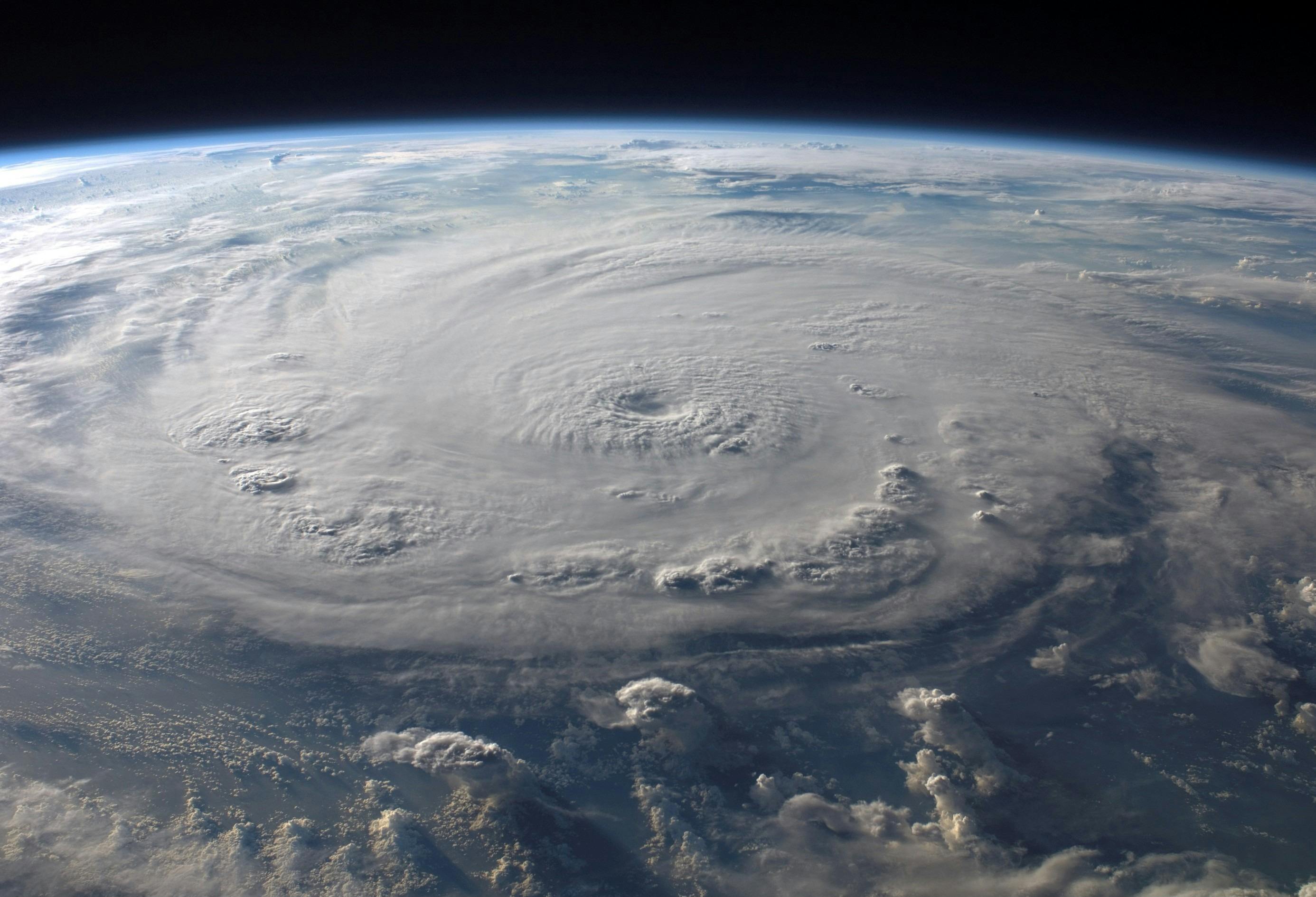
Satellite view of massive hurricane over ocean showing spiral bands and clear eye
Hurricanes are massive rotating storms that form over warm ocean water and can grow larger than entire states! These powerful weather systems bring dangerous winds, flooding rain, and storm surge that can reshape coastlines. Hurricanes are called different names around the world - typhoons in the Pacific and cyclones in the Indian Ocean.
Hurricane Structure and Formation
Hurricanes need warm ocean water (at least 80°F) to form and grow stronger. As warm, moist air rises from the ocean surface, it creates an area of low pressure that starts spinning due to Earth's rotation. The Coriolis effect makes the storm rotate counterclockwise in the Northern Hemisphere.
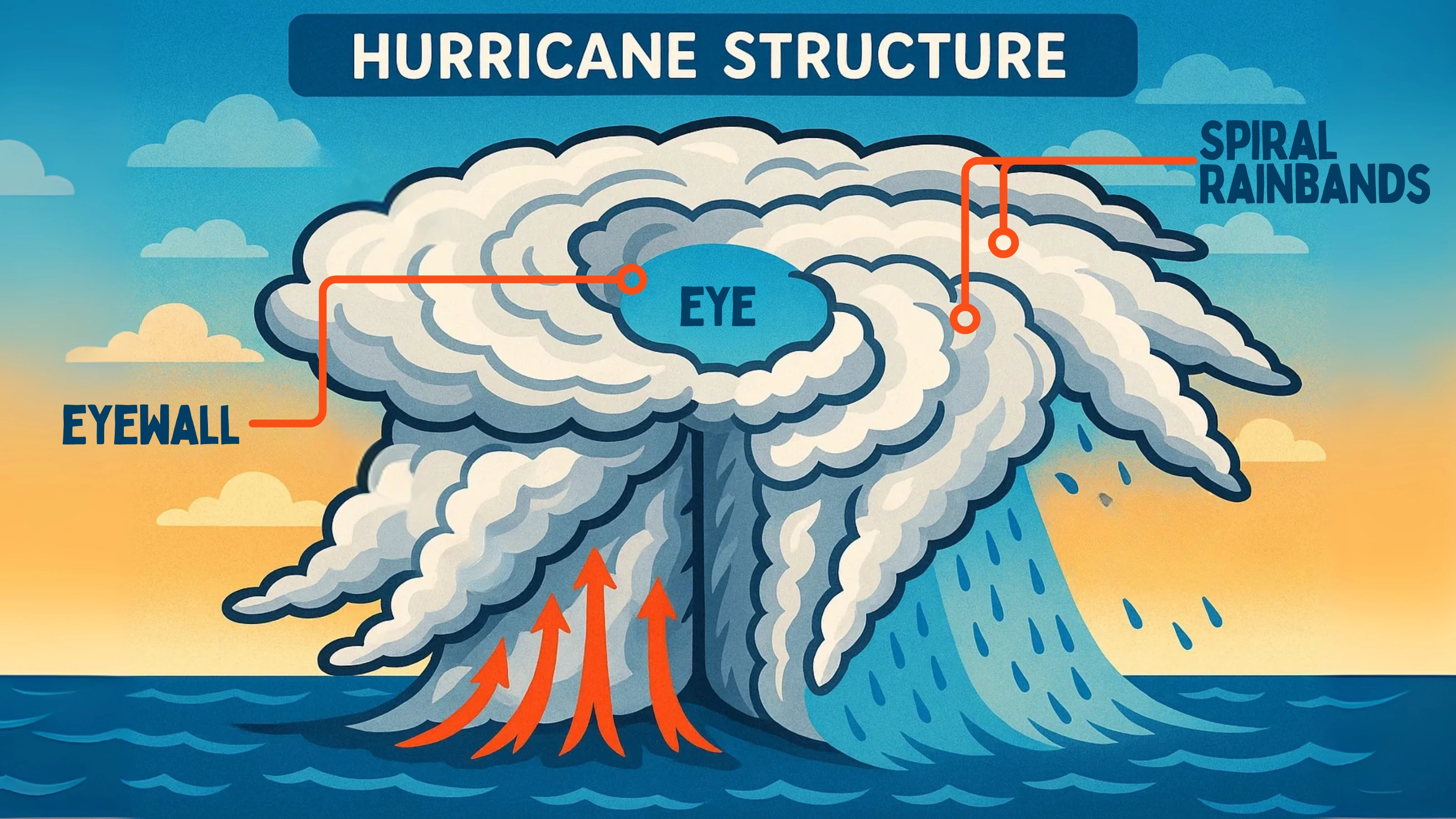 Hurricane structure diagram showing eye, eyewall, and spiral rain bands
The most amazing part of a hurricane is its eye - a calm area in the center with light winds and sometimes clear skies! The eyewall surrounding the eye contains the strongest winds and heaviest rain. Spiral rain bands extend outward from the center, bringing wind and rain for hundreds of miles.

Hurricane Dangers and Safety
The biggest danger from hurricanes isn't always the wind - it's storm surge! Hurricane winds push ocean water toward shore, creating a wall of water that can be 20 feet high and travel miles inland. Storm surge causes most hurricane deaths and can completely flood coastal communities.
Heavy rainfall from hurricanes can cause dangerous flash flooding far from the coast. Rivers and streams can overflow their banks, turning streets into raging rivers. Tornadoes often form in hurricane rain bands, creating additional dangers.
Hurricanes show us both the destructive and beneficial power of nature - while they can be extremely dangerous, they also play important roles in Earth's weather system and help distribute heat and moisture around our planet!