Layers of Earth

Take a journey to the center of Earth and discover the different layers that make up our planet


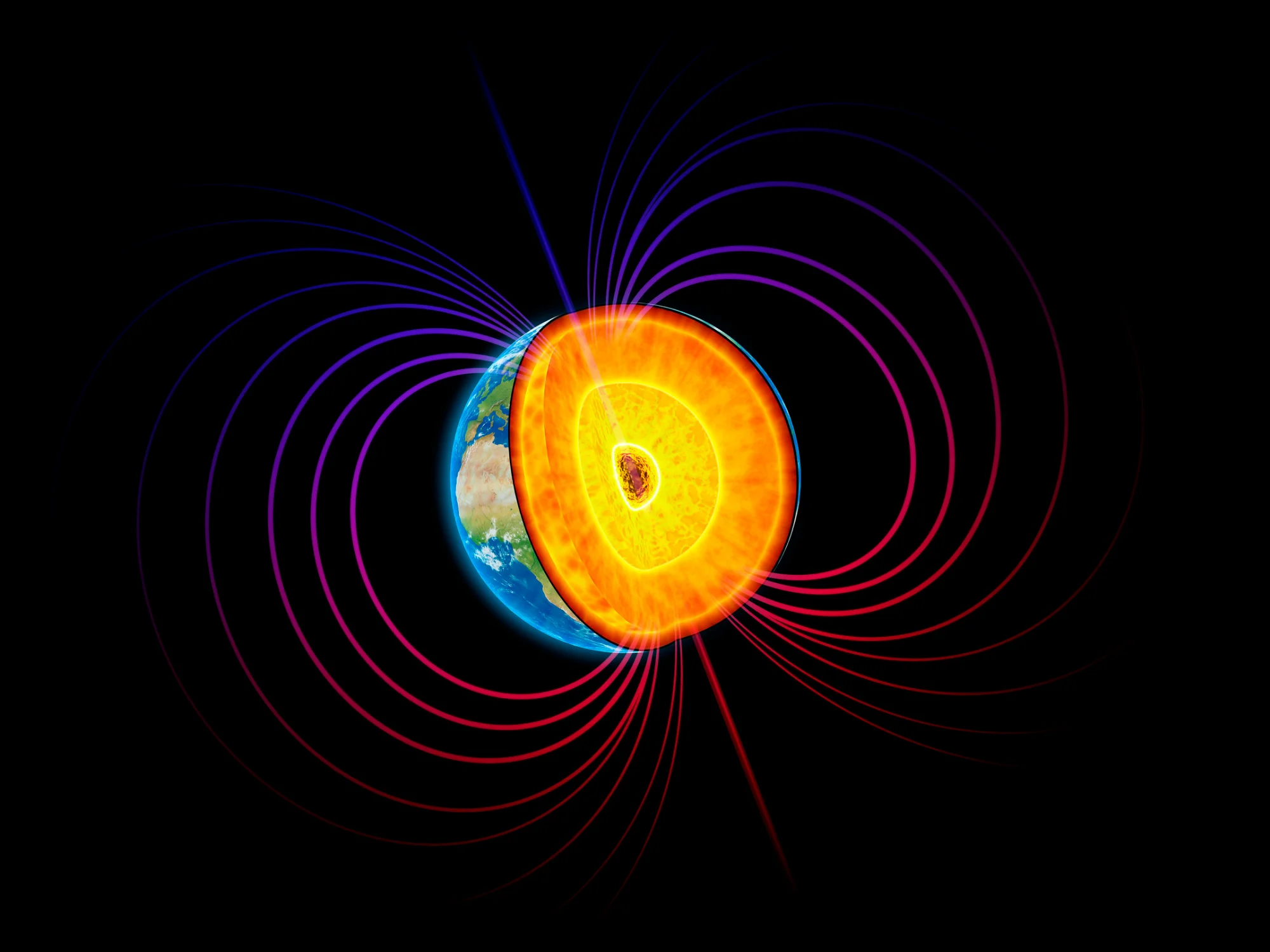
Cutaway diagram of Earth revealing crust, mantle, outer core, and inner core
1/2

Cutaway diagram of Earth revealing crust, mantle, outer core, and inner core

PHOTOGRAPH BY Merikanto, Wikimedia Commons

If you could dig a hole straight down through Earth, you'd discover that our planet is like a giant jawbreaker candy with different layers! Earth has four main layers: the thin crust we live on, the hot mantle, the liquid outer core, and the solid inner core. Each layer has amazing properties and plays a crucial role in making Earth the dynamic planet we know.
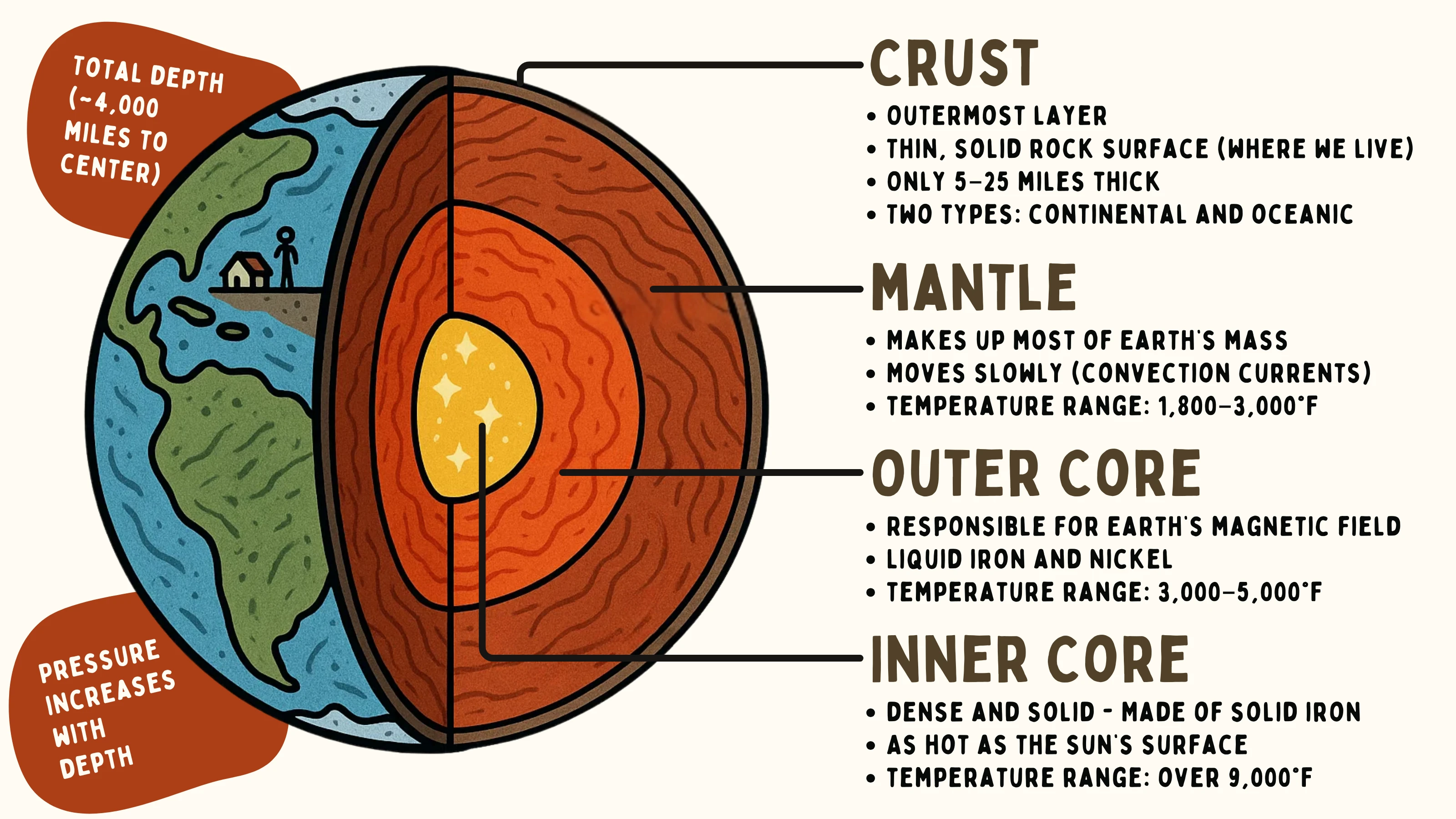
Layers of the Earth Diagram

The Crust: Earth's Thin Skin

The crust is Earth's outermost layer - the solid rock surface we live on! It's surprisingly thin compared to the rest of the planet. If Earth were the size of an apple, the crust would be thinner than the apple's skin! There are two types: continental crust (thicker, under land) and oceanic crust (thinner, under oceans).

EARTH'S CRUST FACTS
Continental crust is 20-40 miles thick
Oceanic crust is only 3-6 miles thick
Made mostly of lighter rocks like granite and basalt
Temperature increases about 75°F for every mile you go down
Contains all the minerals and resources we use
Broken into large pieces called tectonic plates

The Mantle: Earth's Hot Middle Layer

The mantle is Earth's thickest layer, making up about 84% of the planet's volume! It's made of very hot rock that's under so much pressure it flows like thick honey. The mantle reaches temperatures of over 3,000°F - hot enough to melt most rocks we know!

JOURNEY TO EARTH'S CENTER
CRUST: 0-25 miles deep, solid rock, where we live
MANTLE: 25-1,800 miles deep, hot flowing rock, 1,800-3,000°F
OUTER CORE: 1,800-3,200 miles deep, liquid iron and nickel, 3,000-5,000°F
INNER CORE: 3,200-3,960 miles deep, solid iron, over 9,000°F (hotter than the sun's surface!)
TOTAL DISTANCE: About 4,000 miles to the center
PRESSURE: Increases dramatically with depth
Info box image

The Outer Core: Earth's Liquid Metal Layer

The outer core is a layer of liquid iron and nickel that's incredibly hot - between 3,000-5,000°F! This liquid metal layer is constantly moving, creating electric currents that generate Earth's magnetic field. This magnetic field protects us from harmful radiation from space!

The Inner Core: Earth's Solid Heart

At Earth's very center is the inner core - a solid ball of iron and nickel that's hotter than the surface of the sun! Even though it's over 9,000°F, the inner core stays solid because of the enormous pressure from all the layers above it. It's about the size of the moon!

EARTH LAYER ACTIVITIES
Create a model of Earth's layers using different colored clay
Compare Earth's layer thicknesses using a hard-boiled egg
Research how scientists study Earth's interior without digging
Make a scale drawing showing how thin the crust really is

HOW WE KNOW ABOUT EARTH'S INTERIOR
EARTHQUAKE WAVES: Seismic waves travel differently through different materials
VOLCANIC ERUPTIONS: Bring samples of mantle rock to the surface
METEORITES: Space rocks similar to Earth's interior materials
MAGNETIC FIELD: Shows us the liquid outer core exists
PRESSURE EXPERIMENTS: Scientists recreate core conditions in labs

EARTH'S LAYERS IN ACTION
PLATE TECTONICS: Mantle currents move crustal plates
VOLCANISM: Magma from mantle erupts through crust
MAGNETIC FIELD: Outer core generates our protective magnetic shield
EARTHQUAKES: Energy released when crustal plates move
HEAT FLOW: Heat from core and mantle affects surface processes

EARTH COMPARED TO OTHER PLANETS
ROCKY PLANETS: Mercury, Venus, Earth, Mars all have layered structures
GAS GIANTS: Jupiter and Saturn are mostly gas with small solid cores
EARTH'S UNIQUENESS: Only known planet with liquid water and life
MAGNETIC PROTECTION: Earth's magnetic field is stronger than most planets
GEOLOGICAL ACTIVITY: Earth is one of the most geologically active planets

Understanding Earth's layers helps us appreciate that we live on the thin outer shell of an incredibly dynamic planet with a fiery heart that's been beating for over 4.5 billion years!