Every drop of rain, every snowflake, and every hailstone has an amazing story to tell! Precipitation is water that falls from clouds to Earth's surface in different forms. Whether it's gentle rain, fluffy snow, or bouncing hail, all precipitation plays a crucial role in Earth's water cycle and supports all life on our planet.
What Is Precipitation?
Precipitation occurs when water droplets or ice crystals in clouds become too heavy to stay suspended in the air and fall to Earth. The type of precipitation depends on the temperature of the air both in the cloud and between the cloud and the ground.
CLOUD FORMATION: Water vapor condenses into tiny droplets in clouds
DROPLET GROWTH: Small droplets collide and merge into larger drops
GRAVITY TAKES OVER: When droplets become heavy enough, they fall
ATMOSPHERIC JOURNEY: Temperature determines what form reaches the ground
COLLECTION: Precipitation gathers in oceans, rivers, lakes, and groundwater
Rain: The Most Common Precipitation
Rain forms when water droplets in clouds grow large enough to overcome air resistance and fall to Earth. In warm clouds, droplets collide and stick together. In cold clouds, ice crystals grow and then melt as they fall through warmer air near the ground.
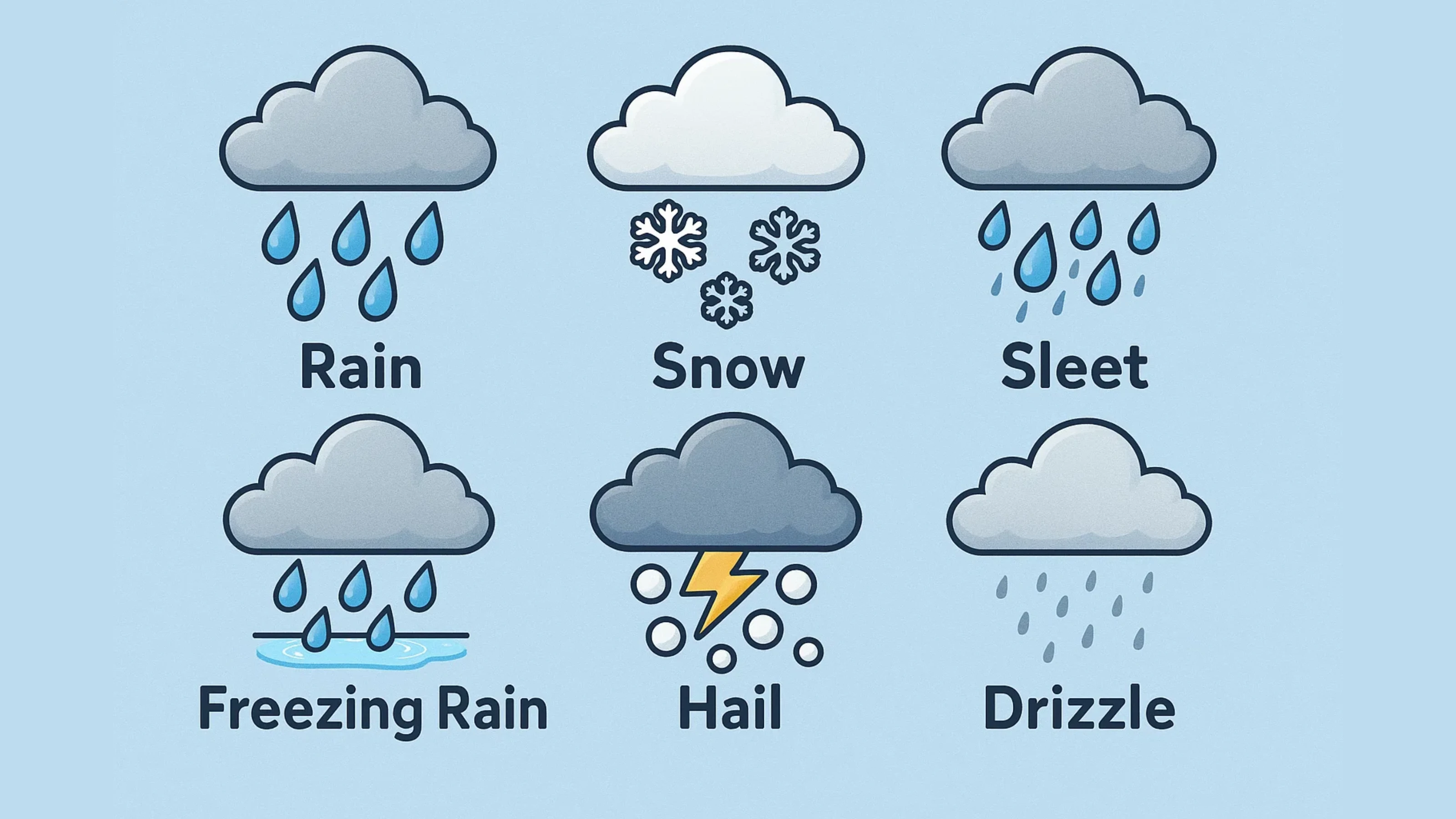
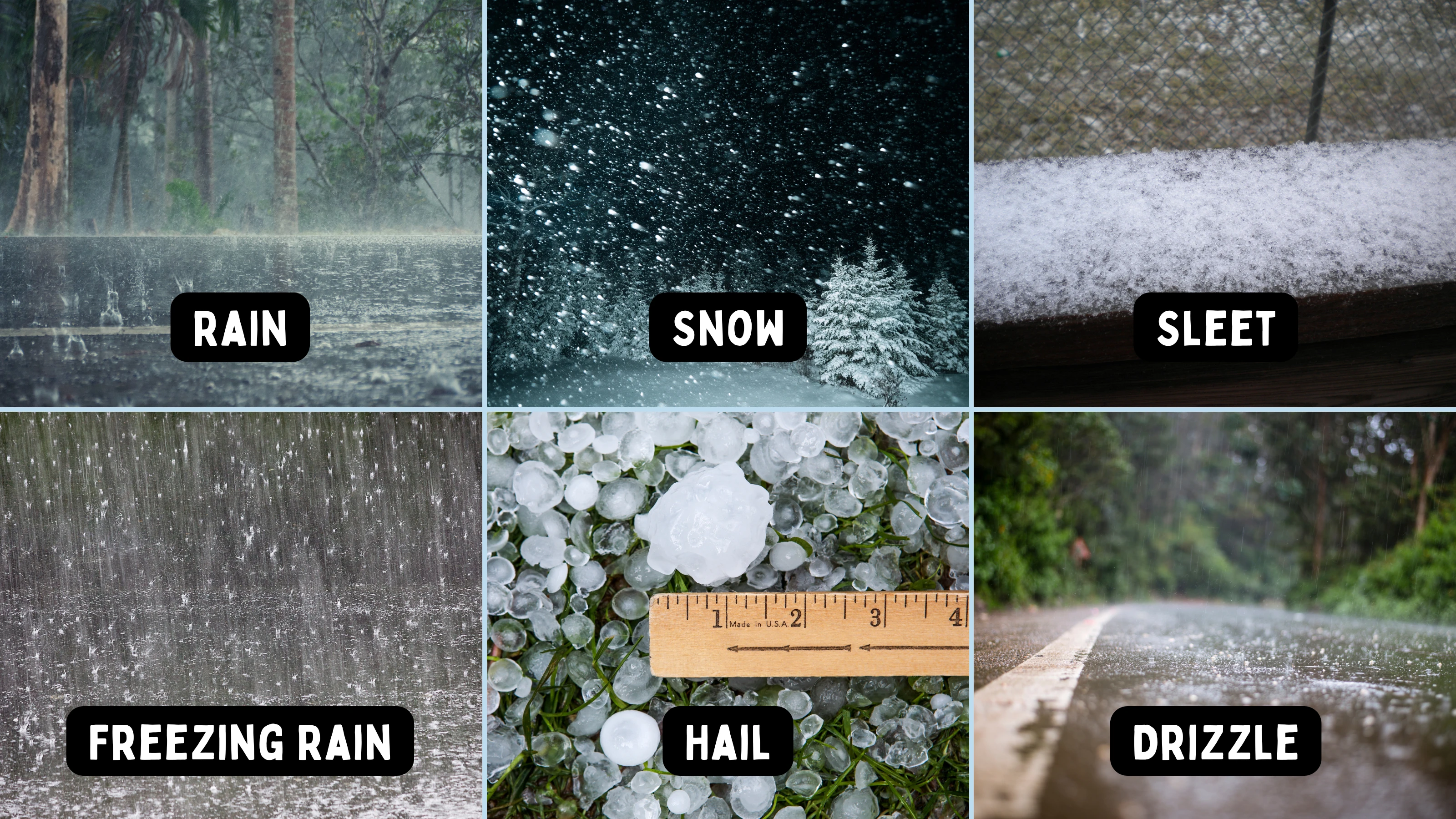
RAIN:
Liquid water droplets (temperature above 32°F through entire fall)
SNOW:
Ice crystals formed in below-freezing temperatures
SLEET:
Raindrops that freeze into ice pellets before hitting ground
FREEZING RAIN:
Rain that freezes on contact with cold surfaces
HAIL:
Ice balls formed in thunderstorms with strong updrafts
DRIZZLE:
Very small water droplets that seem to float in the air
Snow: Nature's Frozen Art
Snow forms when water vapor turns directly into ice crystals in below-freezing clouds. Each snowflake is unique because it forms under slightly different temperature and humidity conditions. Snow crystals have six sides because of the molecular structure of ice!
Hail: Ice Balls from the Sky
Hail forms in powerful thunderstorms with strong updrafts (upward air currents). Raindrops get caught in these updrafts, freeze, fall, get caught again, add another layer of ice, and repeat this process. The stronger the updrafts, the larger the hailstones can grow!
Measure rainfall with a homemade rain gauge
Catch snowflakes on dark paper and observe their shapes with a magnifying glass
Calculate how much water is in snow (usually 10 inches of snow = 1 inch of water)
Collect and measure hailstones during a safe hailstorm
TROPICAL REGIONS: Frequent, heavy rainfall from warm, moist air
DESERT REGIONS: Very little precipitation due to dry air
POLAR REGIONS: Mostly snow due to consistently cold temperatures
SEASONAL PATTERNS: Wet and dry seasons in many parts of the world
MOUNTAIN EFFECTS: Mountains create more precipitation on windward sides
EVAPORATION: Precipitation eventually evaporates back into the atmosphere
RUNOFF: Surface water flows into streams, rivers, and oceans
INFILTRATION: Some precipitation soaks into soil and becomes groundwater
PLANT UPTAKE: Plants absorb water and release it through transpiration
STORAGE: Water is stored in ice caps, lakes, and underground aquifers
FRESHWATER SUPPLY: Provides drinking water for humans and animals
AGRICULTURE: Essential for growing crops and maintaining ecosystems
HYDROELECTRIC POWER: Flowing water from precipitation generates electricity
ECOSYSTEM SUPPORT: Maintains wetlands, forests, and diverse habitats
NATURAL CLEANING: Rain washes dust and pollutants from the air
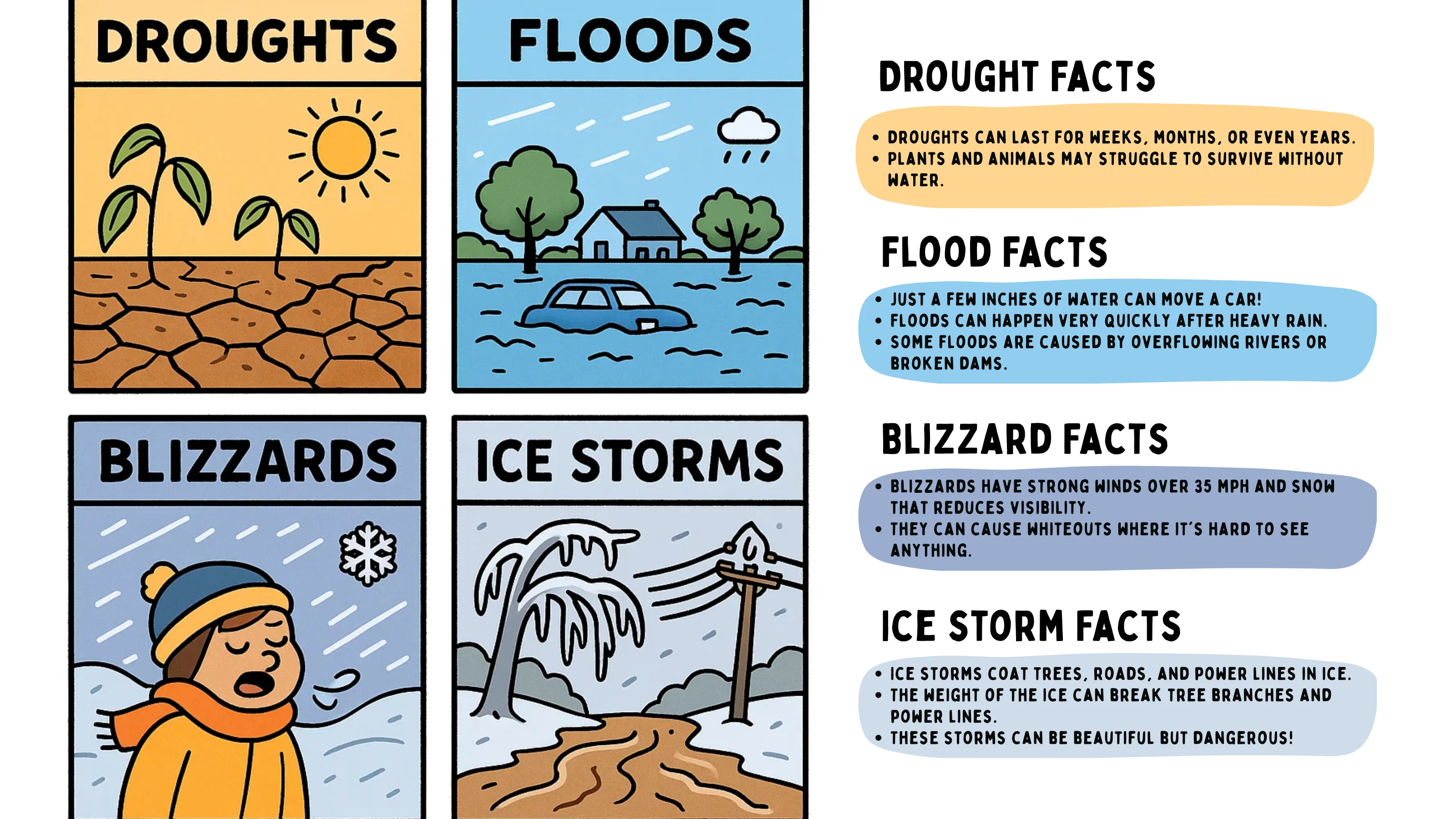
DROUGHTS: Extended periods without adequate precipitation
FLOODS: Too much precipitation in a short time or area
BLIZZARDS: Heavy snow combined with strong winds
ICE STORMS: Freezing rain that creates dangerous ice accumulation
FLASH FLOODS: Sudden flooding from intense precipitation
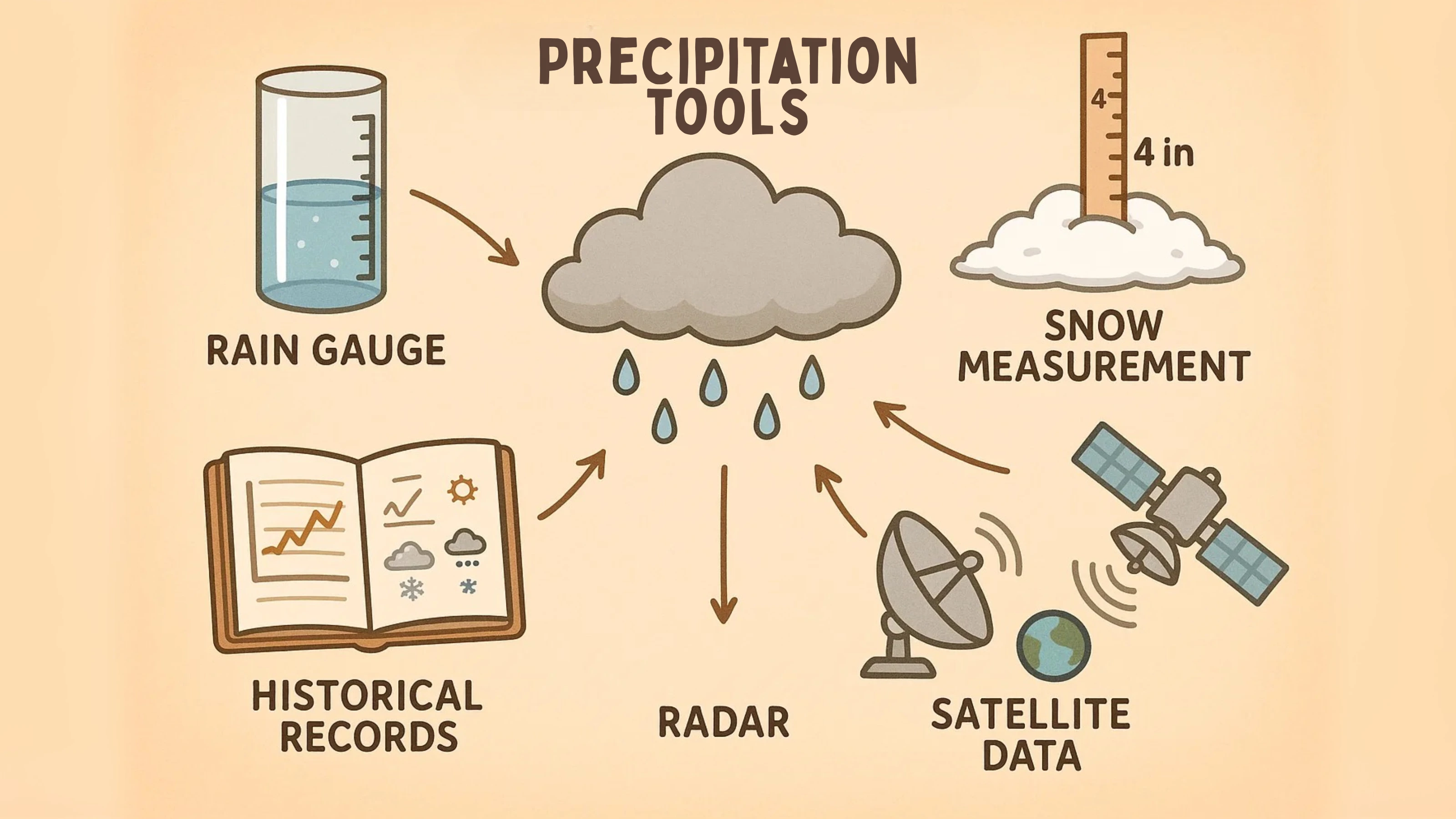
RAIN GAUGE: Simple device that collects and measures rainfall
SNOW MEASUREMENT: Depth and water equivalent content
RADAR: Detects precipitation in clouds before it reaches ground
SATELLITE DATA: Monitors precipitation patterns around the world
HISTORICAL RECORDS: Long-term precipitation data shows climate patterns
Precipitation connects the sky to the Earth, completing the water cycle and providing the essential water that makes life possible on our blue planet!