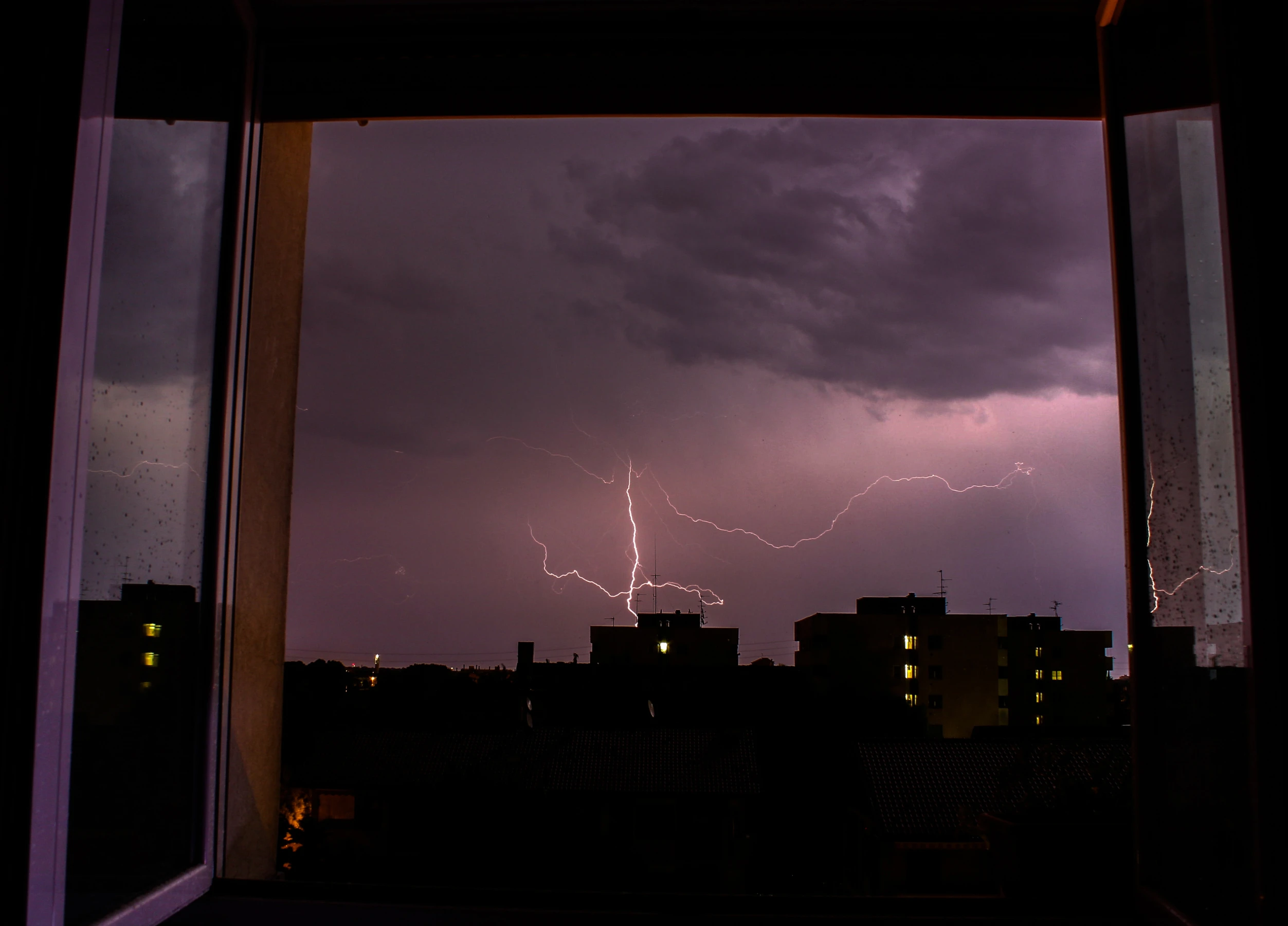
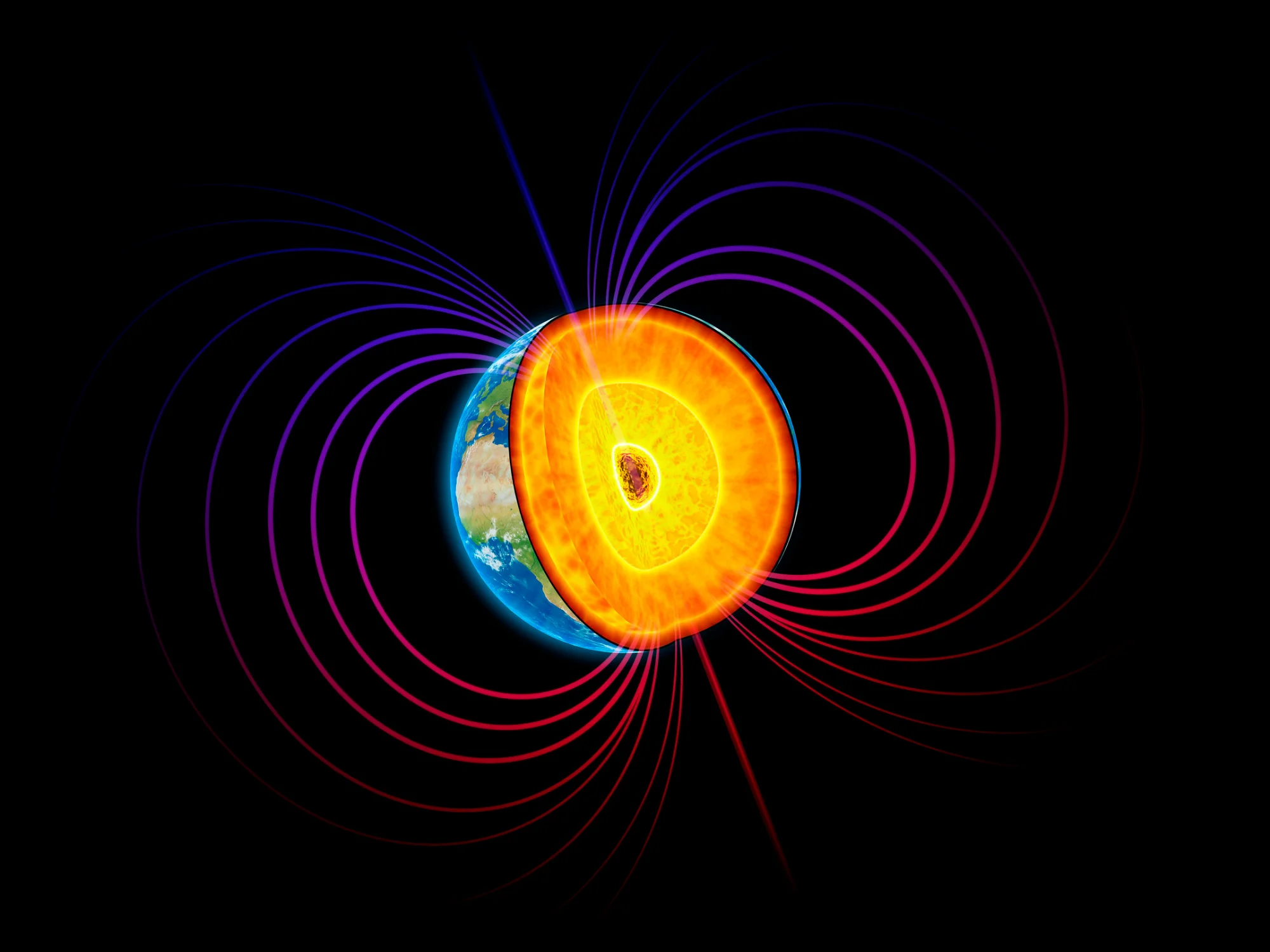
Thunderstorms are some of nature's most spectacular and powerful shows! These amazing weather events combine towering clouds, brilliant lightning, rumbling thunder, and sometimes heavy rain or hail. Understanding how storms work and how to stay safe during them helps us appreciate these incredible atmospheric phenomena.
How Thunderstorms Form
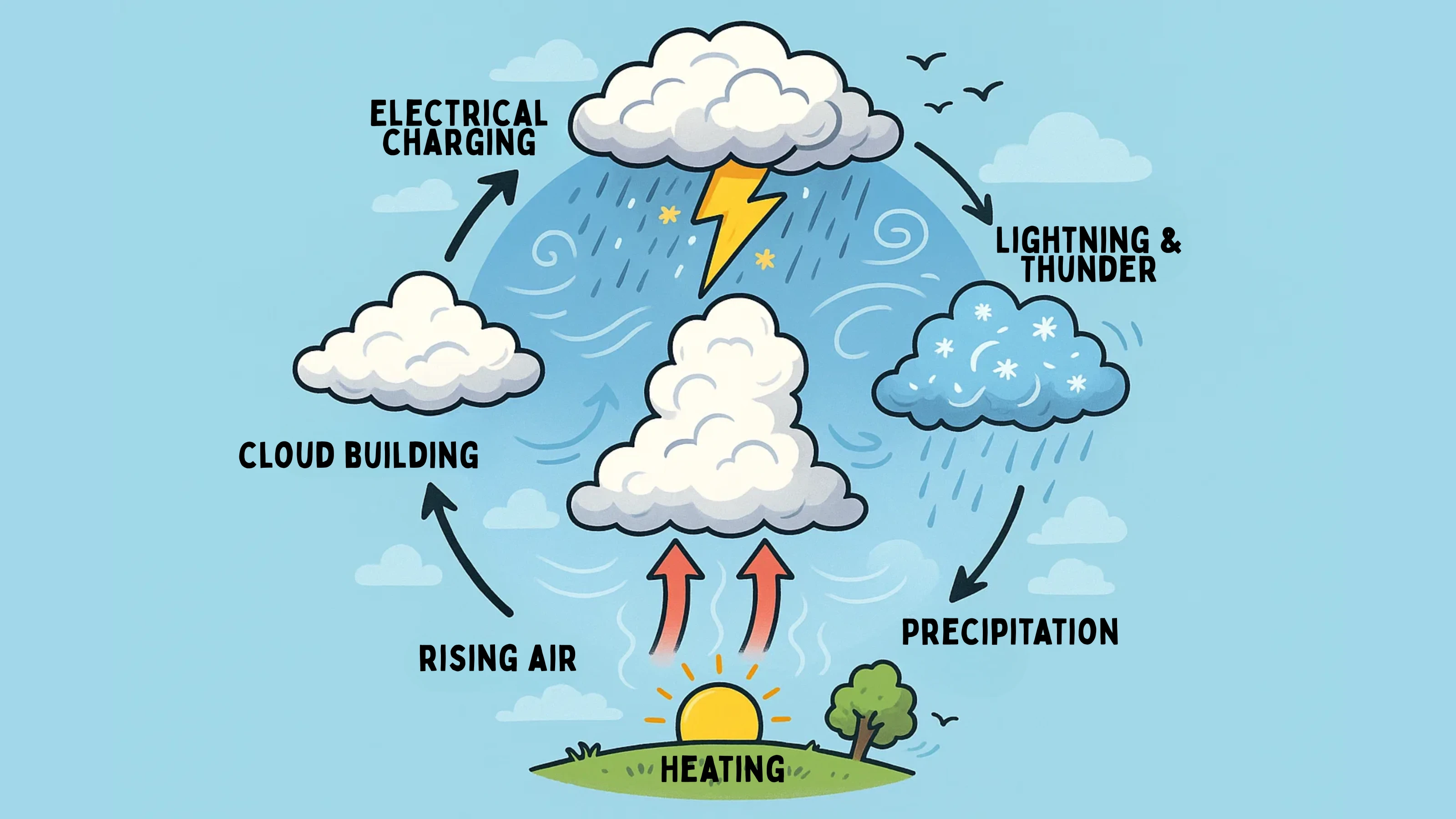
Thunderstorms need three main ingredients: moisture (water vapor in the air), instability (warm air that wants to rise), and lift (something to trigger the upward motion). When these come together, they create towering cumulonimbus clouds that can reach 60,000 feet high!
HEATING: Sun heats Earth's surface, creating warm, moist air
RISING AIR: Warm air rises rapidly, creating strong updrafts
CLOUD BUILDING: Water vapor condenses, forming towering cumulonimbus clouds
ELECTRICAL CHARGING: Ice particles collide in the cloud, creating electrical charges
LIGHTNING AND THUNDER: Electrical discharge creates lightning and thunder
PRECIPITATION: Heavy rain, hail, or snow falls from the storm
Lightning: Nature's Electrical Display
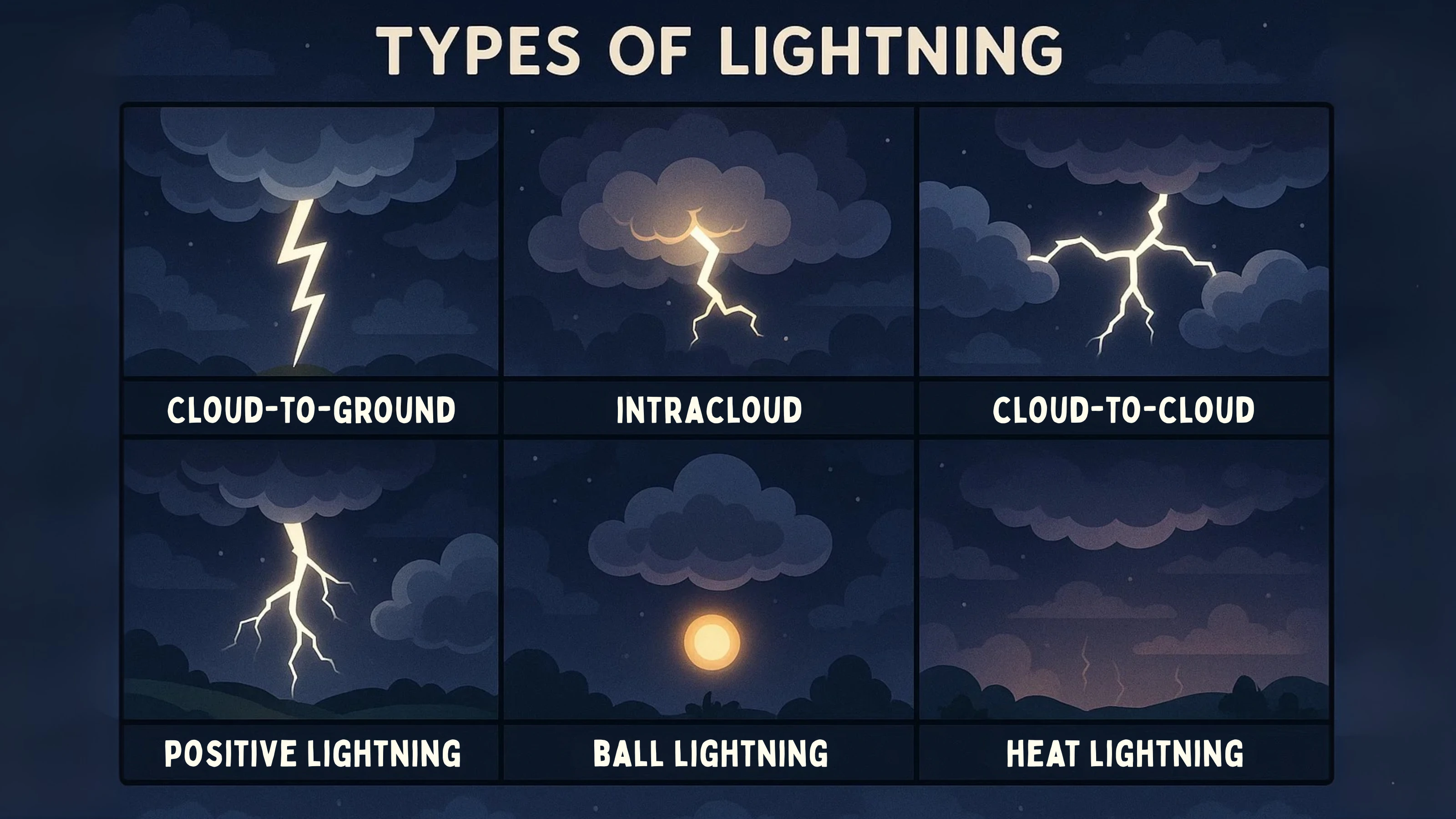
Lightning is a giant electrical spark that can be hotter than the surface of the sun! It forms when ice particles in storm clouds collide and create positive and negative electrical charges. When the electrical difference becomes too great, lightning jumps between charges to balance things out.
CLOUD-TO-GROUND:
Lightning that travels from cloud to Earth's surface
INTRACLOUD:
Lightning that occurs within a single cloud (most common type)
CLOUD-TO-CLOUD:
Lightning that jumps between different clouds
POSITIVE LIGHTNING:
Rare, extremely powerful lightning from cloud tops
BALL LIGHTNING:
Mysterious, rare spherical lightning phenomenon
HEAT LIGHTNING:
Distant lightning seen without hearing thunder
Thunder: Lightning's Sound Partner
Thunder is the sound that lightning makes! When lightning heats the air to extreme temperatures (around 50,000°F), it causes the air to expand so rapidly that it creates a shock wave we hear as thunder. You can estimate how far away lightning is by counting the seconds between lightning and thunder, then dividing by 5 (the result is the distance in miles).
Storm Safety: Protecting Yourself
The most important thing about thunderstorms is knowing how to stay safe! Lightning can strike up to 10 miles away from a storm, so if you can hear thunder, you're close enough to be struck. The safest place during a thunderstorm is inside a substantial building or a hard-topped vehicle.
Safely watch storms from indoors and count lightning-to-thunder delays
Track storm movement using weather radar (with adult help)
Learn to identify different types of lightning from a safe location
Create a storm log recording when storms occur in your area
GO INDOORS: Seek shelter in buildings or hard-topped vehicles
AVOID WATER: Don't swim, bathe, or use water during storms
STAY AWAY FROM METAL: Avoid fences, poles, and metal objects
DON'T USE ELECTRONICS: Unplug devices and avoid corded phones
WAIT IT OUT: Stay inside for 30 minutes after the last thunder
IF CAUGHT OUTSIDE: Crouch low, avoid trees and high ground
LIGHTNING STRIKES: Can cause serious injury or death
FLASH FLOODING: Heavy rain can create dangerous floods quickly
HAIL: Can damage property and injure people caught outside
STRONG WINDS: Can knock down trees and power lines
TORNADOES: Some thunderstorms can spawn dangerous tornadoes
Lightning strikes Earth about 100 times per second
A lightning bolt is only 2-5 centimeters wide but extremely hot
Thunder can be heard up to 15 miles away under ideal conditions
Lightning helps create nitrogen compounds that fertilize soil
Some lightning bolts can be 5 miles long
The average lightning bolt contains enough energy to power a 100-watt bulb for 3 months
RAINFALL: Thunderstorms provide essential water for plants and animals
COOLING: Storms can lower temperatures during hot weather
NITROGEN FIXATION: Lightning helps create natural fertilizers
CLEANING THE AIR: Rain washes dust and pollution from the atmosphere
ELECTRICAL DISCHARGE: Helps balance Earth's electrical field
Thunderstorms show us the incredible power of our atmosphere - they're beautiful and important weather events that deserve our respect and understanding!