Volcanoes and Earthquakes
Learn about the powerful forces inside Earth that create volcanoes and earthquakes

Overhead view of an active volcanic eruption
Deep beneath your feet, Earth is constantly moving and changing! Volcanoes and earthquakes are dramatic reminders that our planet is very much alive. These powerful geological events shape our landscape and show us the incredible forces at work inside our dynamic Earth.
What Are Volcanoes?
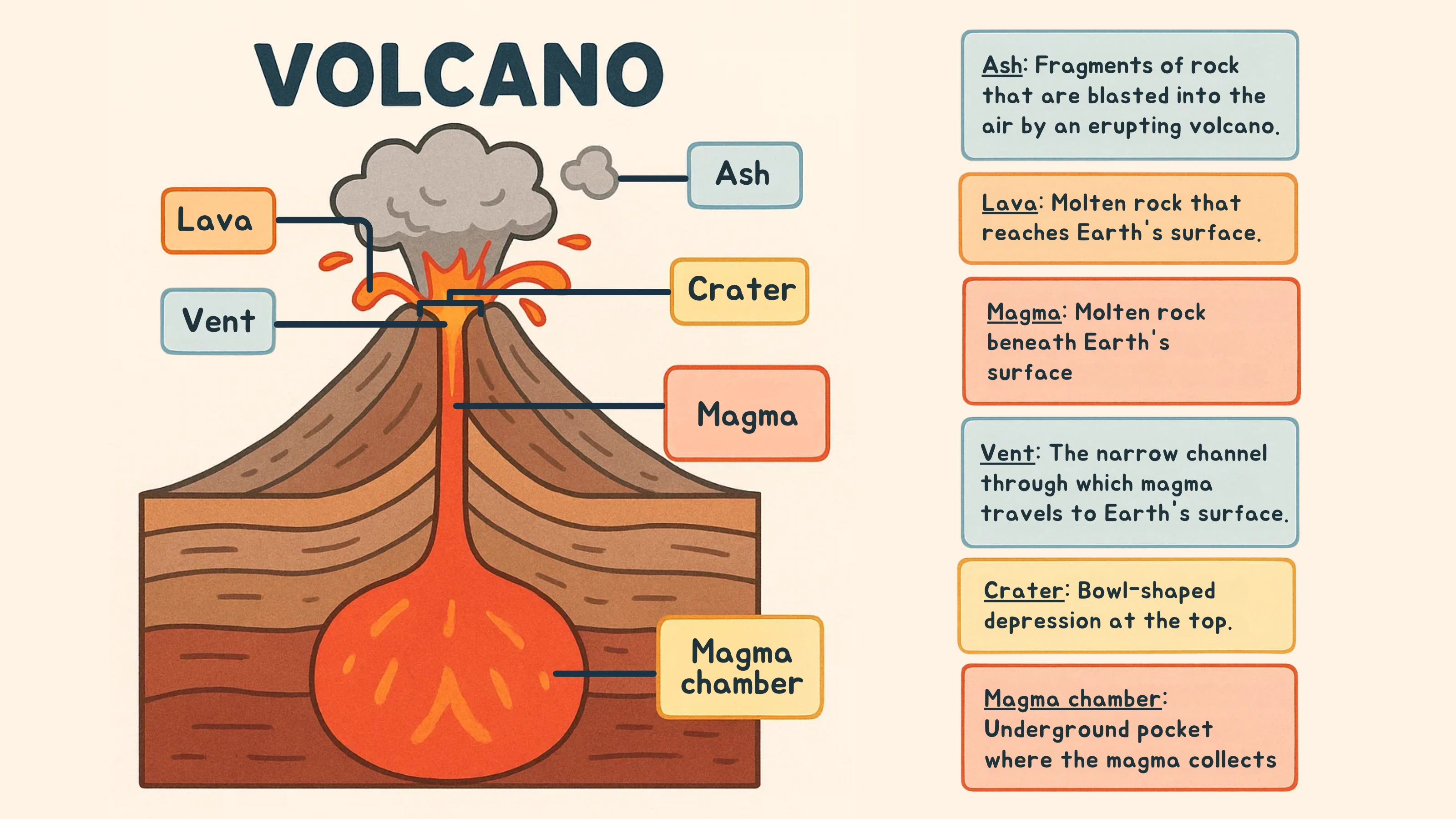
A volcano is like Earth's pressure release valve! It's an opening in Earth's surface where magma (melted rock underground) can escape. When magma reaches the surface, it's called lava. Volcanoes form when pressure builds up underground and needs somewhere to go - kind of like shaking a soda bottle and then opening it!
Types of Volcanic Eruptions
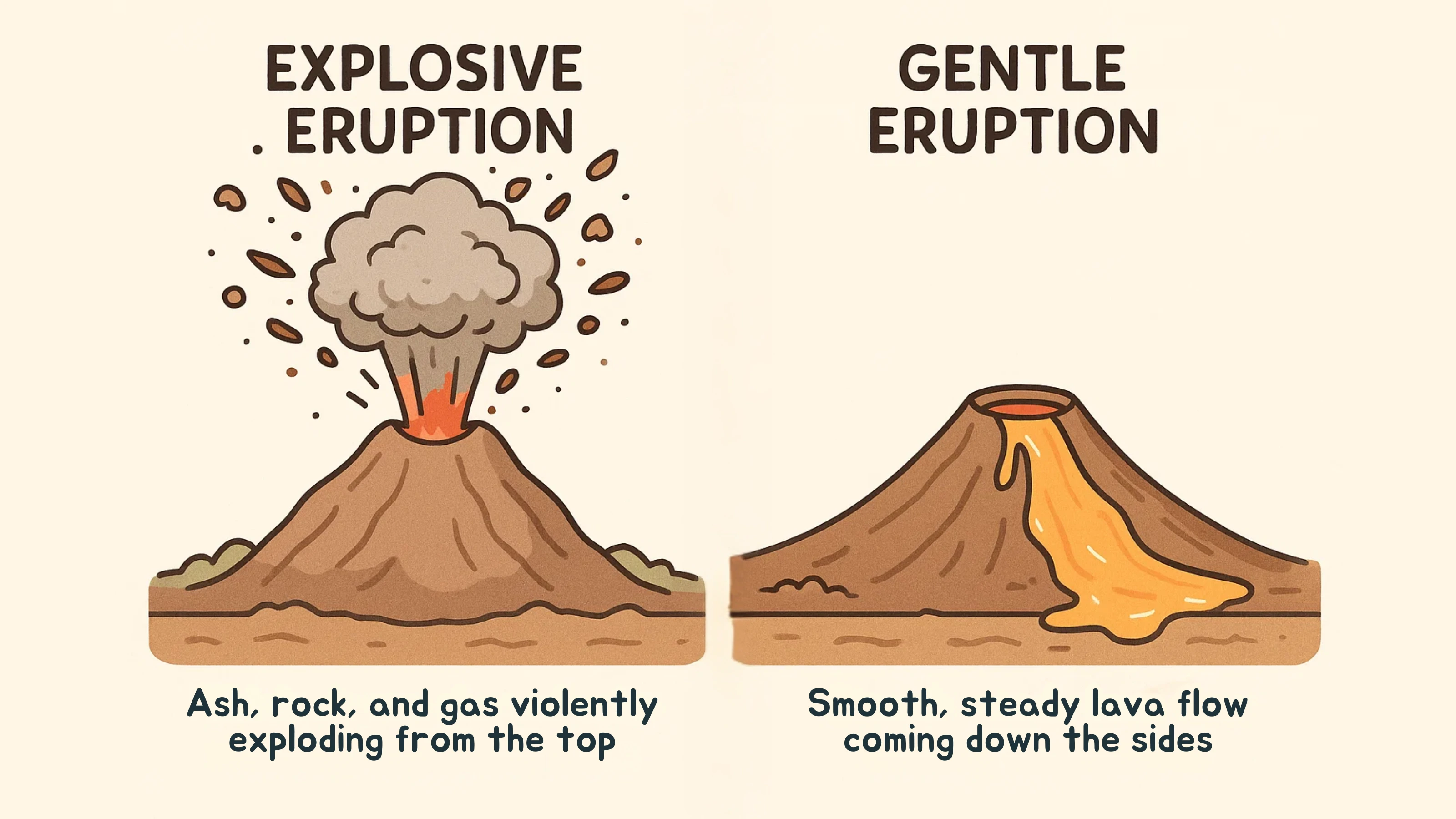
Not all volcanic eruptions are the same! Explosive eruptions happen when thick, gas-filled magma builds up pressure and explodes violently, shooting ash and rock high into the sky. Gentle eruptions occur when thin, runny lava flows out steadily like thick honey. The type depends on the magma's consistency!

What Are Earthquakes?
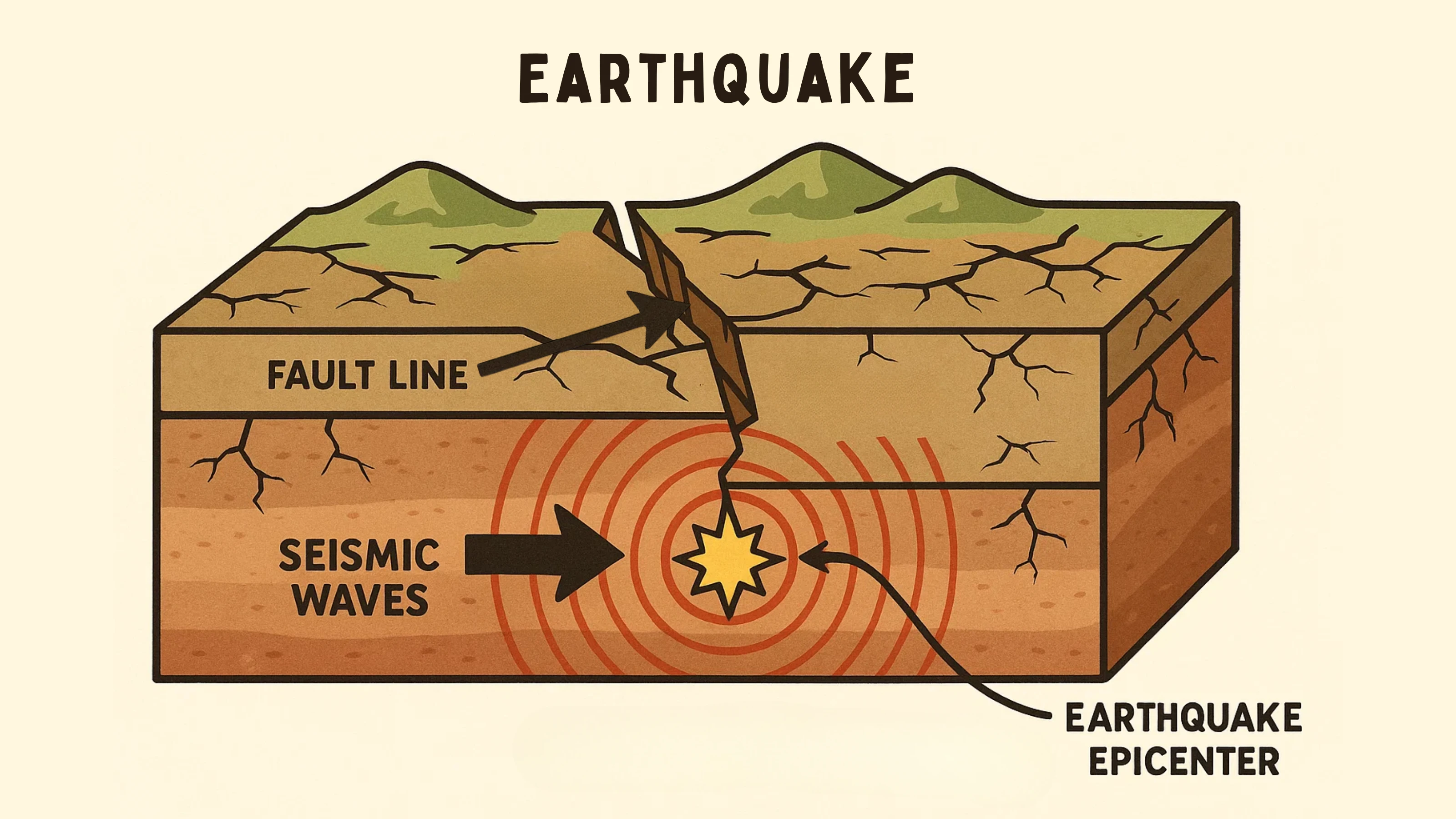
Earthquakes happen when pieces of Earth's crust suddenly move or break! Earth's surface is made up of giant puzzle pieces called tectonic plates that slowly drift around. Sometimes these plates get stuck, pressure builds up, and then they suddenly slip - creating an earthquake that sends seismic waves through the ground.
Measuring Earthquakes
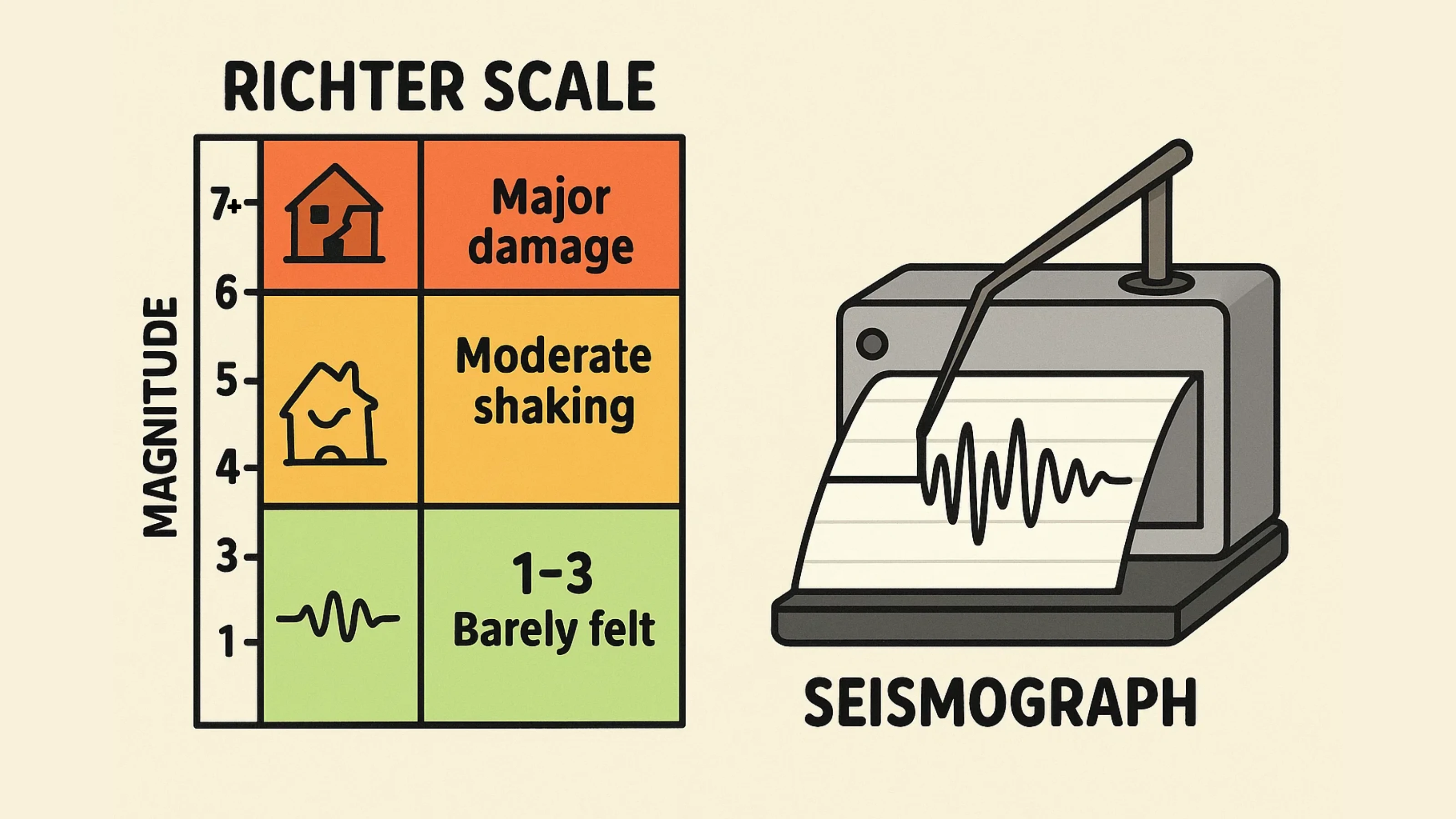
Scientists use the Richter scale to measure earthquake strength. Small earthquakes (magnitude 1-3) can barely be felt, while major earthquakes (magnitude 7+) can cause serious damage. A seismograph is a special instrument that detects and records earthquake waves, even tiny ones from far away.
Volcanoes and earthquakes remind us that Earth is a living, breathing planet where the ground beneath our feet is constantly changing, usually slowly but sometimes dramatically!