Wind is air in motion, and it's one of the most important forces shaping our weather and climate! From gentle breezes that cool us on hot days to powerful winds that generate electricity, moving air affects our lives in countless ways. Understanding what causes wind helps us predict weather and harness wind's energy.
What Causes Wind?
Wind is created by differences in air pressure! Air always moves from areas of high pressure to areas of low pressure, trying to balance things out. Think of it like water flowing downhill - air "flows" from high pressure to low pressure, creating the wind we feel.
UNEVEN HEATING: Sun heats Earth's surface unevenly
PRESSURE DIFFERENCES: Warm air rises (low pressure), cool air sinks (high pressure)
AIR MOVEMENT: Air flows from high pressure areas to low pressure areas
WIND CREATION: This horizontal movement of air is what we call wind
CORIOLIS EFFECT: Earth's rotation causes winds to curve
GLOBAL PATTERNS: Creates predictable wind patterns around the world
Air Pressure: The Invisible Force
Air pressure is the weight of air pressing down on Earth's surface. At sea level, air pressure is about 14.7 pounds per square inch - that means there's nearly 15 pounds of air pressing on every square inch of your body! Changes in air pressure create the pressure differences that drive wind.
HIGH PRESSURE:
Cool, dense air sinks downward (usually brings clear, calm weather)
LOW PRESSURE:
Warm air rises upward (usually brings clouds and storms)
PRESSURE GRADIENT:
The difference in pressure between two areas
BAROMETER:
Instrument that measures air pressure
WEATHER PREDICTION:
Changing pressure often indicates changing weather
PRESSURE UNITS:
Measured in inches of mercury or millibars
Global Wind Patterns
Earth has predictable global wind patterns caused by uneven heating and our planet's rotation. The trade winds blow toward the equator, westerlies blow away from the equator in temperate regions, and polar easterlies blow from the poles. These patterns help determine climate around the world.
Local Wind Effects
Local geography creates special wind patterns! Sea breezes happen when land heats up faster than water during the day. Mountain and valley breezes occur as air flows up mountainsides during the day and down at night. Cities can create their own wind patterns due to buildings and heat from pavement.
Make a simple wind vane to show wind direction
Create an anemometer to measure wind speed
Fly kites and observe how wind affects their flight
Watch how flags, leaves, and smoke move in the wind
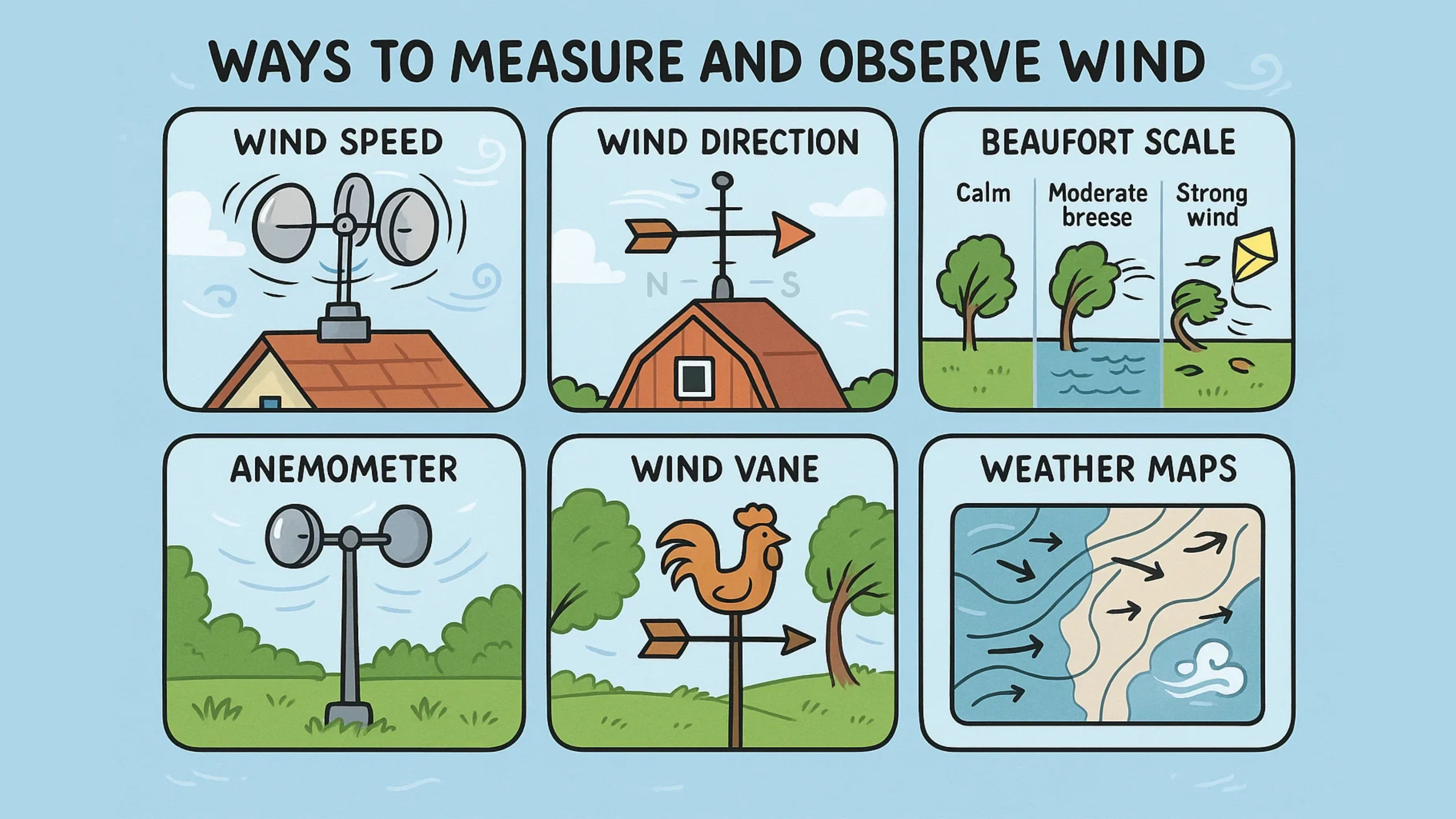
WIND SPEED: Measured in miles per hour (mph) or knots
WIND DIRECTION: Described by where the wind is coming FROM
BEAUFORT SCALE: System for estimating wind speed by observing effects
ANEMOMETER: Instrument with spinning cups that measures wind speed
WIND VANE: Shows wind direction with an arrow that points into the wind
WEATHER MAPS: Show wind patterns with arrows and isobars (pressure lines)
TRADE WINDS: Steady winds that blow toward the equator
WESTERLIES: Winds that blow from west to east in temperate regions
JET STREAMS: Fast-moving air currents high in the atmosphere
MONSOONS: Seasonal winds that bring wet and dry periods
CHINOOK WINDS: Warm, dry winds that flow down mountain slopes
DUST DEVILS: Small, spinning columns of air that pick up dust
WIND TURBINES: Convert wind motion into clean electricity
SAILING: Humans have used wind power for thousands of years
POLLINATION: Wind helps many plants reproduce by carrying pollen
SEED DISPERSAL: Wind spreads seeds to help plants colonize new areas
WEATHER SYSTEMS: Wind moves storms and weather patterns around the globe
BENEFITS: Clean energy, cooling, helps weather patterns, supports ecosystems
HAZARDS: Can cause property damage, create dangerous flying debris
WIND CHILL: Makes cold temperatures feel even colder
EROSION: Strong winds can blow away topsoil and sand
FIRE DANGER: Wind spreads wildfires rapidly
RENEWABLE ENERGY: Wind power produces no pollution or greenhouse gases
Wind is nature's way of balancing temperature and pressure differences around our planet - it's an invisible force that shapes our weather, powers our technology, and connects all parts of Earth's atmosphere!