Floating and Sinking
Discover the science of density and buoyancy, and learn why ships float while rocks sink

Child playing with a floating basketball in a pool
Have you ever wondered why huge metal ships can float on water, but a tiny pebble sinks right to the bottom? Or why ice cubes float in your drink? The answer lies in understanding density and buoyancy - two amazing scientific concepts!
What Is Density?
Density is how much stuff (mass) is packed into a space. Imagine two boxes of the same size - one filled with feathers and one filled with rocks. The rock box is much denser because it has more mass packed into the same amount of space.
Why Do Things Float?
When you put an object in water, the water pushes back up on it with a force called buoyancy. If this upward push is stronger than the object's weight pulling it down, the object floats! If the downward pull is stronger, the object sinks.

The Secret of Floating Ships
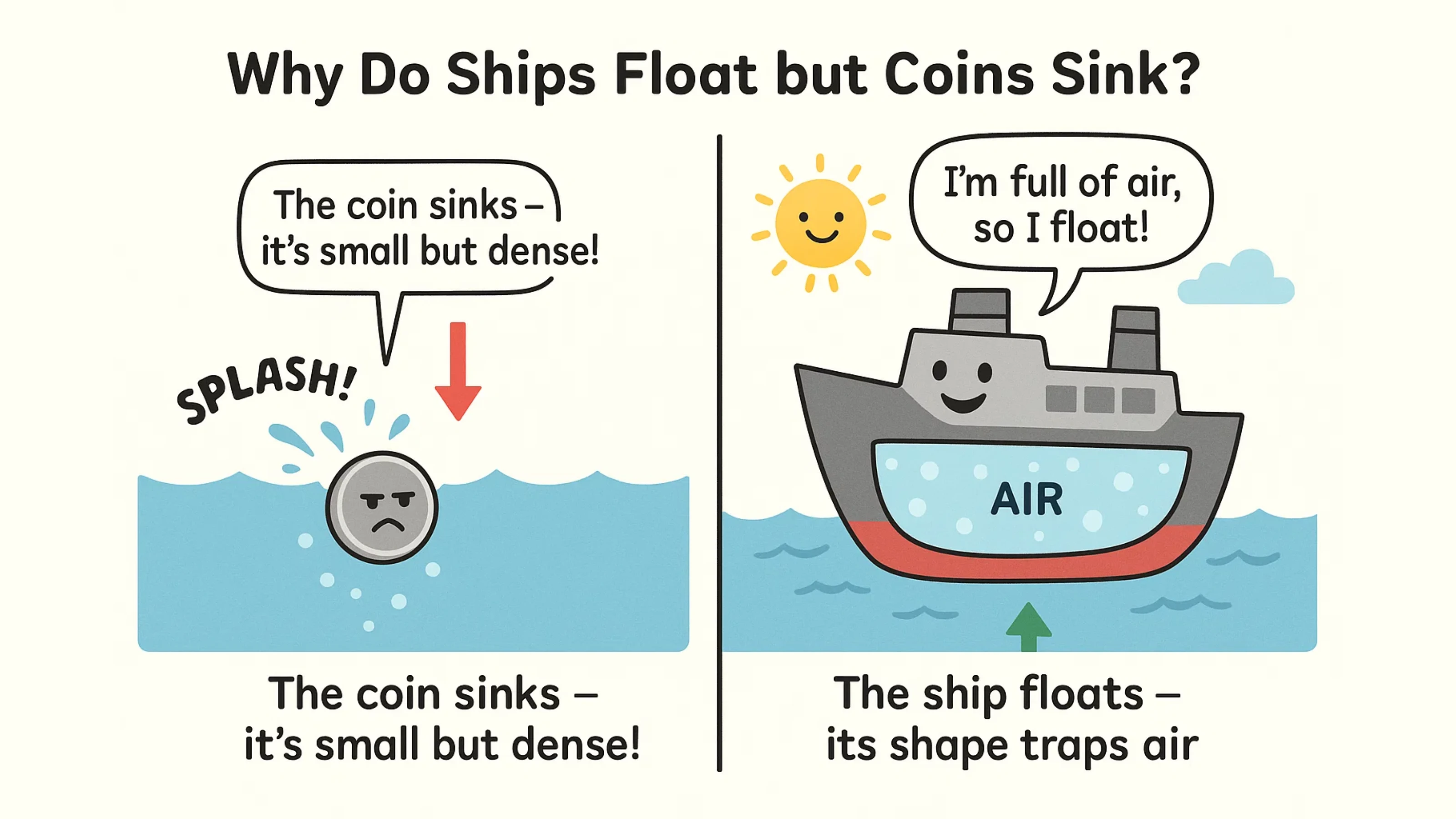
How can a giant metal ship float when a small metal coin sinks? It's all about shape! The ship is designed with a hollow hull that traps air inside. This makes the overall density of the ship (metal plus air) less than water, so it floats like a giant metal bubble!
Displacement: Water Gets Pushed Away
When something floats, it pushes away (displaces) an amount of water that weighs exactly the same as the floating object. This is why the water level rises when you get into a bathtub - your body displaces the water!
Understanding floating and sinking helps us build boats, design submarines, and even understand how hot air balloons rise through the air!