Light and Shadows
Learn how light travels in straight lines, bounces off mirrors, bends through water, and creates shadows

Children making shadow puppets with their hands against a wall
Light is everywhere around us! It helps us see colors, read books, and find our way. But have you ever wondered why you have a shadow, or why a pencil looks bent when you put it in water? Let's explore the amazing journey of light!
How Light Travels
Light travels in perfectly straight lines, kind of like invisible arrows shooting through space. Light is incredibly fast - it can travel around the entire Earth more than 7 times in just one second! When light hits something, three things can happen: it can bounce off (reflect), go through (transmit), or get absorbed.
Reflection: When Light Bounces
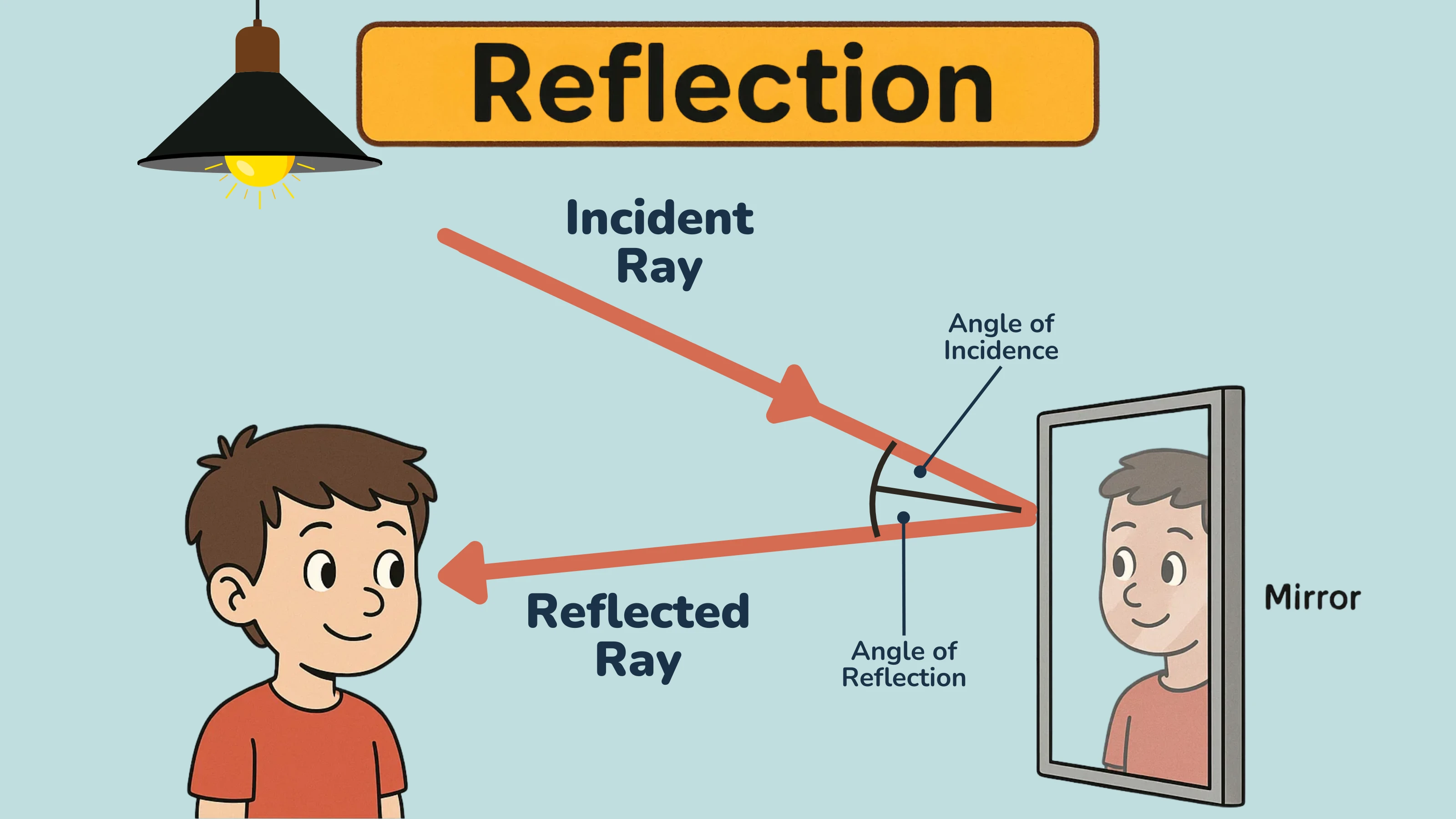
When light hits a mirror, it bounces back to your eyes - that's called reflection. The bouncing follows a simple rule: light bounces off at the same angle it hits the mirror. That's why you can see yourself in mirrors, shiny spoons, or calm water!

Refraction: When Light Bends
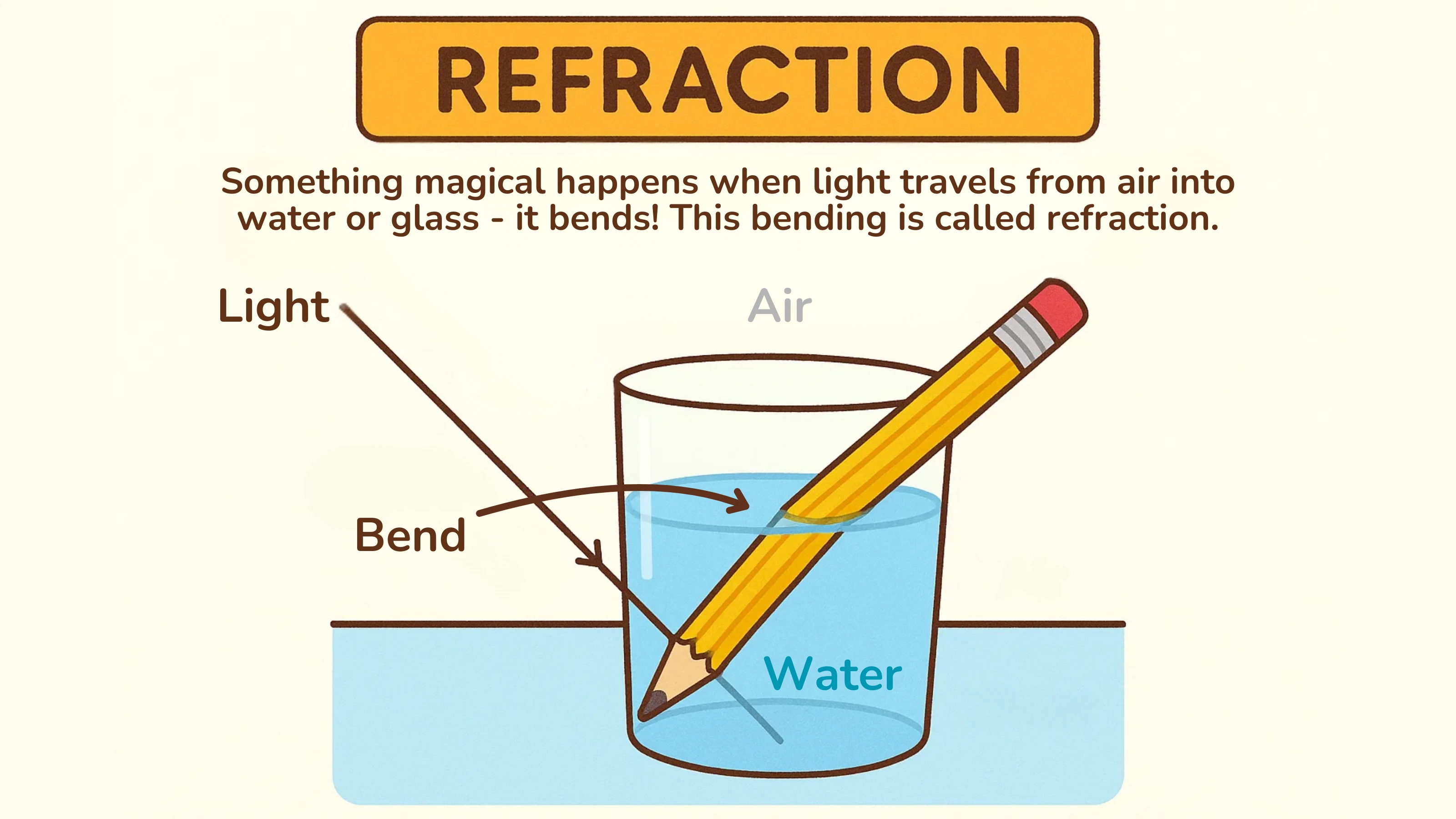
Something magical happens when light travels from air into water or glass - it bends! This bending is called refraction. That's why a pencil looks broken when you put it in a glass of water, or why a swimming pool looks shallower than it really is.
Shadows: Blocked Light Creates Darkness
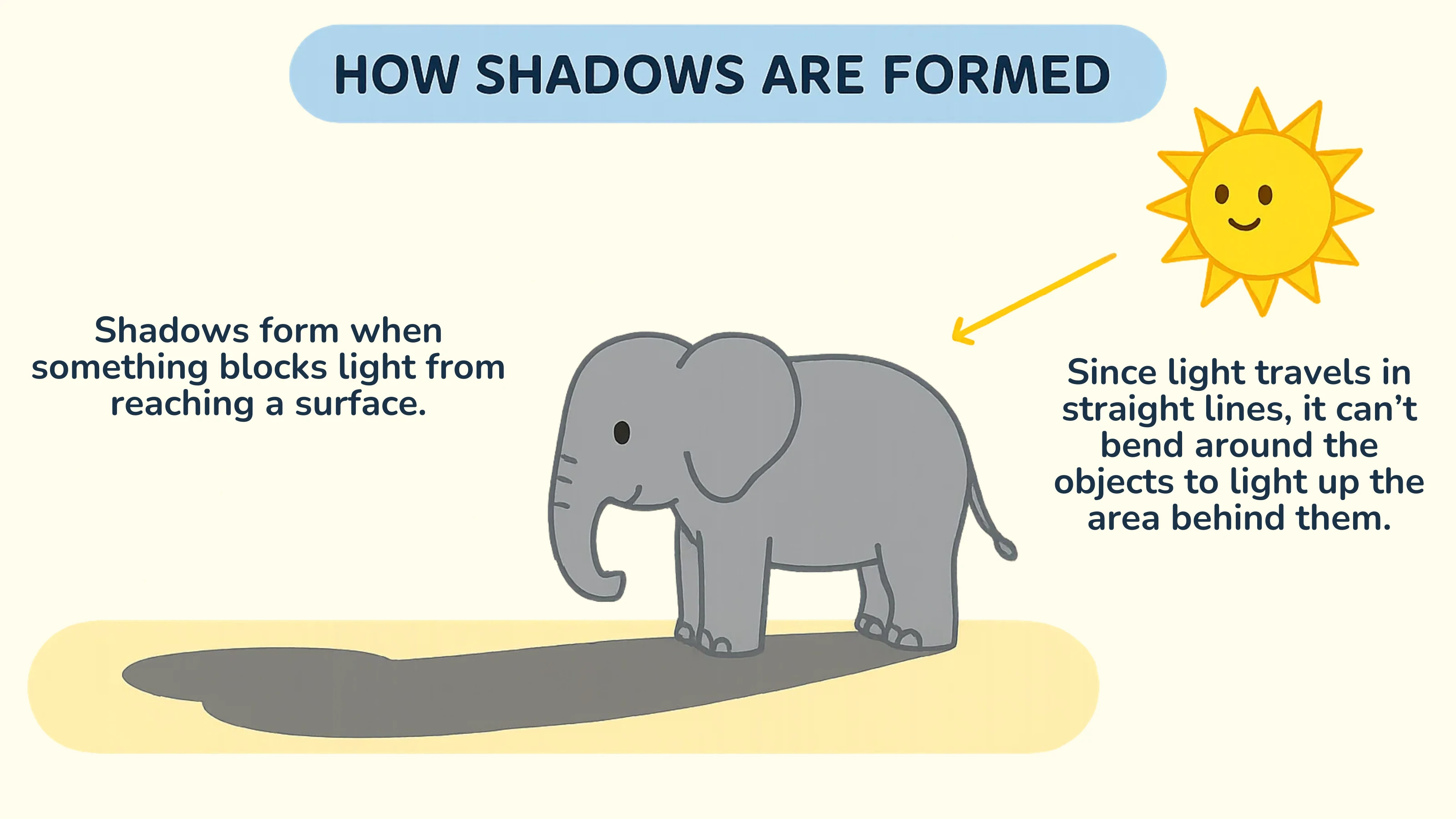
Shadows form when something blocks light from reaching a surface. Since light travels in straight lines, it can't bend around objects to light up the area behind them. The bigger the object blocking the light, the bigger the shadow!
Light is the reason we can see our beautiful world - from the colors of flowers to the twinkling of stars at night!