Galactic Black Holes
Discover amazing facts about supermassive black holes, the incredible cosmic monsters that lurk at the centers of galaxies

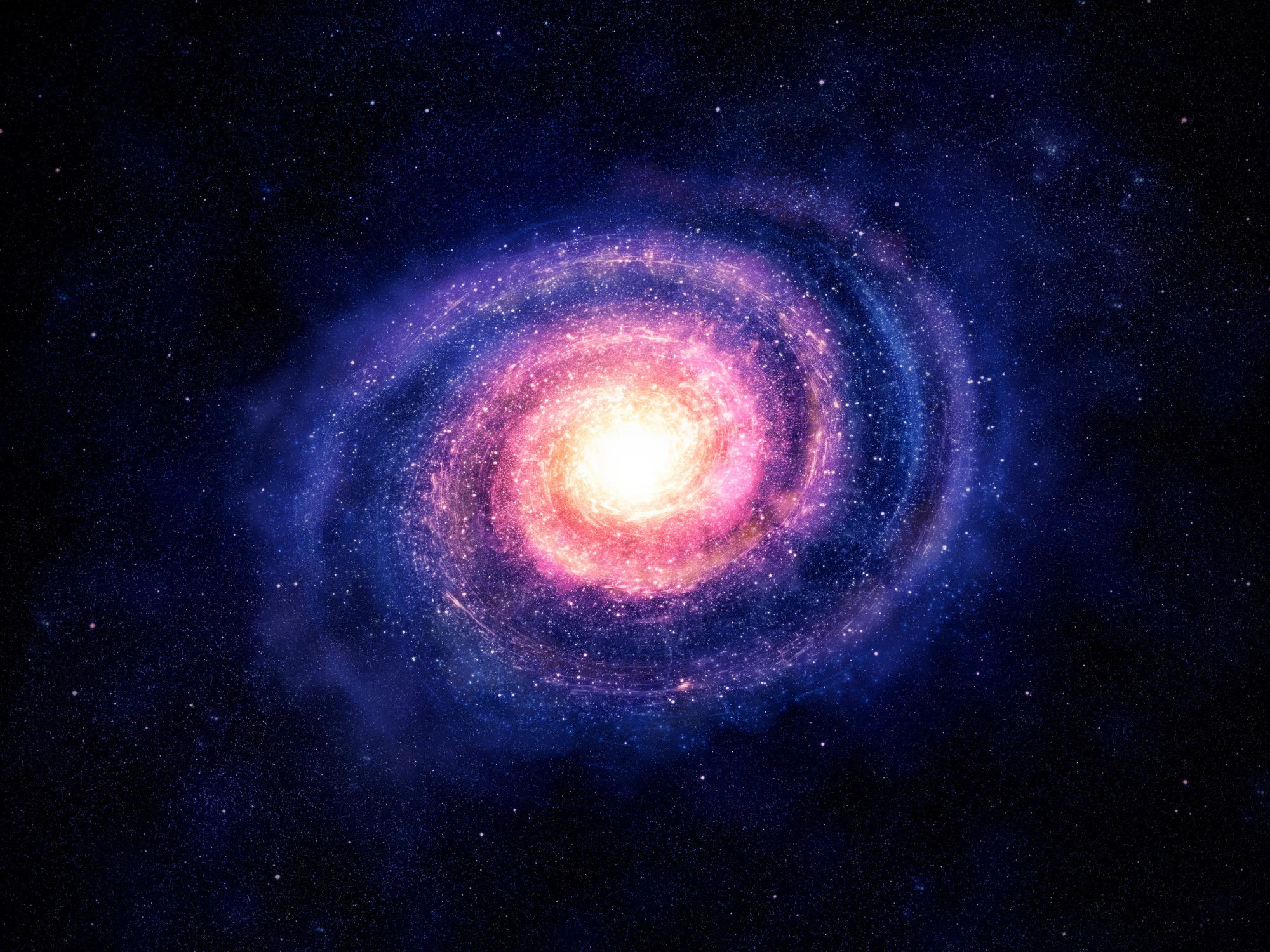
Supermassive black holes create brilliant accretion disks as matter spirals into their inescapable gravitational pull
Black holes are the most extreme and mysterious objects in the universe, and almost every large galaxy has a supermassive black hole lurking at its center! These cosmic monsters are incredibly dense regions of space where gravity is so strong that nothing - not even light - can escape once it gets too close. The supermassive black hole at the center of our Milky Way galaxy is called Sagittarius A* (pronounced "A-star") and weighs about 4 million times more than our Sun, yet it's packed into a space smaller than our solar system!
You might think that having a massive black hole at the center of our galaxy would be dangerous, but it's actually very important for how galaxies work. The black hole's enormous gravity helps hold the entire galaxy together and influences how stars form and move throughout the galaxy. When material falls toward a supermassive black hole, it heats up to millions of degrees and creates brilliant, swirling disks of hot gas called "accretion disks" that can outshine billions of stars. Some black holes also shoot out powerful jets of energy and particles that stretch for thousands of light-years across space.
Scientists have recently been able to take the first actual photographs of black holes using a network of telescopes around the world called the Event Horizon Telescope. In 2019, they captured an image of the supermassive black hole in the galaxy M87, and in 2022, they photographed our own Sagittarius A*. These images show the "shadow" of the black hole surrounded by a bright ring of hot, glowing gas. Even though black holes themselves are invisible, we can detect them by watching how they affect nearby stars and gas clouds with their incredible gravitational pull.