Makemake
Discover amazing facts about Makemake, the dwarf planet discovered around Easter and named after a Polynesian creator god
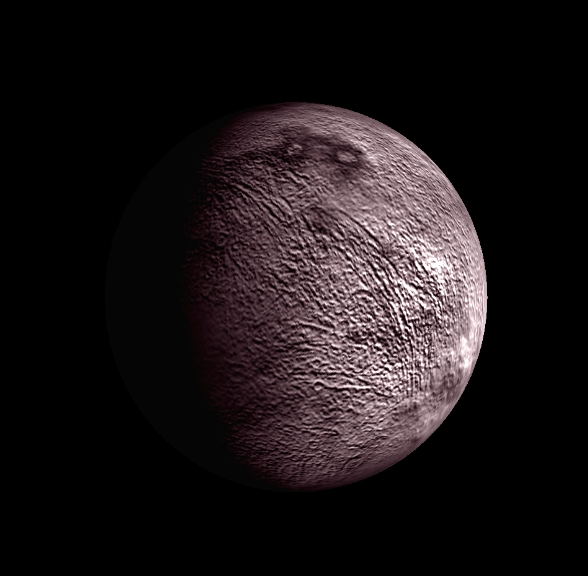
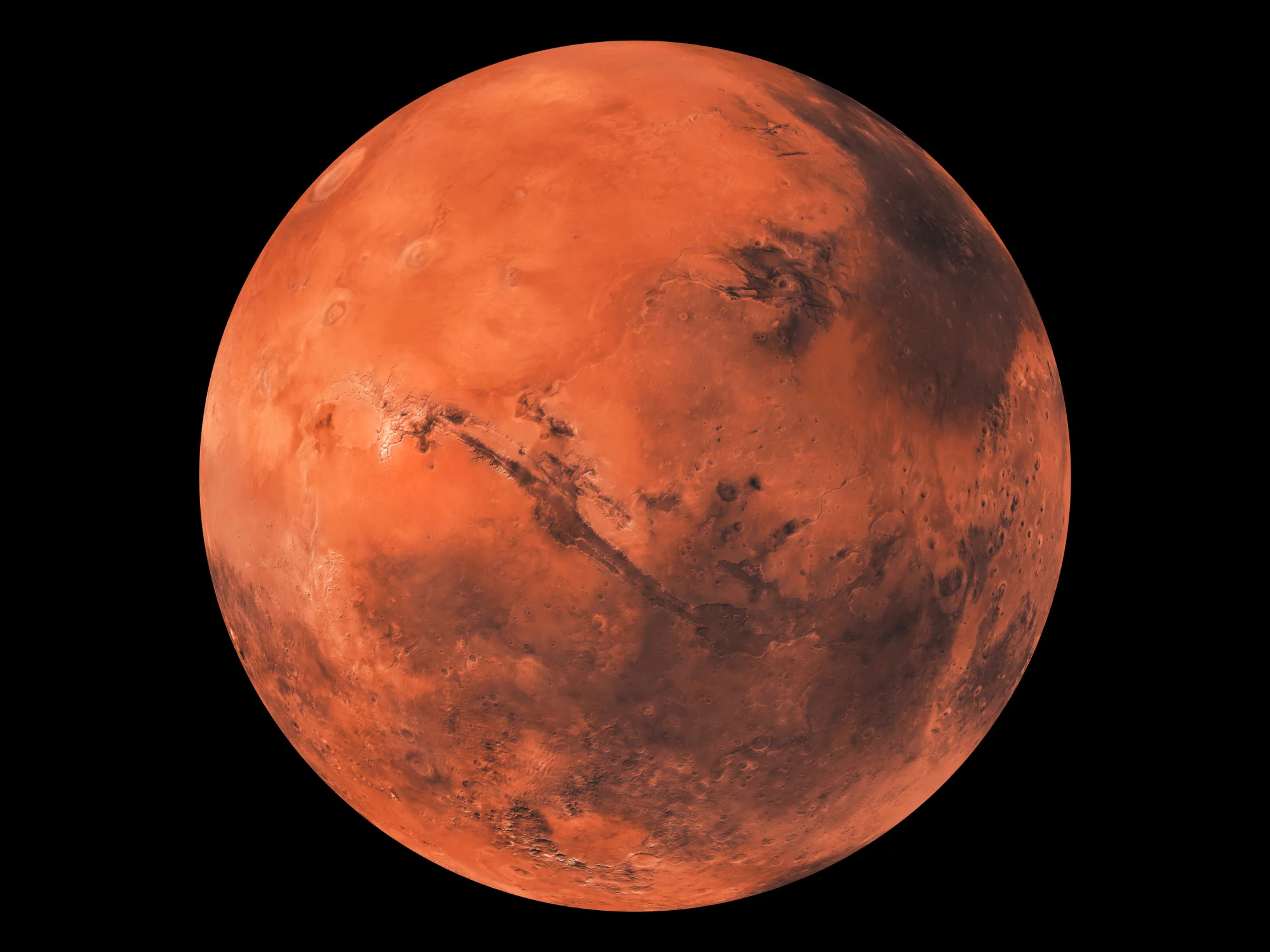
Makemake appears reddish in color and has a very reflective surface covered in frozen methane
Makemake has a very special discovery story - it was found around Easter time in 2005, which is why it was initially nicknamed the "Easter Bunny"! The dwarf planet got its official name from Makemake, the creator god of the Rapa Nui people of Easter Island. This makes Makemake the only dwarf planet named after a deity from Polynesian mythology. Makemake lives in the Kuiper Belt along with Pluto and is one of the brightest objects in that distant region of our solar system.
What makes Makemake particularly interesting is its surface, which is covered in frozen methane that makes it very reflective and gives it a reddish color. Scientists think Makemake's surface temperature is so cold that even nitrogen would be frozen solid there! For many years, astronomers thought Makemake was alone in space, but in 2016 the Hubble Space Telescope discovered that Makemake has a small, dark moon that scientists have nicknamed "MK2."
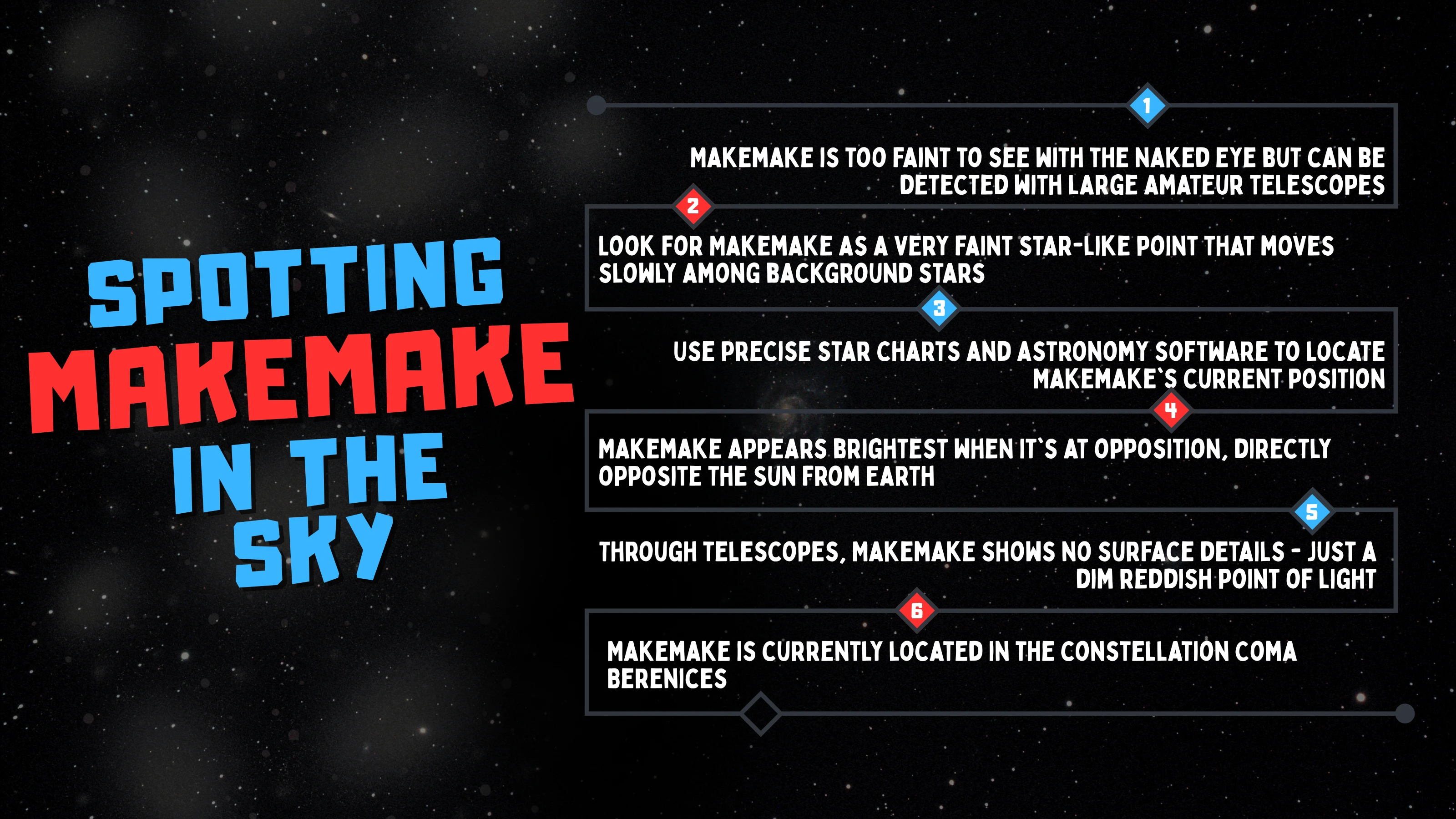
Makemake was discovered by the same team of astronomers who found Eris, led by Mike Brown at Caltech. Because Makemake is so far away, it's very difficult to study with telescopes. Most of what we know about Makemake comes from measuring how much sunlight it reflects and watching what happens when it passes in front of distant stars. These observations have helped scientists learn about Makemake's size, shape, and what its surface might be made of.
No spacecraft missions are currently planned to visit Makemake, but scientists are very interested in learning more about this distant world and its mysterious moon. Future space telescopes might be able to study Makemake's composition in more detail and help us understand how objects in the outer solar system formed. Some scientists think that studying dwarf planets like Makemake could give us clues about what the early solar system was like billions of years ago, when planets were still forming!