Uranus
Discover amazing facts about Uranus, the mysterious ice giant that spins on its side and rolls through space

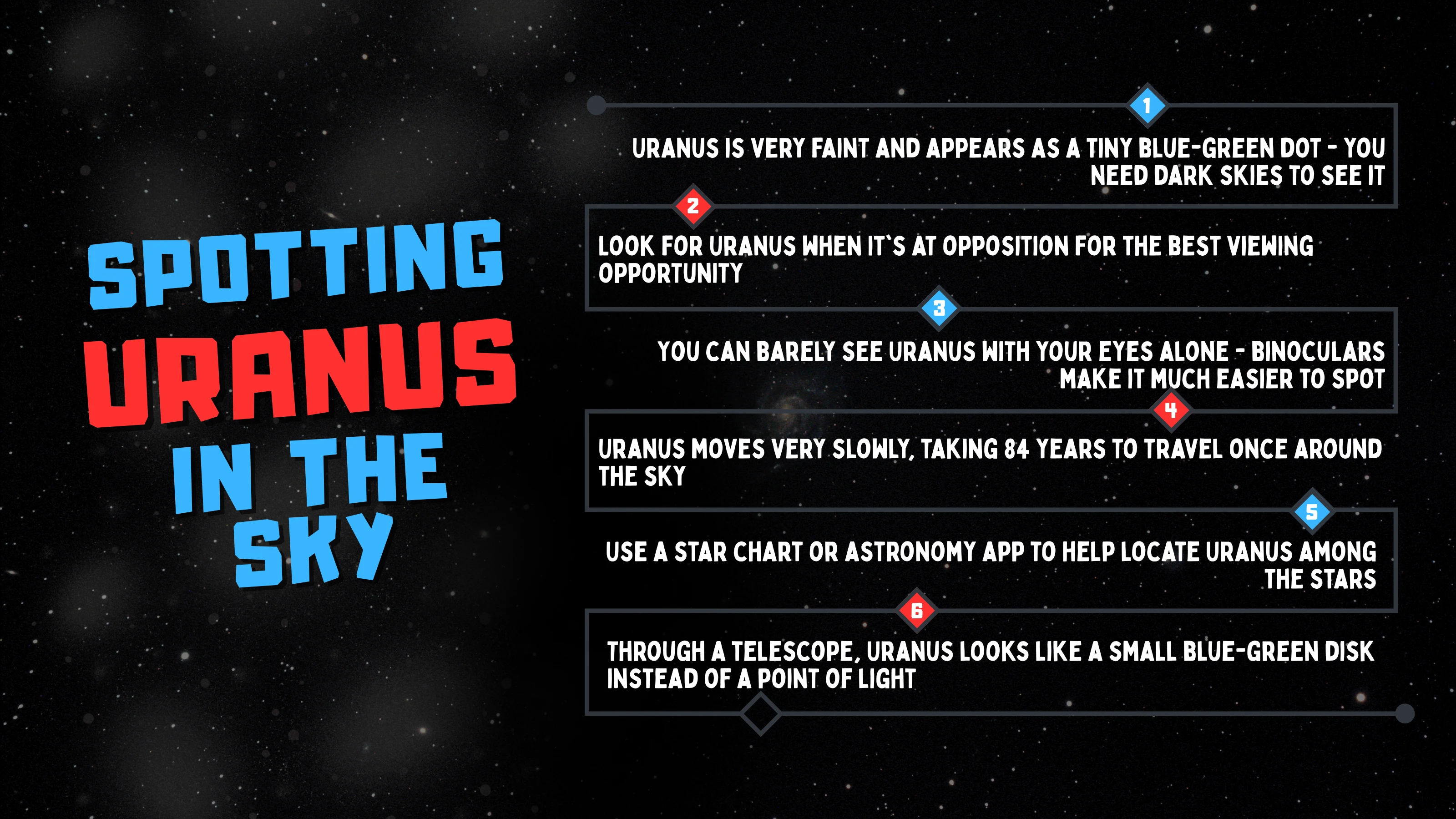
Uranus appears blue-green because of methane gas in its atmosphere
Uranus is one of the strangest planets in our solar system because it spins completely on its side! While most planets spin like a top, Uranus rolls through space like a ball, with its north and south poles pointing toward and away from the Sun as it orbits. Scientists think a massive object crashed into Uranus billions of years ago and knocked it over onto its side. This makes Uranus the only planet that literally rolls around the Sun!
Uranus is called an "ice giant" because it's made mostly of water, methane, and ammonia ices, which is different from the gas giants Jupiter and Saturn. The beautiful blue-green color of Uranus comes from methane gas in its atmosphere, which absorbs red light from the Sun and reflects blue and green light back to space. Uranus is so far from the Sun that it takes 84 Earth years to complete just one orbit!
Uranus is one of the least explored planets in our solar system. The only spacecraft ever to visit Uranus was NASA's Voyager 2, which flew by the planet in 1986 and gave us most of what we know about this mysterious world. Voyager 2 discovered 10 new moons and confirmed that Uranus has rings, though they are much fainter and harder to see than Saturn's spectacular rings.
Scientists are very excited about the possibility of sending a new mission to Uranus in the 2030s! NASA has identified a Uranus orbiter as one of its top priorities for future planetary exploration. This mission would study Uranus's unusual magnetic field, its mysterious atmosphere, and its many moons in much greater detail than Voyager 2 could manage during its brief flyby. Such a mission could help us understand how ice giant planets form and why Uranus is so different from the other planets in our solar system!