Antarctica
Journey to the coldest, windiest, and most remote continent covered in ice at the bottom of the world.
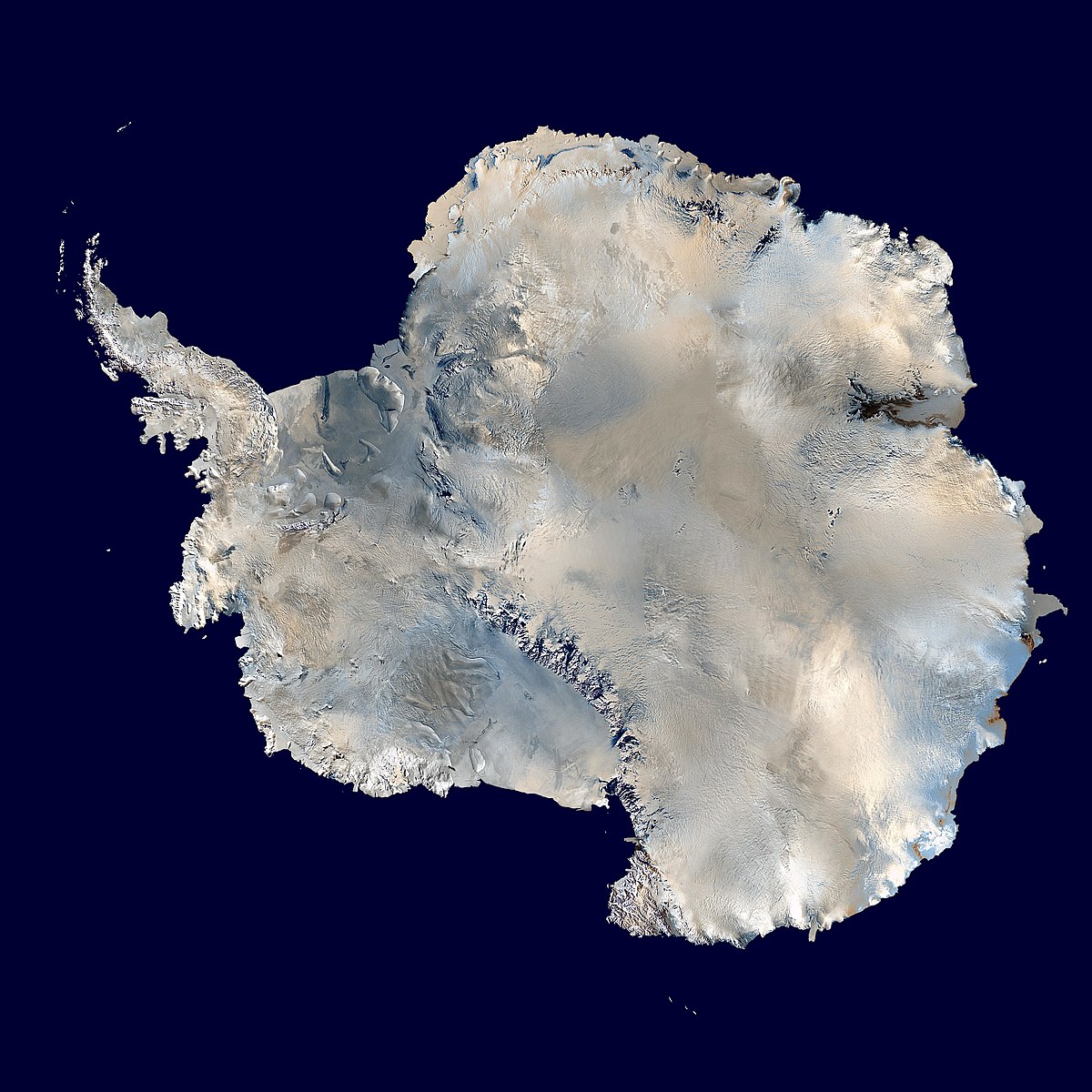
Satellite map of Antarctica showing major ice shelves
Welcome to the most extreme continent on our planet, a land of endless ice and snow where it's winter almost all year long! Antarctica is like Earth's giant freezer, a mysterious continent at the very bottom of the world where only the toughest animals can survive and brave scientists go to study our planet's climate. This incredible frozen wilderness is bigger than the United States and Mexico combined, yet no people live there permanently - making it one of the last true wild places on Earth.
Antarctica is the fifth largest continent and is almost completely covered by ice that's up to 3 miles thick in some places! This amazing ice sheet contains about 70% of all the fresh water on Earth. The continent doesn't belong to any country - instead, it's protected by an international treaty that says it can only be used for peaceful scientific research. During the summer (October to February), about 4,000 scientists from around the world work at research stations, but in winter that number drops to just 1,000 brave researchers!

Map of Antarctica showing major seas, big ice shelves, the Transantarctic Mountains, and key spots like the South Pole.
What makes Antarctica absolutely fascinating is how life manages to survive in such an extreme environment. The continent is home to amazing animals like emperor penguins that huddle together to stay warm in temperatures that can drop to -40°F, leopard seals that are incredible swimmers, and huge whales that visit the surrounding waters to feed. Antarctica also has some of the most spectacular natural phenomena on Earth, including the Southern Lights (aurora australis) that paint the sky in brilliant colors, and massive icebergs that break off from glaciers and float in the ocean like frozen islands.


Who Studies Antarctica
Since no countries own Antarctica, scientists from many nations work together:
- Research Stations - Over 70 permanent research bases from 30 countries
- United States - Operates McMurdo Station, the largest research base
- Argentina - Has the most research stations with 13 bases
- Chile - Operates several bases along the Antarctic Peninsula
- Russia - Runs Vostok Station where the coldest temperature was recorded
- Australia - Manages a large territory and multiple research stations
- United Kingdom - Has historic research stations and ongoing studies
- New Zealand - Provides support and operates Scott Base
- Norway - Has territorial claims and research programs
- France - Operates research stations and studies wildlife
- Japan - Conducts ice and climate research
- South Korea - Has growing research programs in Antarctica
- Plus scientists from many other countries working together peacefully!
Antarctica truly is our planet's final frontier, a frozen continent that teaches us about Earth's climate and shows us how life can survive in the most challenging conditions imaginable!