Haiti

Explore the first Black republic in the world with rich Creole culture, beautiful mountains, and historic independence.


Haitian culture with vibrant, colorful Port-au-Prince architecture

Haitian culture with vibrant, colorful Port-au-Prince architecture

Photo BY Heather Suggitt, Unsplash

Bienvenue en Haïti! Welcome to the first country in the world where enslaved people successfully won their freedom and created their own nation! Haiti is like a country with the strongest heart in the Caribbean, where people have overcome incredible challenges with amazing creativity, producing beautiful art, vibrant music, and a unique Creole culture that blends African, French, and indigenous Taíno traditions. This mountainous nation shares the island of Hispaniola with the Dominican Republic and has a history of courage that inspired freedom movements around the world.

Haiti declared its independence on January 1, 1804, becoming the first Black republic and the second independent nation in the Americas after the United States. The name "Haiti" comes from the indigenous Taíno word "Ayiti," meaning "land of high mountains," which perfectly describes this mountainous country. The Haitian Revolution, led by brave leaders like Toussaint L'Ouverture and Jean-Jacques Dessalines, was the only successful slave revolt in history that led to the founding of a free nation.

Map of Haiti

Map of Haiti showing its 10 departments, mountainous interior, shared border with Dominican Republic on Hispaniola island, and Caribbean coastline. Image Credits: Alexrk2, Wikimedia Commons

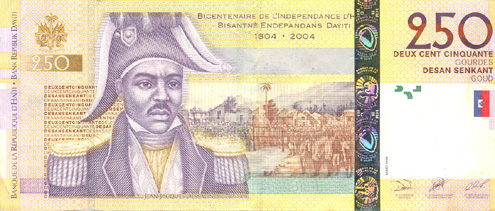
Haitian FlagRoyal Palm TreeHispaniolan trogonGourde Currency
Haitian national symbols: blue and red flag with coat of arms, royal palm tree, Hispaniolan trogon, and gourde currency featuring national heroes and landmarks. Image Credits (from top left to bottom right): Theadept, Wikimedia Commons; Dtobias, Wikimedia Commons; Alfonso Lomba, Wikimedia Commons; Hayko~commonswiki, Wikimedia Commons

HAITI FACTS
INDEPENDENCE: January 1, 1804 (220 years ago)
POPULATION: About 11.7 million people
CAPITAL: Port-au-Prince
DEPARTMENTS: 10 departments
BIGGEST CITY: Port-au-Prince (2.6 million people)
NATIONAL BIRD: Hispaniolan Trogon
NATIONAL FLOWER: Hibiscus (unofficial)
Info box image

History and Geography
Haiti has one of the most inspiring stories in world history - enslaved Africans fought for 13 years to win their freedom and create the first Black-led republic! The country is very mountainous, earning its Taíno name meaning "land of high mountains." Haiti occupies the western third of Hispaniola island and has a long coastline with beautiful bays and beaches. The country has a tropical climate with mountains that reach over 8,700 feet, plus fertile valleys where crops can grow year-round.

Pic la SelleGonâve BaySaut-d'Eau waterfallsHaitian northern coast beaches
Haiti's mountainous geography: Pic la Selle (highest peak), Gonâve Bay with islands, Saut-d'Eau waterfalls, and northern coast beaches with coral reefs. Image Credits (from top left to bottom right): Alex Carroll, Wikimedia Commons; NASA, Wikimedia Commons; La métisse Joassaint, Wikimedia Commons; Andrew Wiseman, Wikimedia Commons

Amazing Wildlife

The Hispaniolan trogon with its beautiful green and red feathers is Haiti's national bird and is found only on the island of Hispaniola. Haiti shares many animals with the Dominican Republic, including Hispaniolan amazons (colorful parrots), hutías (tree-dwelling mammals), and rhinoceros iguanas. The country's coral reefs support tropical fish, sea turtles nest on the beaches, and the mountains are home to unique butterflies and birds found nowhere else.

Hispaniolan trogonsHispaniolan amazon parrotsrhinoceros iguanashawksbill sea turtles
Haiti's island animals: Hispaniolan trogons in mountain forests, Hispaniolan amazon parrots, rhinoceros iguanas on coastal rocks, and hawksbill sea turtles nesting on beaches. Image Credits (from top left to bottom right): Alfonso Lomba, Wikimedia Commons; Martingloor, Wikimedia Commons; Tim Ross, Wikimedia Commons; NOAA, Wikimedia Commons

Natural Resources

Haiti's mountainous terrain contains deposits of bauxite (used to make aluminum), copper, and gold. The country has fertile valleys perfect for growing coffee, mangoes, and other tropical crops. Haiti also has beautiful handicrafts made by talented artisans, including colorful paintings, metal sculptures, and wood carvings that are sought after around the world.

Bauxite MiningCoffee Plantations
Haiti's resources: bauxite mining operations providing aluminum ore and coffee plantations on mountain slopes producing aromatic beans. Image Credits (from left to right): Urbain J. Kinet, Wikimedia Commons; Apilak Sangkhwan, Wikimedia Commons

INSPIRING HAITI FACTS
Haiti was the first country in the Western Hemisphere to abolish slavery permanently in 1804
The Haitian Revolution inspired independence movements throughout Latin America and the Caribbean
Haitian Creole is spoken by nearly all Haitians and is one of the most widely spoken Creole languages in the world
Haiti has produced amazing artists whose colorful paintings and metal sculptures are displayed in museums worldwide

Haiti truly is a nation of incredible strength and creativity, where the spirit of freedom lives on and beautiful art and culture continue to flourish despite many challenges!