Nicaragua

Discover the land of lakes and volcanoes with the largest freshwater lake in Central America and active volcanic chains.


Colourful Nicaraguan colonial cities that are home to traditional markets, folk dancers, and artisans creating pottery and textiles

Colourful Nicaraguan colonial cities that are home to traditional markets, folk dancers, and artisans creating pottery and textiles

Photo BY Hermes Rivera, Unsplash

¡Bienvenidos a Nicaragua! Welcome to the "Land of Lakes and Volcanoes," where the largest freshwater lake in Central America contains islands formed by active volcanoes! Nicaragua is like nature's incredible playground, where you can swim in a giant lake that's home to the world's only freshwater sharks, explore volcanic islands, and discover colonial cities with colorful buildings that look like something from a fairy tale. This amazing country has more volcanoes than any other Central American nation and water resources that make it one of the most naturally beautiful places in the region.

Nicaragua gained its independence from Spain on September 15, 1821, as part of the Central American independence movement. The name "Nicaragua" comes from "Nicarao," a powerful indigenous chief who ruled the area around Lake Nicaragua when Spanish conquistador Gil González Dávila arrived in 1522. The name combined Chief Nicarao with the Spanish word "agua" (water), perfectly describing this land dominated by its magnificent lake and volcanic landscape.

Map of Nicaragua

Map of Nicaragua showing its 15 departments, Lake Nicaragua with Ometepe Island, and coastlines on both Caribbean Sea and Pacific Ocean. Image Credit: BrankoMarinovic99, Wikimedia Commons

Nicaraguan FlagMadroño TreeGuardabarranco (Turquoise-browed motmot)Córdoba Currency
Nicaraguan national symbols: blue and white flag with triangle and rainbow, madroño tree, guardabarranco (rufous motmot), and córdoba currency featuring national landmarks. Image Credits (from top left to bottom right): C records, Wikimedia Commons; David J. Stang; Bernard Gagnon, Wikimedia Commons; Brendan Berkley, Wikimedia Commons

NICARAGUA FACTS
INDEPENDENCE: September 15, 1821 (203 years ago)
POPULATION: About 7 million people
CAPITAL: Managua
DEPARTMENTS: 15 departments plus 2 autonomous regions
BIGGEST CITY: Managua (1.4 million people)
NATIONAL BIRD: Guardabarranco (Turquoise-browed Motmot)
NATIONAL FLOWER: Sacuanjoche (Frangipani)
Info box image

History and Geography
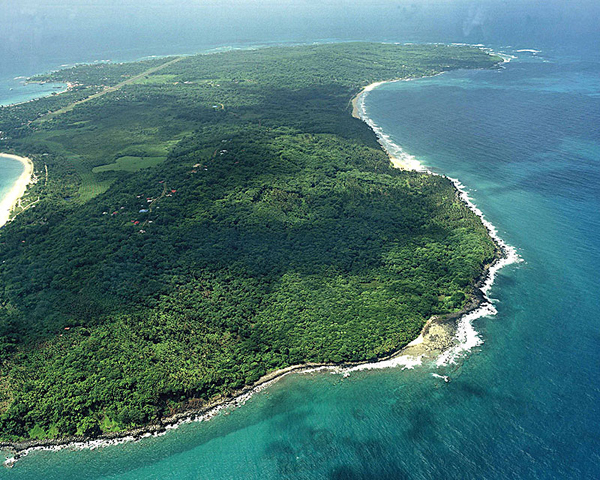
Nicaragua is famous for Lake Nicaragua (also called Lake Cocibolca), the largest freshwater lake in Central America and the 10th largest in the world! This amazing lake is home to unique freshwater sharks that swam up from the Caribbean Sea thousands of years ago and adapted to live in fresh water. The country has over 40 volcanoes, including the twin volcanoes on Ometepe Island that rise dramatically from the lake. Nicaragua also has both Pacific and Caribbean coastlines, cloud forests, and colonial cities like Granada founded in 1524.

Ometepe Island's twin volcanoesGranada's colorful architectureMasaya VolcanoCorn Islands
Nicaragua's volcanic wonders: Ometepe Island's twin volcanoes rising from Lake Nicaragua, colonial Granada's colorful architecture, Masaya Volcano's glowing lava lake, and Caribbean coast Corn Islands. Image Credits (from top left to bottom right): Milei.vencel, Wikimedia Commons; Haakon S. Krohn, Wikimedia Commons; JrPilarte, Wikimedia Commons; Oliverhenriquez, Wikimedia Commons

Amazing Wildlife

The guardabarranco (turquoise-browed motmot) is Nicaragua's national bird and gets its name from its habit of sitting on barbed wire fences guarding cattle ranches. Lake Nicaragua's unique ecosystem supports the world's only freshwater sharks, plus sawfish, tarpon, and rainbow bass. The country has incredible biodiversity with over 750 bird species, howler monkeys whose calls can be heard for miles, jaguars, and sea turtles that nest on both Pacific and Caribbean beaches.

Guardabarranco MotmotsBull SharksHowler MonkeysOlive Ridley Sea Turtles
Nicaragua's unique animals: guardabarranco motmots with distinctive tails, Lake Nicaragua's rare freshwater bull sharks, howler monkeys in forest canopies, and olive ridley sea turtles nesting on Pacific beaches. Image Credits (from top left to bottom right): Bernard Gagnon, Wikimedia Commons; Jerome Paillet, Wikimedia Commons; Charles J. Sharp, Wikimedia Commons; Claudio Giovenzana, Wikimedia Commons

Natural Resources

Nicaragua's volcanic soil is incredibly fertile, perfect for growing excellent coffee on mountain slopes and producing abundant crops in the lowlands. The country has significant gold deposits and is rich in timber from its forests. Lake Nicaragua and the extensive river systems provide abundant freshwater, and both coastlines offer excellent fishing opportunities. The country also has potential for geothermal energy from its many volcanoes.

Coffee PlantationsGold Mines
Nicaragua's natural wealth: coffee plantations on volcanic slopes producing premium beans and gold mining operations in northern mountain regions. Image Credits (from left to right): Martin Kulldorff, Wikimedia Commons; Allen Drebert, Wikimedia Commons

FASCINATING NICARAGUA FACTS
Lake Nicaragua is so large it was once considered for a canal route to connect the Atlantic and Pacific Oceans
Ometepe Island in Lake Nicaragua is the largest volcanic island in a freshwater lake anywhere in the world
Nicaragua has more than 78 protected areas including cloud forests, volcanic parks, and marine reserves
The country's colonial city of León has the largest cathedral in Central America with beautiful baroque architecture

Nicaragua truly is Central America's crown jewel of water and fire, where volcanic islands rise from freshwater seas and every corner reveals another amazing natural wonder waiting to be explored!