Poland

Discover the heart of Europe with medieval castles, rich traditions, resilient history, and beautiful diverse landscapes.


Polish landscape showing Krakow's medieval Old Town

Polish landscape showing Krakow's medieval Old Town

Photo BY Gabriella Bortolussi, Unsplash

Witamy w Polsce! Welcome to the heart of Europe, where medieval castles rise from misty forests and resilient people have preserved their beautiful culture through centuries of challenges! Poland is like a country with nine lives, having been erased from maps but always returning stronger, where fairy-tale cities like Krakow showcase stunning medieval architecture, where the last primeval forest in Europe protects ancient trees and European bison, and where traditions like pierogi-making and colorful folk dancing bring families together in celebration of their proud heritage.

Poland regained its independence on November 11, 1918, after being partitioned and erased from European maps for 123 years by neighboring empires. The name "Poland" comes from the Slavic tribe called "Polanie," meaning "people of the fields," referring to the flat plains that cover much of the country. In Polish, it's called "Polska." Poland has a remarkable history of resilience, having survived invasions, partitions, and occupations while maintaining its language, culture, and Catholic faith that helped unite the people during difficult times.

Map of Poland

Map of Poland showing its 16 voivodeships, and central position in Europe. Image Credit: NordNordWest, Wikimedia Commons

Polish FlagOak TreeWhite-Tailed EagleZłoty Currency
Polish national symbols: white and red flag, oak tree, white-tailed eagle, and złoty currency featuring Polish historical figures and landmarks. Image Credits (from top left to bottom right): Perhelion, Wikimedia Commons; Stacey Hayden, Unsplash; Yathin S Krishnappa, Wikimedia Commons; Lalpino, Wikimedia Commons

POLAND FACTS
INDEPENDENCE REGAINED: November 11, 1918 (106 years ago)
POPULATION: About 37.7 million people
CAPITAL: Warsaw
VOIVODESHIPS: 16 voivodeships (provinces)
BIGGEST CITY: Warsaw (1.8 million people)
NATIONAL BIRD: White-tailed Eagle
NATIONAL FLOWER: Red Poppy (unofficial)
Info box image

History and Geography
Poland sits in the heart of Europe and has been a crossroads of cultures, trade, and unfortunately, conflicts for centuries. The country has diverse geography from the beautiful Tatra Mountains in the south (shared with Slovakia) to the Baltic Sea coast in the north with sandy beaches and coastal forests. Central Poland features vast plains perfect for agriculture, while the east contains Białowieża Forest, the last remaining primeval forest in Europe where ancient oaks grow alongside the continent's largest land mammal - the European bison!

Krakow's Main Market SquareTatra Mountain PeaksBaltic Sea BeachesBiałowieża Forest
Poland's diverse geography: medieval Krakow's Main Market Square, dramatic Tatra Mountain peaks, pristine Baltic Sea beaches, and ancient Białowieża Forest with giant oak trees. Image Credits (from top left to bottom right): Bahnfrend, Wikimedia Commons; Piotr J, Wikimedia Commons; Ess Threefive, Wikimedia Commons; Bouke ten Cate, Wikimedia Commons

Amazing Wildlife

The majestic white-tailed eagle, Europe's largest eagle with an 8-foot wingspan, is Poland's national bird and has made a remarkable comeback from near extinction! Poland's Białowieża Forest is home to European bison (the continent's heaviest land animal), wolves, lynx, and over 250 bird species. The country also has large populations of wild boar, red deer, and is an important corridor for millions of migrating birds traveling between northern breeding grounds and southern wintering areas.
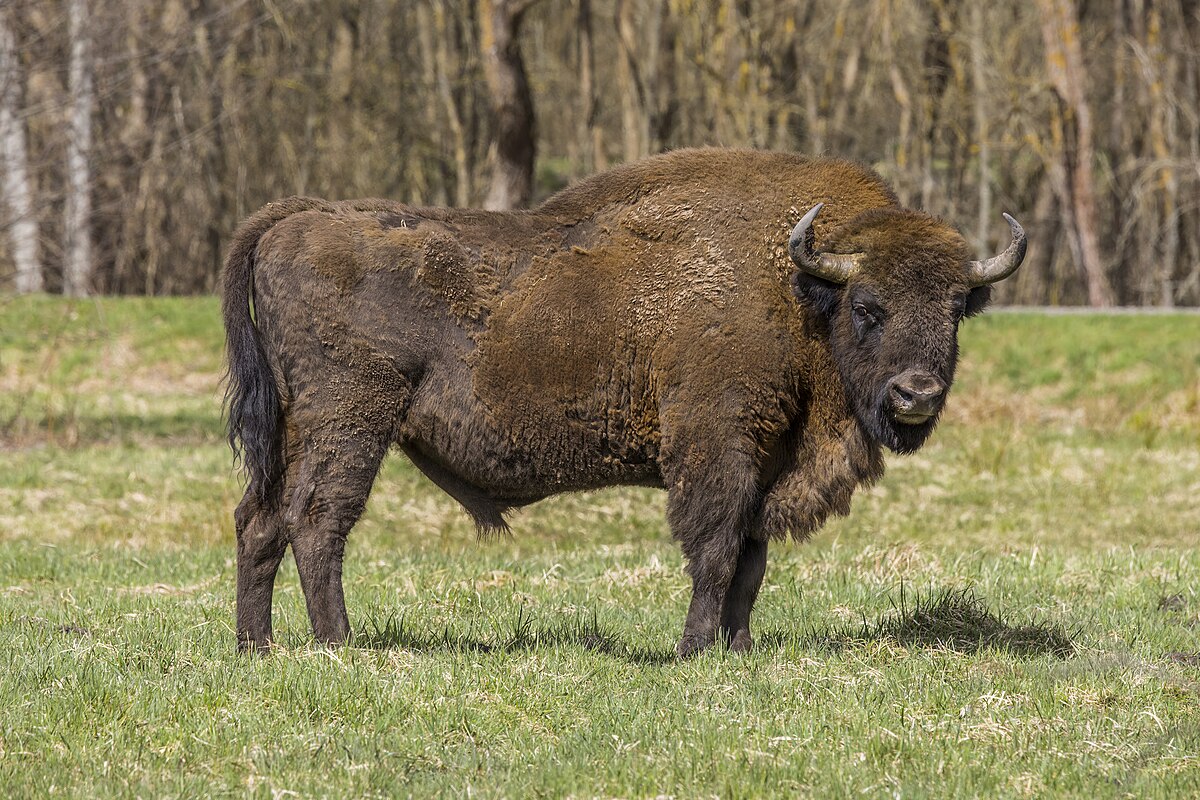
White-Tailed EaglesEuropean BisonGrey WolvesEurasian Lynx
Poland's magnificent animals: white-tailed eagles soaring over forests, massive European bison in Białowieża Forest, grey wolves in mountain wilderness, and Eurasian lynx stalking through ancient woodlands. Image Credits (from top left to bottom right): Yathin S Krishnappa, Wikimedia Commons; Charles J. Sharp, Wikimedia Commons; Mariofan13, Wikimedia Commons; Jon Glittenberg, Wikimedia Commons

Natural Resources

Poland has significant coal deposits that have historically powered its industry, though the country is transitioning to cleaner energy sources including wind and solar power. The fertile plains produce excellent crops including wheat, potatoes, and sugar beets, while Poland is also famous for its amber - fossilized tree resin that sometimes contains prehistoric insects and is made into beautiful jewelry. The country's rich cultural heritage attracts millions of tourists to its medieval cities and historic sites.

Wind Energy FarmsAmber Mining Operations
Poland's treasures: renewable wind energy farms replacing traditional coal power and amber mining operations producing fossilized treasures from ancient forests. Image Credits (from left to right): Wojciech Zabolotny, Wikimedia Commons; Homik8 Michal Kosior, Wikimedia Commons

RESILIENT POLAND FACTS
Poland gave the world famous scientists like Marie Curie (first woman to win Nobel Prize) and Nicolaus Copernicus who proved Earth orbits the Sun
The country has 16 UNESCO World Heritage Sites including medieval Krakow and the hauntingly preserved Auschwitz memorial
Polish people invented bulletproof vests, mine detectors, and kerosene lamps that changed the world
Despite being erased from maps for 123 years, Poland kept its language and culture alive and emerged as a strong democracy

Poland truly is Europe's resilient heart, where medieval beauty meets modern determination and a proud people have shown the world that culture, freedom, and traditions can survive any challenge!