Rwanda

Explore the land of a thousand hills with mountain gorillas, remarkable recovery, and innovative conservation programs.


Rwandan landscape showing misty volcanic mountains

Rwandan landscape showing misty volcanic mountains

Photo BY Maxime Ishmax, Wikimedia Commons

Muraho! Welcome to the "Land of a Thousand Hills," where misty mountains hide some of our planet's most precious treasures - the endangered mountain gorillas! Rwanda is like a country that has risen like a phoenix, transforming itself from tragedy to become one of Africa's most remarkable success stories. This beautiful, green, mountainous nation has shown the world how unity, determination, and innovative thinking can create incredible progress while protecting some of Earth's most endangered animals in the lush Volcanoes National Park.

Rwanda gained independence from Belgium on July 1, 1962, though the modern Rwanda began its remarkable transformation after 1994. The name "Rwanda" comes from the word "Rwanda" meaning "to expand" in the Kinyarwanda language, referring to the gradual expansion of the original kingdom. Rwanda is called the "Land of a Thousand Hills" because of its incredibly mountainous and hilly terrain - there isn't a single flat area in the entire country! The nation has three official languages: Kinyarwanda, English, and French.

Map of Rwanda

Map of Rwanda showing its provinces, Volcanoes National Park, mountainous terrain, and landlocked position surrounded by Uganda, Tanzania, Burundi, and Democratic Republic of Congo. Image Credit: NordNordWest

Rwandan FlagGiant LobeliaGrey Crowned CraneRwandan Franc
Rwandan national symbols: blue, yellow, and green flag with sun symbol, giant lobelia, grey crowned crane, and Rwandan franc. Image Credit (from top left to bottom right): Zscout370, Wikimedia Commons; Bernard Gagnon, Wikimedia Commons; Charles J. Sharp, Wikimedia Commons; أشرف اليماني, Wikimedia Commons

RWANDA FACTS
INDEPENDENCE: July 1, 1962 (62 years ago)
POPULATION: About 13.6 million people
CAPITAL: Kigali
PROVINCES: 5 provinces (including Kigali city)
BIGGEST CITY: Kigali (1.2 million people)
NATIONAL BIRD: Grey Crowned Crane (shared with Uganda)
NATIONAL FLOWER: Giant Lobelia (found in high mountains)

History and Geography
Rwanda is incredibly mountainous and is part of the East African Rift Valley, with elevations ranging from 3,960 to 14,826 feet above sea level. The country shares the Virunga Mountains with Uganda and Democratic Republic of Congo, where about 1,000 endangered mountain gorillas live in misty bamboo forests. Rwanda has no flat land at all - it's literally all hills and mountains! The country has transformed into one of Africa's cleanest and most organized nations, with the capital Kigali being remarkably clean and safe.

Virunga Volcanic PeaksTerraced HillsidesMountain ForestsKigali City
Rwanda's mountainous geography: misty Virunga volcanic peaks, terraced hillsides for agriculture, pristine mountain forests, and modern clean Kigali city nestled among hills. Image Credit (from top left to bottom right): Estherkmugarura, Wikimedia Commons; CIAT, Wikimedia Commons; Peace Batuma, Wikimedia Commons; Dushime rw, Wikimedia Commons

Amazing Wildlife

The majestic grey crowned crane is Rwanda's national bird and also appears on Uganda's flag and coat of arms. Rwanda is most famous for being home to about one-third of the world's remaining mountain gorillas - fewer than 1,000 exist in the wild! These gentle giants live in the Volcanoes National Park along with golden monkeys, forest elephants, and over 200 bird species. The mountain gorillas are so endangered that visiting them requires special permits and helps fund their conservation.

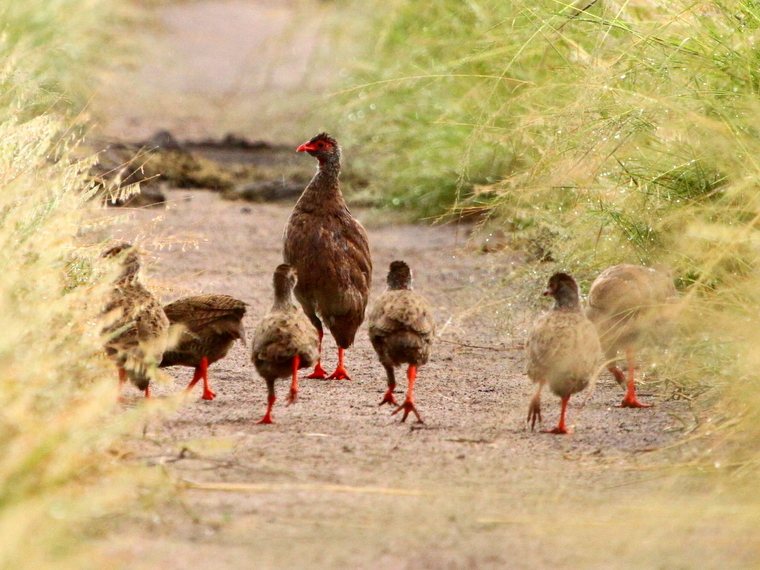
Grey Crowned CranesMountain GorillasGolden MonkeysMontane Forest Birds (Handsome Francolin)
Rwanda's precious animals: grey crowned cranes in highland meadows, endangered mountain gorillas in misty forests, colorful golden monkeys in bamboo groves, and diverse montane forest birds. Image Credit (from top left to bottom right): Diego Delso, Wikimedia Commons; Thomas Fuhrmann, Wikimedia Commons; Wood Wildlife Photography, Wikimedia Commons; Mickey Samuni-Blank, Wikimedia Commons

Natural Resources

Rwanda's greatest treasures are its mountain gorillas and the ecotourism they attract from around the world! The country also produces excellent coffee grown on terraced mountain slopes, and has tea plantations in the high-altitude regions. Rwanda has some mineral deposits including tin, tungsten, and tantalum, plus recently discovered methane gas in Lake Kivu. However, the country's most valuable resource is its commitment to conservation and sustainable development that protects endangered species while improving people's lives.

Mountain Coffee PlantationsGorilla Tourism
Rwanda's sustainable wealth: mountain coffee plantations on terraced hillsides and gorilla tourism providing income while protecting endangered mountain gorillas. Image Credit (from left to right): CIAT, Wikimedia Commons; Rugamba fabrice, Wikmedia Commons

REMARKABLE RWANDA FACTS
Rwanda is one of only three countries in the world where you can see endangered mountain gorillas in the wild
The country banned plastic bags in 2008 and is now one of the cleanest countries in Africa
Rwanda has the highest percentage of women in parliament of any country in the world showing commitment to equality
Every last Saturday of the month is "Umuganda" when all Rwandans participate in community cleanup and development work

Rwanda truly is Africa's land of hope and renewal, where thousand hills cradle some of Earth's most precious creatures and a nation has shown the world that unity, conservation, and determination can create miracles in the mountains!