Uruguay

Discover the Switzerland of South America with beautiful beaches, progressive policies, and peaceful gaucho culture.


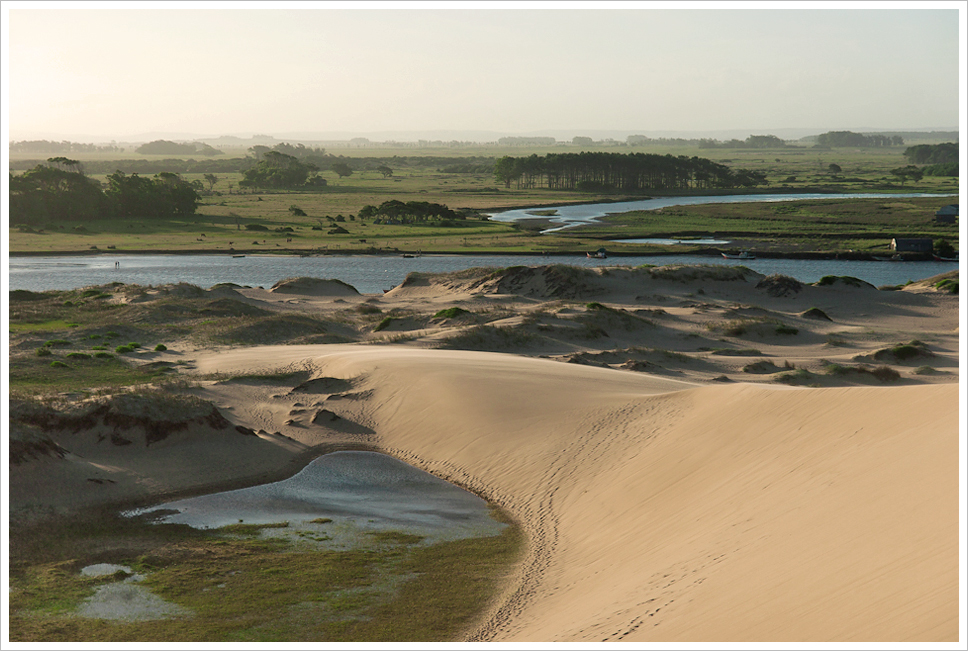
Uruguayan landscape showing pristine Atlantic beaches

Uruguayan landscape showing pristine Atlantic beaches

Photo BY Pedro Slinger, Unsplash

¡Bienvenidos al Uruguay! Welcome to the "Switzerland of South America," the second smallest country on the continent but one with some of the highest living standards and most beautiful beaches! Uruguay is like South America's peaceful gem, where rolling green hills dotted with cattle meet pristine Atlantic beaches, and a progressive, educated society has created one of the most stable and prosperous countries in Latin America. This charming nation is famous for its gaucho culture, excellent beef, and being one of the first countries in the world to legalize many progressive social policies.

Uruguay declared independence on August 25, 1825, after struggling to break free from both Spanish and Portuguese control, and later Brazilian occupation. The name "Uruguay" comes from the Guaraní words "uru," meaning river bird, "gua," meaning from, and "y," meaning water - so "river of the bird" or "river where birds come from." This refers to the Uruguay River that forms the country's western border and was named by indigenous peoples for the many birds that gather along its banks.

Map of Uruguay

Map of Uruguay showing its 19 departments, Atlantic coastline, Uruguay River border with Argentina, and position between Brazil and Argentina. Image Credit: GrandEscogriffe, Wikimedia Commons

Uruguayan FlagCeibo TreeSouthern Lapwing BirdPeso Uruguayo Currency
Uruguayan national symbols: blue, white, and yellow flag with sun symbol, ceibo tree, southern lapwing bird, and peso uruguayo currency. Image Credits (from top left to bottom right): Jarekt, Wikimedia Commons; Pablo Bombín, Wikimedia Commons; Charles J. Sharp, Wikimedia Commons; bryanrmason, Flickr

URUGUAY FACTS
INDEPENDENCE: August 25, 1825 (199 years ago)
POPULATION: About 3.4 million people
CAPITAL: Montevideo
DEPARTMENTS: 19 departments
BIGGEST CITY: Montevideo (1.3 million people)
NATIONAL BIRD: Southern Lapwing (Tero)
NATIONAL FLOWER: Ceibo

History and Geography
Uruguay is wedged between two giant neighbors - Brazil and Argentina - but has maintained its own unique identity and peaceful character. The country is mostly rolling grasslands perfect for cattle ranching, with beautiful Atlantic beaches stretching for over 400 miles along the coast. Uruguay has no mountains or deserts - just gentle hills, fertile plains, and lovely beaches. The country is famous for Punta del Este, one of South America's most exclusive beach resorts, and for having one of the most educated populations in Latin America.

Punta del Este beachesRolling green hills with cattleUruguay River wetlandsCoastal sand dunes
Uruguay's gentle geography: pristine Punta del Este beaches, rolling green hills with grazing cattle, Uruguay River wetlands, and coastal sand dunes. Image Credits (from top left to bottom right): mriaco, Wikimedia Commons; Miriam Edith Leal, Wikimedia Commons; Phillip Capper, Wikimedia Commons; Montecruz Foto, Wikimedia Commons

Amazing Wildlife

The southern lapwing (called "tero" locally) is Uruguay's national bird and is famous for being very brave - it will attack much larger animals to protect its nest! Uruguay's grasslands support many birds including the colorful southern screamer, while the Atlantic coast is visited by southern right whales during winter months. The country also has sea lions, fur seals, and various dolphins along its coastline, plus grassland animals like rheas (similar to ostriches) inland.

Southern LapwingsSouthern Right WhalesSea LionsRheas
Uruguay's coastal and grassland animals: southern lapwings defending their territory, southern right whales near the coast, sea lions on rocky shores, and rheas running across grasslands. Image Credits (from top left to bottom right): Charles J. Sharp, Wikimedia Commons; Hugo Hulsberg, Wikimedia Commons; Okta30, Wikimedia Commons; Charles J. Sharp, Wikimedia Commons

Natural Resources

Uruguay's main natural resource is its fertile grassland that supports millions of cattle and sheep, making the country famous for high-quality beef and wool exports. The country also has become a leader in renewable energy, generating almost all its electricity from wind, solar, and hydroelectric power. Uruguay's beautiful beaches and stable political system make tourism increasingly important to the economy.

Wind FarmsCattle Ranching
Uruguay's sustainable wealth: wind farms generating clean renewable energy and cattle ranching on fertile grasslands producing premium beef. Image Credits (from left to right): Mx. Granger, Wikimedia Commons; NaBUru38, Wikimedia Commons

PROGRESSIVE URUGUAY FACTS
Uruguay was the first country in the world to provide a free laptop computer to every elementary school child
The country generates 95% of its electricity from renewable sources making it a world leader in clean energy
Uruguay was the first South American country to legalize same-sex marriage and has many other progressive laws
Despite being tiny, Uruguay has won the FIFA World Cup twice and hosted the very first World Cup in 1930

Uruguay truly is South America's most peaceful and progressive jewel, where beautiful beaches meet sustainable living and a small country shows the world how to balance prosperity with environmental responsibility!