Stegosaurus
Stegosaurus had tall plates on its back, a spiked tail and a brain the size of a plum. It lived so long ago that T. rex lived closer in time to us!
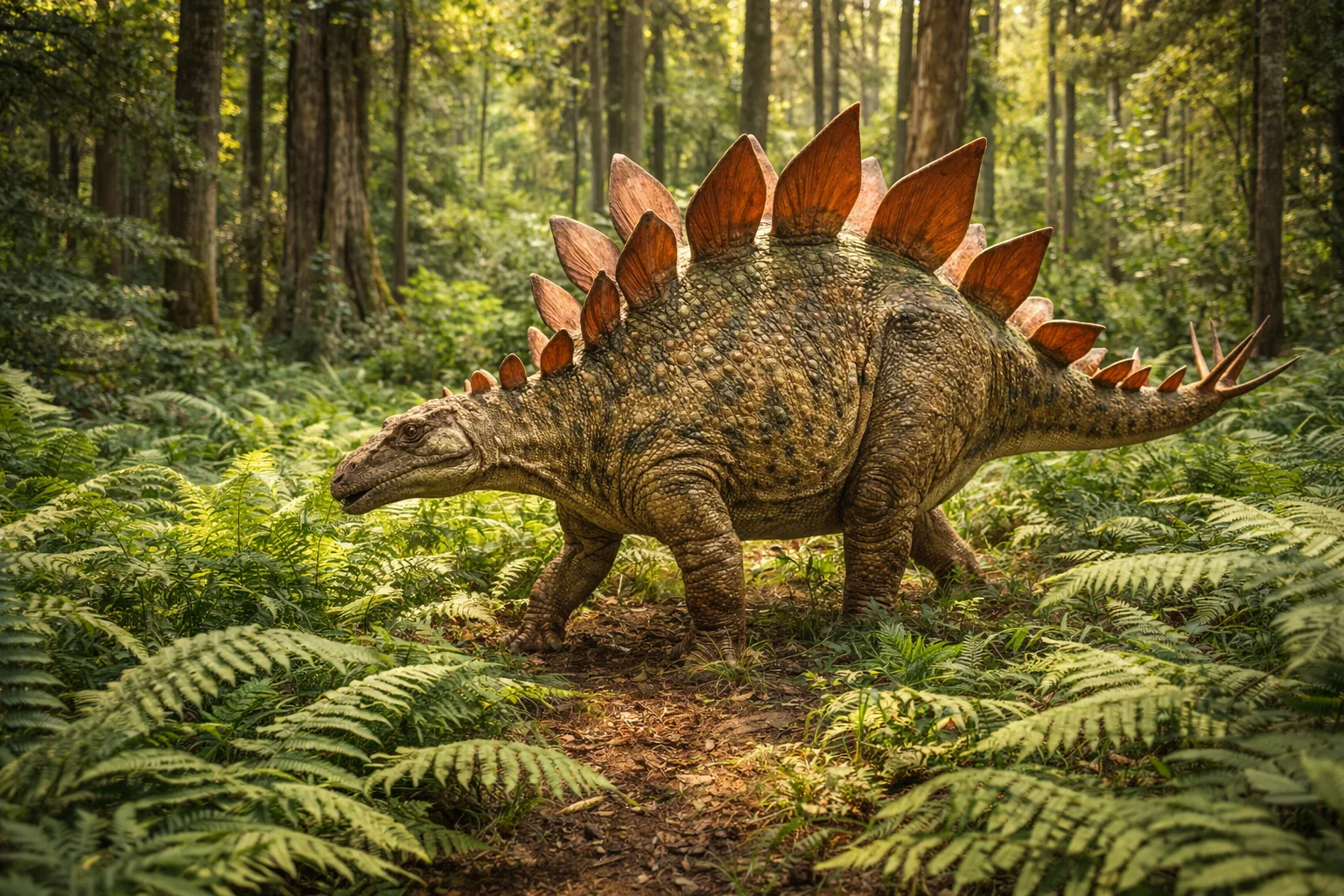
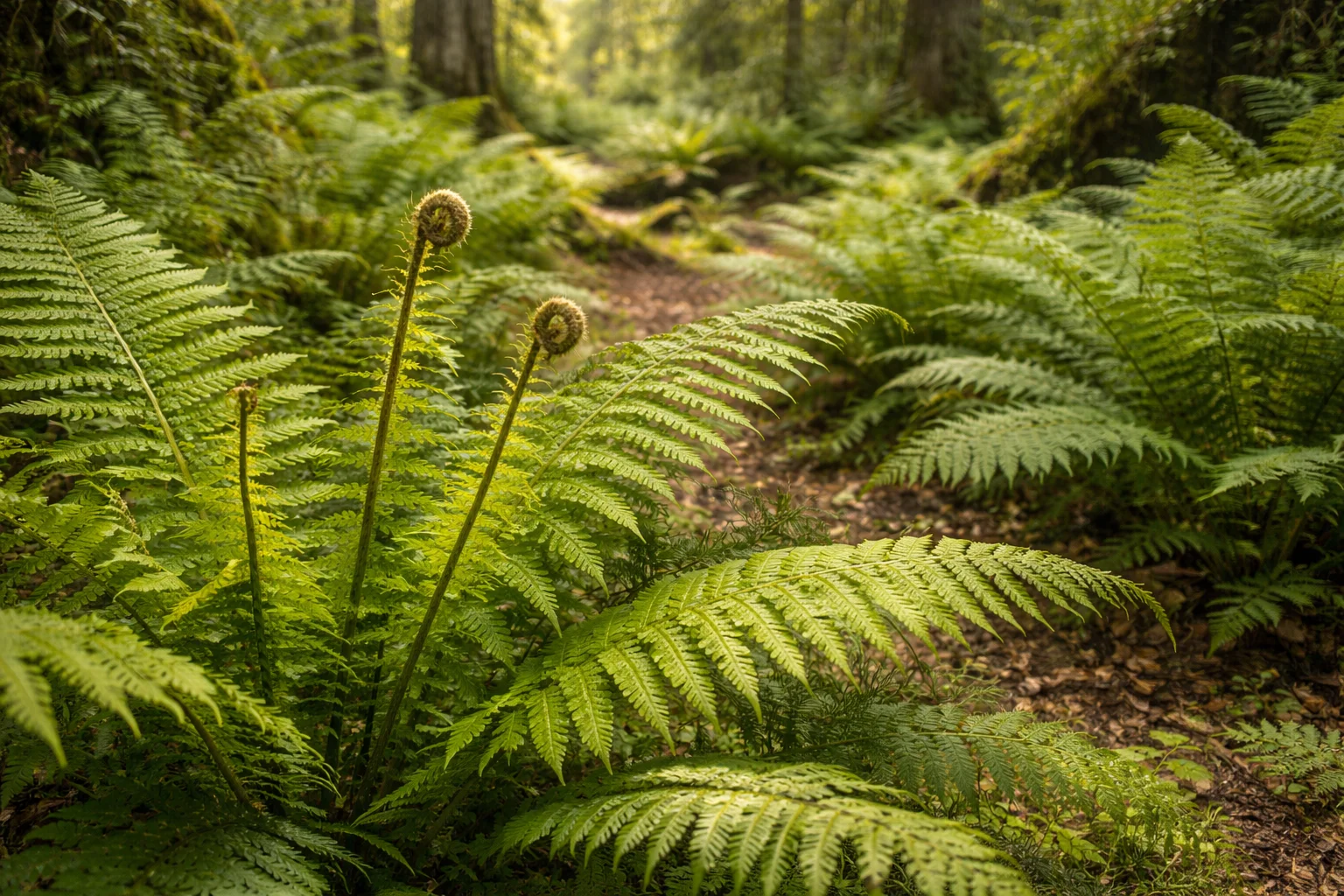
Stegosaurus walking through a warm Jurassic forest with ferns.
Duskbloom Littles (Artistic Image Rendering)
Stegosaurus was a big plant-eating dinosaur with two rows of tall, bony plates along its back and sharp spikes on the end of its tail. It lived in the Jurassic Period, long before T. rex.
 STEGOSAURUS FACTS
When and where it lived
Stegosaurus lived about 152 to 145 million years ago, in what is now the western United States. Its fossils come from a famous layer of rock called the Morrison Formation, found in states like Colorado, Utah and Wyoming.
Stegosaurus lived so long ago that T. rex lived closer in time to us than to Stegosaurus! About 80 million years passed between the last Stegosaurus and the first T. rex.
What it ate
Stegosaurus was a large, slow-moving plant-eater. It had a small head with a beak at the front, and it probably spent much of its day munching on low-growing plants. Stegosaurus walked on four legs, and its back legs were much longer than its front legs. That kept its small head low, close to the plants it ate.
Plates on its back
The plates on Stegosaurus's back were made of bone, but they weren't attached to its skeleton. Instead, they sat in its skin, standing upright in two rows that took turns from side to side. Scientists still aren't sure what the plates were for. They may have warned off predators, helped Stegosaurus recognize each other, or helped them warm up and cool down. Tiny grooves on the plates may have held blood vessels.
A spiky tail
Stegosaurus could swing its powerful tail to defend itself. The tail had four sharp spikes, sometimes called a thagomizer. It used them to fight off hungry predators like Allosaurus and Ceratosaurus.

Close-up of the spiked tail used for defence. Image Credit: Dan121377, Wikimedia Commons
 AMAZING STEGOSAURUS FACTS
How we know
The first Stegosaurus fossils were described by scientist Othniel Charles Marsh, who named it in 1877. Its name means "roof lizard," because Marsh first thought the plates lay flat on its back like roof tiles. Later, a skeleton was found still covered in mud, with its plates standing up. That showed scientists how the plates really looked.
In 2014, a nearly complete Stegosaurus skeleton went on display at the Natural History Museum in London, where scientists are still learning from it.


Stegosaurus shows how dinosaurs grew amazing body armour to stay safe.
Topics covered:
Up Next
Triceratops
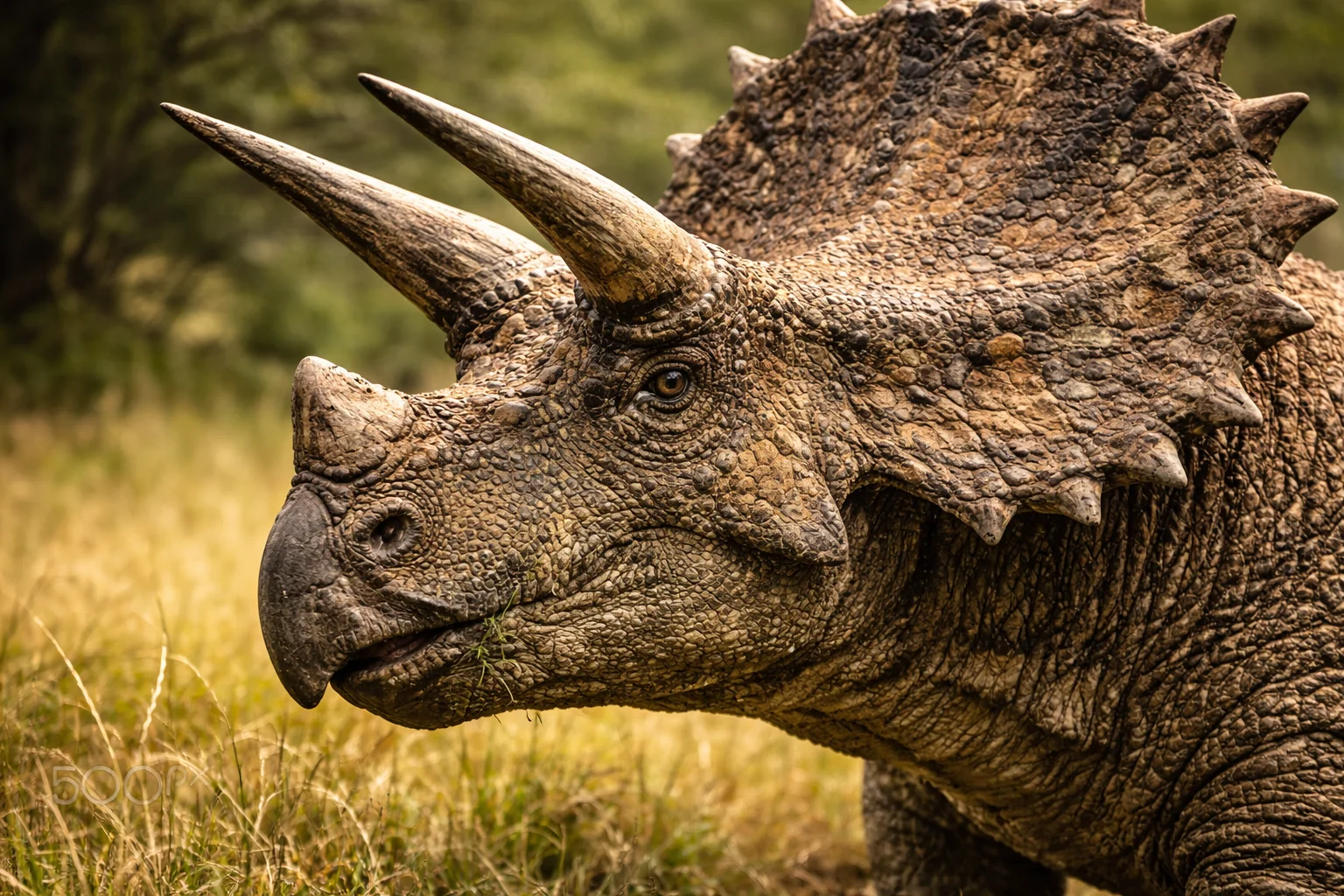
Triceratops was a 10,000 kg plant-eater with three horns and a frill nearly 1 m across. Find out how it faced T. rex and what its fossils tell us.