Triceratops
Triceratops was a 10,000 kg plant-eater with three horns and a frill nearly 1 m across. Find out how it faced T. rex and what its fossils tell us.
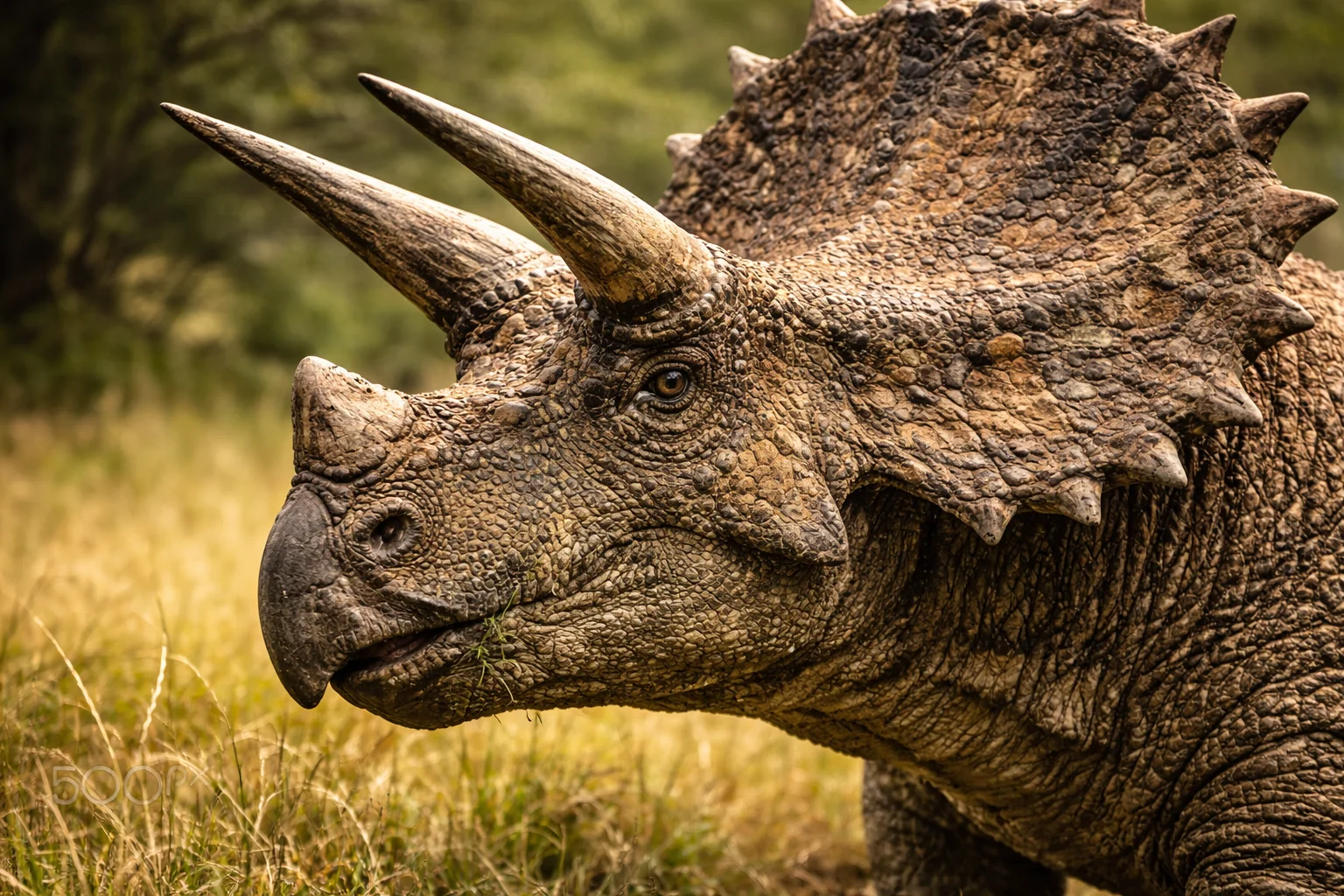
Side view of a Triceratops head showing the three horns and wide frill.
Duskbloom Littles (Artistic Image Rendering)
Triceratops was a giant plant-eating dinosaur with three horns and a huge bony frill around its neck. Its name means "three-horned face." It lived at the same time as T. rex, and its horns may have helped it stand up to this famous hunter.
 TRICERATOPS FACTS
When and where it lived
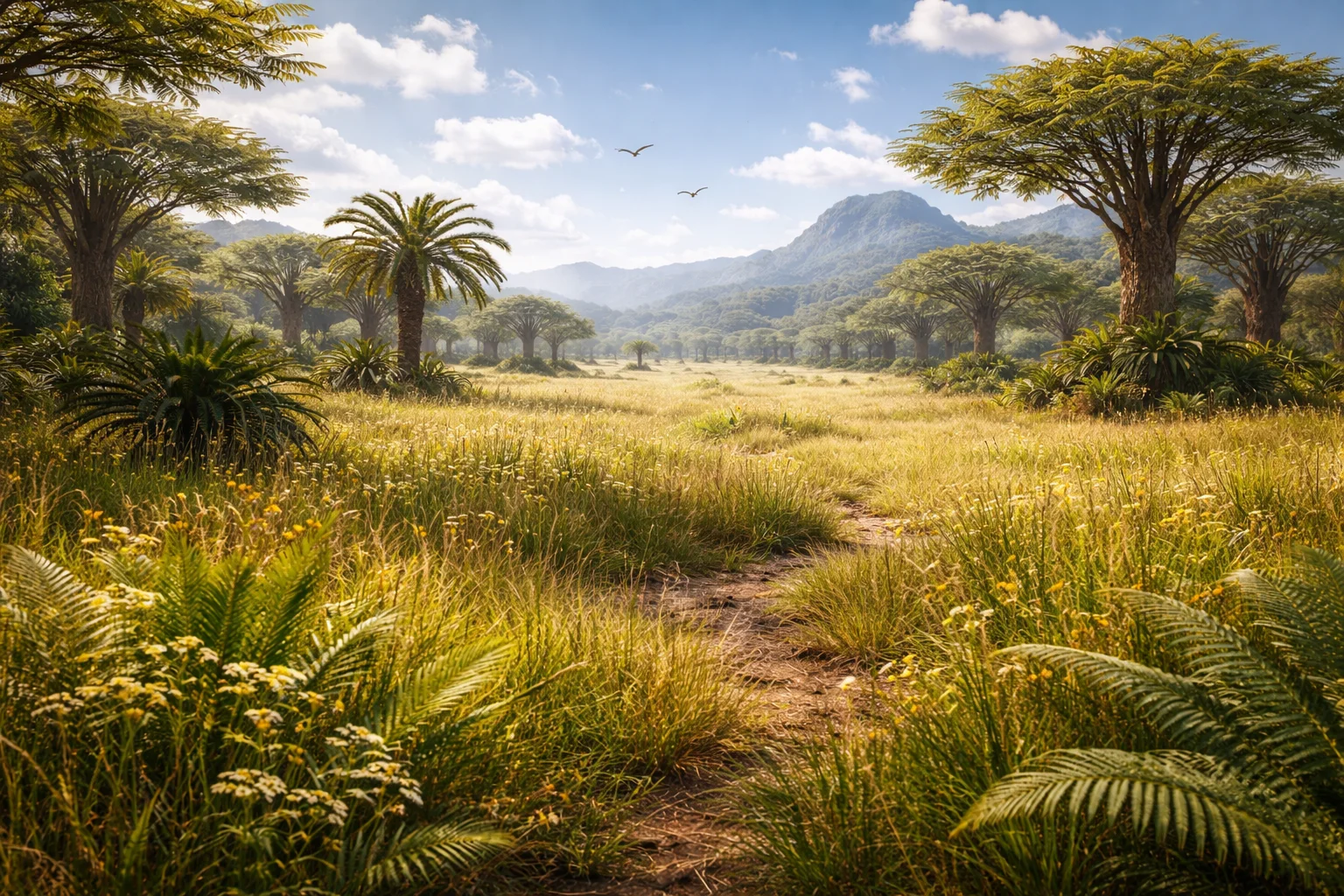
Triceratops lived right at the end of the age of dinosaurs, about 68 to 66 million years ago. It roamed the warm plains and forests of western North America. Most of its fossils have been found in the western United States, in places like Montana, Wyoming and the Dakotas.
Triceratops shared its world with T. rex. The two were among the very last dinosaurs, living right up until dinosaurs (all except birds) disappeared about 66 million years ago.
What it ate
Triceratops was a herbivore, which means it ate plants. It used its sharp, parrot-like beak to snip off tough plants like palm leaves. Then rows of teeth at the back of its mouth sliced and ground the plants up.
Horns and a frill
Triceratops had two long horns above its eyes and a short horn on its nose. Its frill could be nearly 1 m across (3 feet). Scientists think the horns helped it fight off T. rex. One Triceratops fossil has a horn that was partly bitten off and then healed, so that dinosaur survived the attack!
Triceratops may also have used its horns on each other. Puncture marks on some frills suggest that males locked horns and fought, probably to impress females. The frill may have protected its neck, and it may have helped Triceratops recognize each other and show off.

A Triceratops skull at the Royal Tyrrell Museum in Drumheller, Alberta. Image Credit: Chris Woodrich, Wikimedia Commons
 AMAZING TRICERATOPS FACTS
How we know
In 1887, a scientist named Othniel Charles Marsh was sent a pair of fossil horns. At first he thought they came from a giant bison! When more fossils were found, he realized they belonged to a three-horned dinosaur, and he named it Triceratops in 1889.
Today, scientists learn about Triceratops from skulls, bones and even the marks left on them. T. rex bite marks on Triceratops frills show that the two dinosaurs really did meet.


Triceratops shows us that plant-eating dinosaurs could be just as tough and amazing as the hunters.
Topics covered:
Up Next
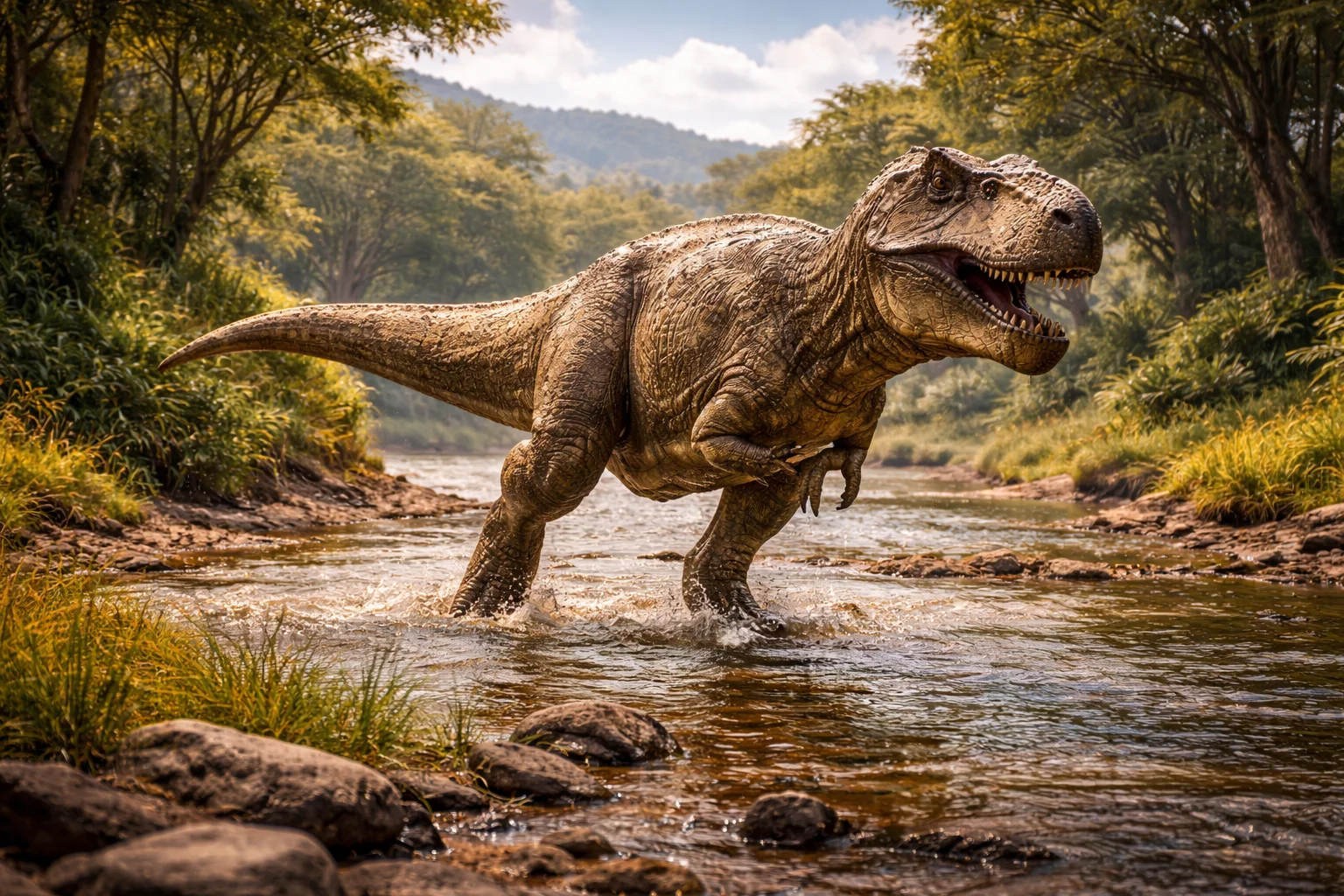
Tyrannosaurus Rex
T. rex was one of the biggest meat-eaters ever, with 60 teeth up to 20 cm long. Meet Scotty, the record-breaking T. rex found in Saskatchewan!